9 min read Diesen Artikel auf Deutsch lesen
Cold Email Subject Line: Examples and Rules
The short answer
A cold email subject line should say plainly what the message is about and why this recipient is getting it, whether that's a role, a trigger event or a company detail. It should also match the first sentence of the body. Put the key words first: RFC 5322 recommends 78 characters per line, and inboxes show fewer. Use "Re:" only on real replies, because CAN-SPAM prohibits subject lines that mislead about the content.
In this article
- What should a cold email subject line actually do?
- Which cold email subject line examples work for a first touch?
- What subject line fits a cold email that contains a personal video?
- What does a complete cold email example look like?
- How do you write a sales follow up email?
- What does a sales follow up email sample look like?
- Which cold email subject lines backfire, and why?
- Questions people ask
What should a cold email subject line actually do?
A cold email subject line has one job. It tells someone who has never heard of you what the message is about and why it landed in their inbox. Being clever doesn't help with that. The subject sits in the Subject header defined by RFC 5322, which allows up to 998 characters per line and recommends 78. Inbox list views on desktop and mobile show far fewer, so the first three or four words have to carry the meaning. Write in sentence case or lowercase. Leave out all caps, stacked exclamation marks and anything that reads like a banner ad. In the United States, CAN-SPAM (15 U.S.C. 7704(a)(2)) bans subject lines that are likely to mislead a recipient about the content or subject matter of the message. Here's what doesn't work: a subject that sets up an expectation the first sentence doesn't meet. If the subject says "your hiring post", the body has to open with the hiring post, not with your product. One more thing: don't use open rates to judge which subject is 'working', because Apple Mail Privacy Protection preloads tracking pixels. Our piece on email open rate tracking limits explains what cold senders can measure instead.

Which cold email subject line examples work for a first touch?
- {Company}'s move into {new market}
- Question about {team}'s {process} after the {event}
- {First name}, saw your post on {topic}
- Idea for {company}'s {specific workflow}
- {Mutual contact} suggested I reach out
- {Role} at {company}: {problem} during {season or launch}
Each of these needs one real fact before you can send it. Use the market-move and post-based lines when there's a public trigger you can point to in the first sentence: a press release, a funding note, a LinkedIn post. The process question suits technical buyers who'd rather be asked about their setup than told about yours. Only send the mutual-contact line if that person actually agreed to be named. Otherwise it's exactly the kind of misleading subject CAN-SPAM targets, and it falls apart in the first reply. The role-and-problem line is the fallback when there's no trigger. It only holds up if the problem genuinely belongs to that role. Fill the braces from your prospect data, not from guesses. A subject with an unfilled placeholder or the wrong company name tells the reader the message was mass-produced. For more patterns, including sales-specific variants, see our collection of sales email subject lines for cold and follow-up messages.
What subject line fits a cold email that contains a personal video?
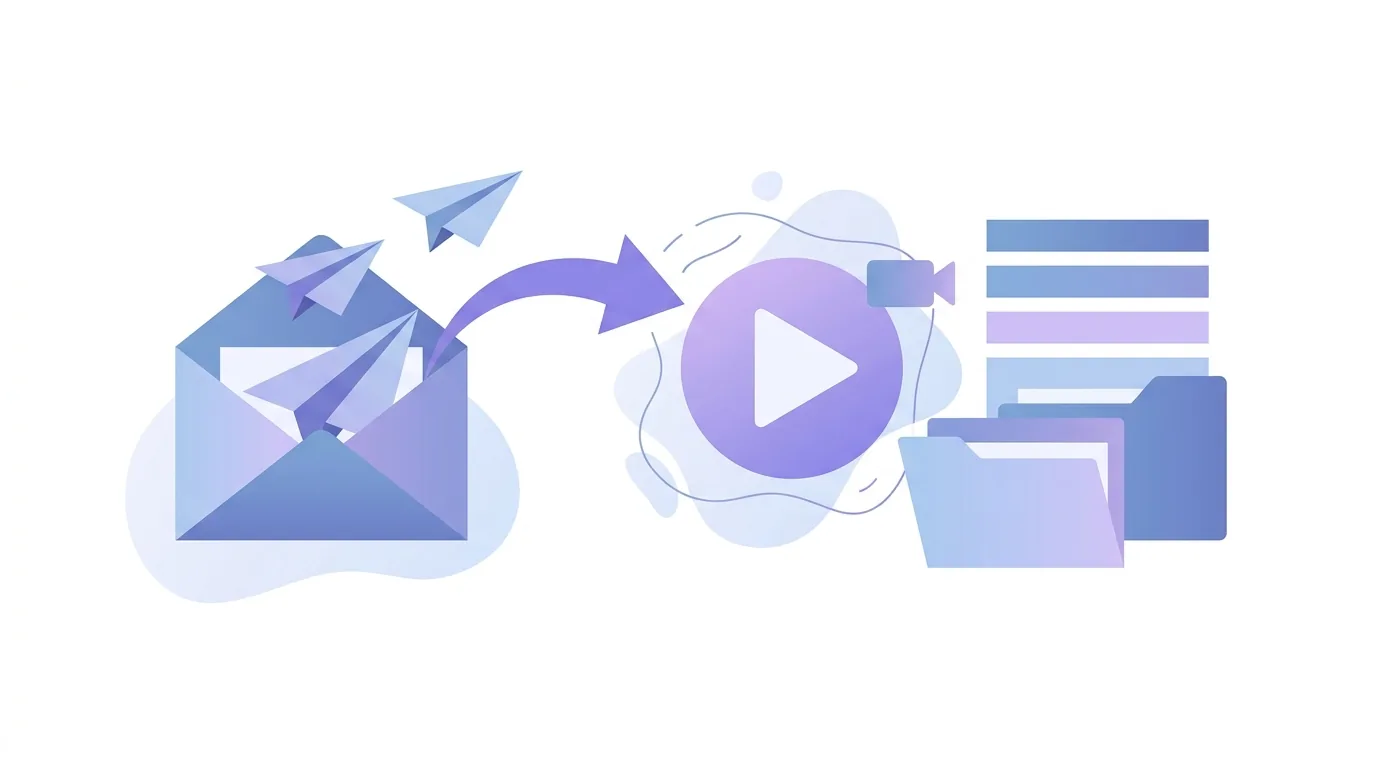
Here's how EmailFlow OS works. You record one video and upload it to EmailFlow OS. You connect your Brevo account and sending domain, and you import your prospect list into EmailFlow OS. EmailFlow OS then creates a personalised version of that single recording for each recipient, not just each company, and sends every version from your own inbox, through your own Brevo account and on your own domain. Since each person gets their own version, the subject line can address that person too:
- {First name}, a short video on {company}'s {topic}
- Video: how {company} could handle {problem}
- {First name} — 60 seconds on {specific workflow}
- Walkthrough for {team} at {company}
- {Company} + {your company}: quick video
Stay accurate about how the video was made. You recorded it once, and EmailFlow OS personalised it per recipient. So "I recorded this just for you" is a claim you shouldn't make, while "a short video on {company}'s {topic}" is true. Only use the "60 seconds" line if your recording really is about that long. Put the word "video" in the subject only if the body visibly delivers one.
What does a complete cold email example look like?
People searching for an email example usually want the whole message, not just the subject line. Here's a complete first-touch cold email. The subject and the opening sentence point to the same fact.
Subject: Question about Northwind's onboarding after the Series B. Hi Dana, congratulations on the Series B announced last week. Teams that double headcount after a round often find onboarding emails written for 20 customers stop fitting 200. I put together a short video on how we'd approach that for a customer success team your size. Is this something you're looking at this quarter, or should I check back later? Best, Tom. If you'd rather not hear from me again, just reply 'no' and I won't follow up.
Look at how it's built. The subject names a company-specific event, and the first sentence confirms it straight away. The second sentence describes a problem that's plausible for that event. The ask is a yes-or-no question about timing, not a 30-minute meeting. The last line gives an opt-out in plain words. Before you send to EU recipients, check the consent rules: Germany's UWG §7 requires prior consent for advertising emails, including B2B. GDPR Article 14 requires you to tell people where you got their data within one month. A good subject line doesn't change any of that.
How do you write a sales follow up email?
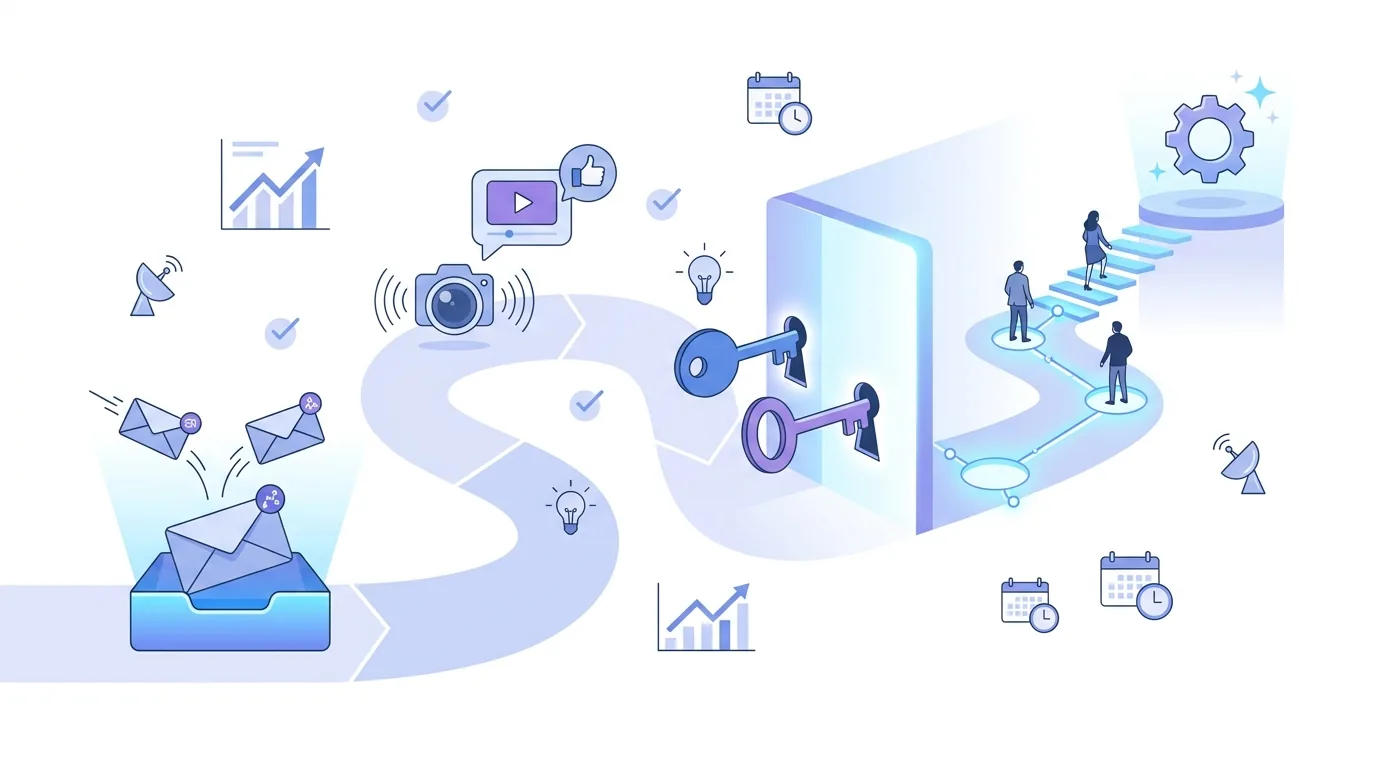
A sales follow up email continues a conversation you already started, and that has a technical meaning. When you reply in the same thread, your mail client sets the In-Reply-To and References headers defined in RFC 5322 section 3.6.4, and receiving clients use them to group the messages together. A real reply in that thread can keep the original subject with "Re:" in front, which is the convention RFC 5322 describes in section 3.6.5. A new message with a fake "Re:" doesn't have those headers. It won't thread, and it suggests a conversation that never happened, which is the kind of misleading subject CAN-SPAM prohibits. Give each follow-up something new: a different angle, a relevant resource or a narrower question. "Just bumping this" is the weakest option because it adds nothing. Stop when you get a clear no or an opt-out, and honour it straight away. If you're sending through your own Brevo account, add the address to your suppression list so a later campaign doesn't email it again. Our follow up email subject line examples cover how to word the subject for each situation.
What does a sales follow up email sample look like?
Here's a sales follow up email sample sent as a threaded reply to the first-touch email above. It keeps the original subject because it really is a reply in the same thread.
Subject: Re: Question about Northwind's onboarding after the Series B. Hi Dana, one more thought and then I'll leave it with you. The part teams usually underestimate is the handover from sales to customer success in week one. I've added a two-minute section on that to the video. If onboarding isn't on the list this quarter, a one-word 'later' is perfectly fine and I'll check back in Q2. Best, Tom.
Why it's built this way: it adds one new idea, the sales-to-CS handover, instead of repeating the pitch. It gives an easy way to say no that still tells you about timing. And it says when you'll get in touch again, so the next message isn't a surprise. Don't send it as a separate email with a new subject. It would show up as a stranger's message instead of part of the earlier exchange. If the first email got no reply at all, start the follow-up with the new information, not with an apology for following up. For post-call follow-ups and breakup emails, see our sales follow up email templates.
Which cold email subject lines backfire, and why?
- A fake "Re:" or "Fwd:" on a first contact. There are no In-Reply-To or References headers, so it doesn't thread, and recipients who notice tend to treat it as a trick.
- A subject the body doesn't match. Readers who feel baited may click 'report spam', and Google's sender guidelines ask senders to keep spam rates reported in Postmaster Tools below 0.3%.
- A broken placeholder like 'Hi {first_name}' or the wrong company name. This comes from unmapped or empty fields in the prospect list.
- All caps, '$$$' or several exclamation marks. Content filters use these as signals, and they look like bulk promotions.
- A subject identical across thousands of messages from a new domain. Repetition at volume is easy for receivers to fingerprint.
- A good subject on a domain that fails SPF, DKIM or DMARC. Authentication is checked before anyone reads the subject.
The last point is the one people underestimate most. No wording gets a message past a receiving server that rejects it for failing authentication. Gmail returns 5.7.26 for unauthenticated mail, and from 5,000 messages a day to Gmail addresses, Google expects SPF, DKIM and a DMARC record. Because EmailFlow OS sends through your own Brevo account and your own domain, those records are yours to set up and look after. Our guide to DKIM, DMARC and SPF for cold email senders covers the setup order.

Questions people ask
- How long should a cold email subject line be?
- RFC 5322 recommends no more than 78 characters per header line and sets a hard limit of 998. Inbox list views show much less than that, especially on mobile. So the length matters less than where the key words sit: the company name, trigger or topic should come within the first few words, because that part stays visible when the rest is cut off.
- Should a cold email subject line include the recipient's name?
- Only if the rest of the message is clearly about that person too. A first name in the subject followed by a generic body draws attention to the mismatch. With EmailFlow OS, each recipient gets their own personalised version of your one recording, so naming the person in the subject matches what the email actually contains.
- Is it legal to use "Re:" in a cold email subject line?
- "Re:" means the message is a reply, which RFC 5322 section 3.6.5 describes as a convention. On a first contact that's not true, and CAN-SPAM (15 U.S.C. 7704(a)(2)) prohibits subject lines likely to mislead recipients about the message's content. Keep "Re:" for real replies in an existing thread.
- Can emoji or umlauts be used in a cold email subject line?
- Yes, technically. Non-ASCII characters in headers are sent as encoded-words under RFC 2047, and current mail clients display them correctly. The risk is about tone, not encoding: in B2B cold outreach, emoji make a message look like a newsletter. Umlauts in a German company or person name are fine and should be spelled correctly.