11 min read Diesen Artikel auf Deutsch lesen Lire cet article en français Ler este artigo em português
Types of Salespeople: 4 Models, Examples
The short answer
Salespeople are usually sorted four ways: by role in the sale (order takers, order getters, missionary and technical sellers), by approach (transactional, value or consultative), by personality style (assertive, amiable, expressive or analytical) and by effort against results. The type tells you what a rep actually does all day. An order getter who prospects by cold email, for example, needs their own sending domain with SPF, DKIM and DMARC set up and under their control.
In this article
- What are the main types of salespeople?
- Types of salespeople by role in the sale
- Transactional, value and consultative sellers
- Sales personality types: assertive, amiable, expressive, analytical
- The effort-and-results matrix
- Which type of salesperson runs cold email outreach?
- Email domain types: which one should a salesperson send from?
- What are the types of email domains by extension?
- How EmailFlow OS supports the order getter
- Questions people ask
What are the main types of salespeople?
The main types of salespeople, sorted by the job they do, are order takers, order getters, missionary sellers, technical sellers and account managers. Three other models sort the same people differently: by selling approach (transactional, value or consultative), by personality style (assertive, amiable, expressive or analytical) and by effort against results. Pick the model that fits your question. Role is the one to use for hiring, personality for coaching, and effort against results for performance reviews.
No single official list of salespeople types exists. Search for the term and you'll find at least four separate models, each answering a different question. One sorts reps by the job they do in the transaction. Another sorts them by what they lead with when they sell. A third sorts them by how they communicate, and a fourth by how hard they work against what they deliver. Mixing the models is where confusion starts. An analytical rep can be an order getter and a consultative seller at the same time. The four models below describe different things, so they don't contradict each other.
| Model | What it sorts by | Typical types | Useful for |
|---|---|---|---|
| Role in the sale | The job in the transaction | Order taker, order getter, missionary, technical seller | Hiring, territory design, comp plans |
| Selling approach | What the rep leads with | Transactional (price), value (product), consultative (customer) | Positioning and message design |
| Personality style | How the rep communicates | Assertive, amiable, expressive, analytical | Coaching and matching reps to buyers |
| Effort vs. results | Activity against outcome | High/high, high/low, low/high, low/low | Performance reviews and coaching plans |
If you want the job titles behind these types (SDR, BDR, AE, account manager), our guide to the types of sales jobs covers what each role owns and where one hands off to the next.

Types of salespeople by role in the sale
- Order taker: handles demand that already exists. Think of a counter clerk at a wholesaler or an inside rep processing reorders. The buyer has already decided, and the job is to be accurate, quick and available.
- Order getter: creates demand that doesn't exist yet. This rep prospects, opens conversations with strangers, qualifies them and closes. New-business reps, hunters and most outbound sellers fall here.
- Missionary seller: builds preference without taking the order. A pharmaceutical rep visiting doctors is the classic case, since the prescription is written later and the sale goes through a pharmacy or distributor.
- Technical seller (sales engineer): brings product and engineering knowledge into the deal, runs demos, answers integration questions and scopes solutions alongside the account executive.
- Account manager (farmer): looks after existing customers, handles renewals, expansions and cross-sells, and keeps the relationship going after the first contract.
- Inside vs. field seller: this is about channel, not role. Inside reps sell by phone, email and video call. Field reps meet buyers on site. Either one can be an order taker or an order getter.
Which one do you need? It depends on where demand comes from. If buyers already come to you, more order getters just add cost. Hire order takers and account managers, and spend on availability. If nobody knows you yet, order takers will wait for orders that never arrive. A common failure is promoting a strong account manager into a new-business territory. The skills overlap less than the title suggests, because farming rewards patience inside one relationship and hunting rewards volume and tolerance for rejection.
Here's how the roles look inside one small B2B company that sells inventory software to wholesalers. The inside rep who processes license add-ons is an order taker and writes from the main company domain. The founder who emails wholesalers that have never heard of the product is an order getter. The solutions engineer who joins the second call to answer ERP integration questions is a technical seller. The person who handles renewals and suggests the reporting module is an account manager. That's four types in one team, and only one of them does cold outreach.
Transactional, value and consultative sellers
- Transactional (price-focused) seller: competes on price, terms and speed. It works for commodity products where buyers compare like for like, and the conversation is short.
- Value (product-focused) seller: leads with what the product does better: features, quality, total cost of ownership. It works when the product really is different and the buyer can check that.
- Consultative (customer-focused) seller: starts with the buyer's situation and problem and only proposes something once the problem is clear. It works for complex purchases with several approvers and a long cycle.
The approach should follow the purchase, not the rep's preference. A consultative style on a commodity reorder wastes the buyer's time. Price-led selling on a six-month enterprise deal invites a procurement squeeze. Named frameworks such as SPIN, Challenger and MEDDIC formalise the consultative end, and we compare them side by side in our overview of sales methodologies.
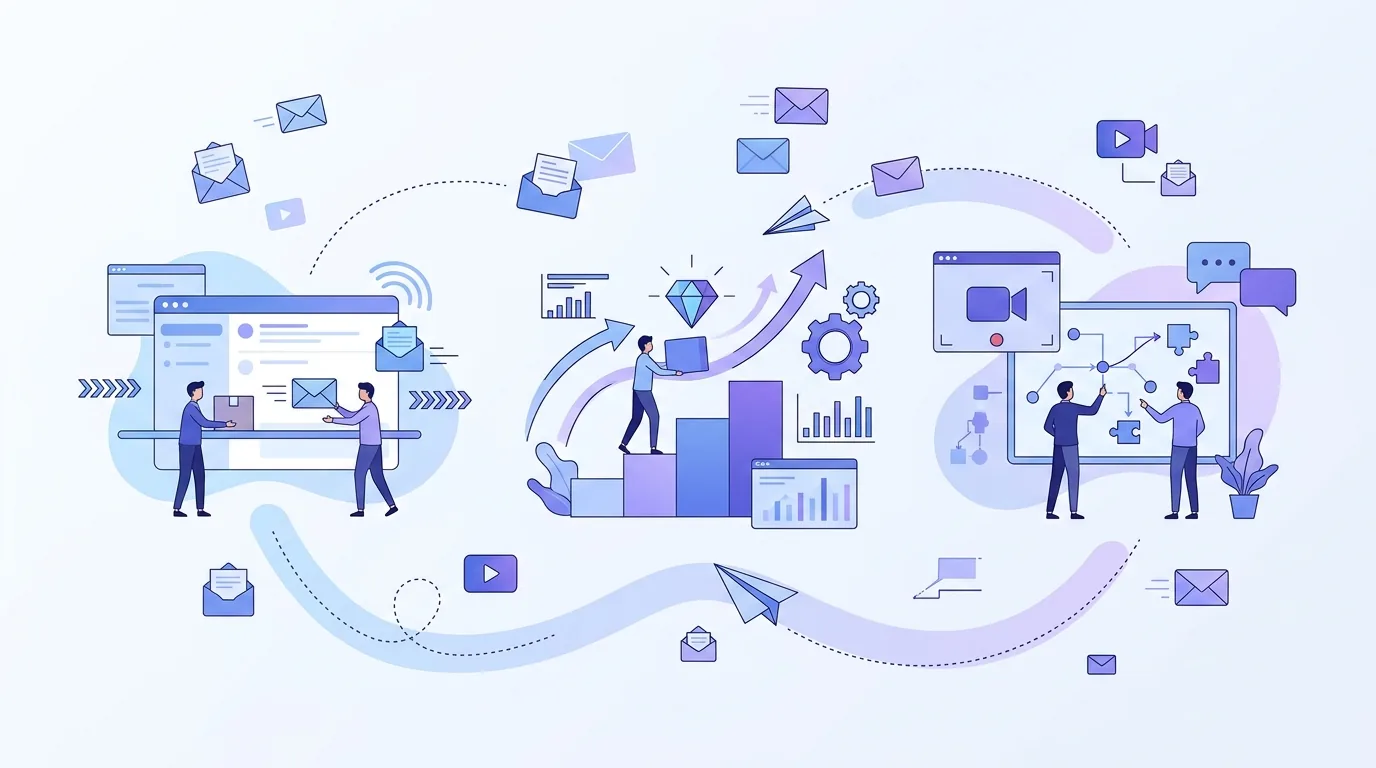
Sales personality types: assertive, amiable, expressive, analytical
- Assertive (driver): direct, quick to decide, focused on results. Strong at pushing deals to a decision, but can come across as impatient with buyers who need detail.
- Amiable: warm, patient, focused on relationships. Strong at long account relationships, but may avoid the closing question or pushing back on discounts.
- Expressive: energetic, story-driven, good in front of a room. Strong in demos and at events, but can be loose on follow-up and CRM hygiene.
- Analytical: precise, prepared, focused on evidence. Strong with technical and finance buyers, but can over-explain and slow a deal that's already ready to close.
These four styles come from the social styles model that David Merrill and Roger Reid set out in their book Personal Styles and Effective Performance. DiSC (dominance, influence, steadiness, conscientiousness) uses a similar four-way split and goes back to William Moulton Marston's book Emotions of Normal People. Both describe behaviour, not ability, so neither predicts who will hit quota. In practice they're most useful when you apply them to the buyer and adjust. Send an analytical buyer the data and an assertive buyer the decision. The trap is treating a style as a fixed label and stopping there.
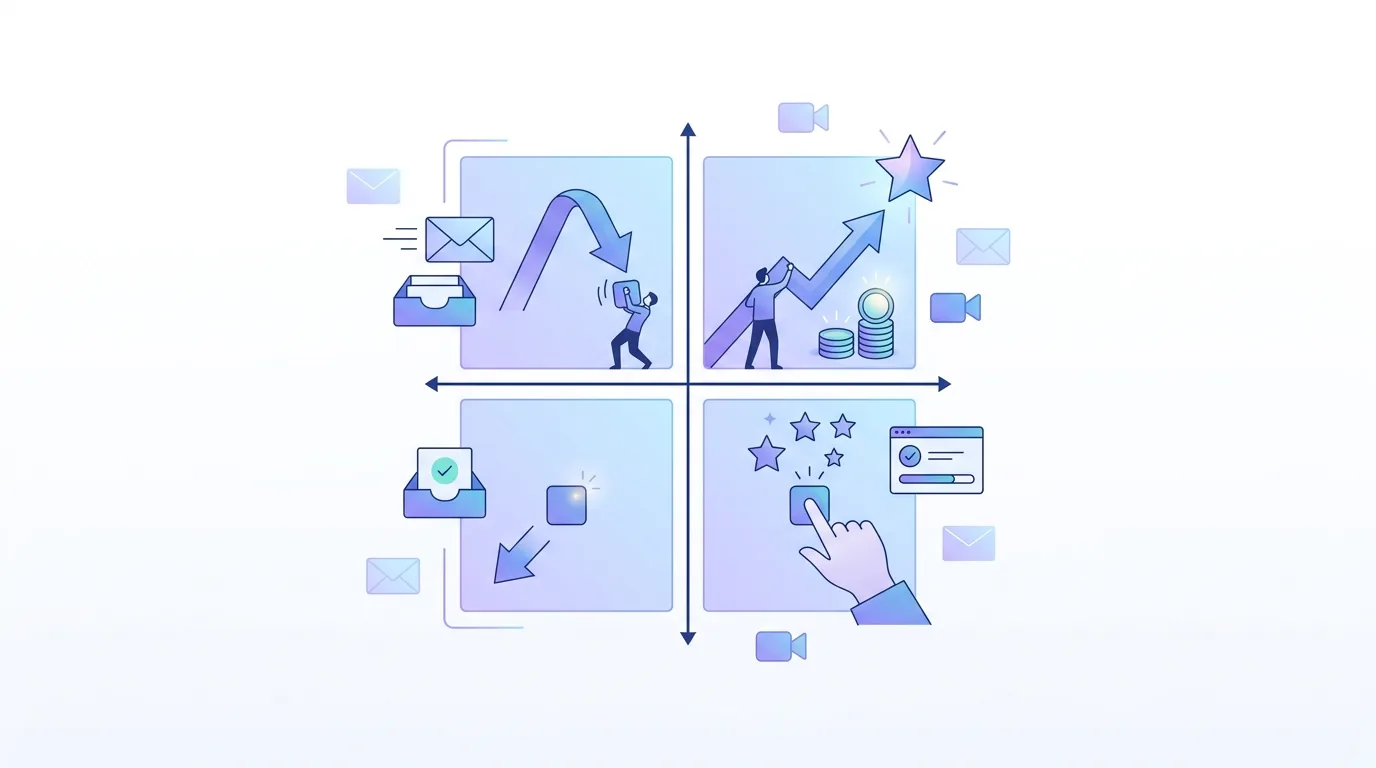
The effort-and-results matrix
- High effort, high results: consistent performers. Give them autonomy and harder territories, not more supervision.
- High effort, low results: the activity is there but something in the method is off. It might be targeting, messaging, qualification or skill. Coach the method, not the work rate.
- Low effort, high results: often talented or sitting in a good territory. Check whether the results come from the person or from inherited accounts before you draw conclusions.
- Low effort, low results: start with a clear conversation about expectations. Then look for causes like onboarding gaps or a role mismatch before deciding.
What doesn't work is coaching all four quadrants the same way. A weekly pipeline review helps the high-effort, low-result rep and annoys the top performer. The matrix also only shows symptoms. Two reps in the same quadrant can be there for completely different reasons, so pull up their activity and pipeline data before you choose a coaching plan.
Which type of salesperson runs cold email outreach?
Cold outreach is order-getter work. It's done by SDRs, BDRs, founders who sell, and account executives who build their own pipeline. Their day runs on infrastructure that order takers never touch: a prospect list, a sending domain, and DNS records the receiving server checks. Gmail, Microsoft and other mailbox providers look up the sender domain's SPF, DKIM and DMARC records, and Google's published email sender guidelines name these records as requirements for senders to Gmail accounts. If those are missing or misaligned, the message can be rejected or filtered, however good the copy is. We walk through each record in our guide to DKIM, DMARC and SPF for cold email senders.
Personality matters here as well. Expressive reps often prefer video and calls. Analytical reps tend to write long, precise emails. Neither one changes the technical requirements. Sender reputation builds up on the domain, not on the person, so a rep who sends carelessly damages the domain for everyone who sends from it.
Email domain types: which one should a salesperson send from?
Different kinds of email domains carry different risks for a seller, depending on what's attached to them. Our detailed guide on email domain types covers the DNS records behind each kind.
| Domain type | Example | What's at stake | Fits which seller |
|---|---|---|---|
| Primary business domain | you@company.com | Your company's main mail, invoices and support share the same reputation | Account managers and order takers writing to existing customers |
| Secondary outreach domain | you@getcompany.com | A separate reputation. It needs its own SPF, DKIM, DMARC and warm-up | Order getters sending cold outreach at volume |
| Subdomain | you@mail.company.com | Partly separate. DMARC policy is inherited from the parent unless set with sp= or on the subdomain | Teams that want brand continuity with some separation |
| Free mailbox domain | you@gmail.com | You don't control the domain's DNS, and buyers see it as unprofessional | Not suitable for B2B outreach |
What are the types of email domains by extension?
The extension, or top-level domain, falls into one of the categories IANA maintains in its root zone database. Generic TLDs include .com, .net, .org and newer ones such as .io or .ai. Country-code TLDs are two letters, such as .de, .fr or .uk, and some come with their own registration rules. Sponsored TLDs such as .edu, .gov or .museum are limited to eligible organisations. A seller can't register a sponsored domain for outreach. Pick either a generic or a country-code domain whose name buyers will recognise as connected to your company.
How EmailFlow OS supports the order getter
EmailFlow OS is built for the outreach-heavy seller, the order getter who wants to send video without giving up control of the domain. You record one video and upload it to EmailFlow OS. Then you connect your own Brevo account and sending domain and import your prospect list into EmailFlow OS. From there, EmailFlow OS personalises that one recording for each recipient, not just each company. Two people at the same account get two different versions. Each version is sent from your own inbox, through your own Brevo account and your own domain, never from a shared platform sender. Your SPF, DKIM and DMARC records and your domain's reputation stay in your hands. How the receiving server treats the message still depends on that setup and on how you send. You can read more on the EmailFlow OS personalised video email page, or in our article on a personalized video message per recipient.
Questions people ask
- What are the types of salespeople?
- By role, there are five: order takers (process existing demand), order getters (create new demand), missionary sellers (build preference without taking the order), technical sellers (bring engineering knowledge into deals) and account managers (grow existing customers). Other models sort salespeople by approach (transactional, value, consultative), by personality (assertive, amiable, expressive, analytical) or by effort against results.
- What is the difference between an order taker and an order getter?
- An order taker serves a buyer who has already decided, such as an inside rep processing a reorder, so speed and accuracy matter most. An order getter starts with a buyer who hasn't decided, or doesn't know the product, and has to prospect, qualify and close. Only the order getter needs a prospect list and a cold outreach sending domain.
- What are the four types of customers in sales?
- The most common split uses the same social styles as for salespeople. Assertive (driver) buyers want the bottom line and a decision. Amiable buyers want trust and reassurance. Expressive buyers respond to stories and vision. Analytical buyers want data and proof. Another split you'll see sorts customers by intent: loyal, discount-driven, impulse and need-based.
- What is the 7 sales process?
- The classic seven-step selling process goes: prospecting, pre-approach (research), approach (first contact), presentation, handling objections, closing, and follow-up. Order getters work through all seven steps. Order takers mostly handle the presentation, closing and follow-up, because the buyer has already done the earlier steps.
- Who is the most famous salesperson?
- The names that come up most are Joe Girard, the Detroit car salesman who wrote How to Sell Anything to Anybody; Zig Ziglar, a sales trainer and author; and David Ogilvy, who sold Aga cookers and wrote a sales manual for them before he founded his advertising agency. All three are known through their books, not through verified sales data.
- What are the functions of salesmanship?
- Salesmanship covers finding prospects, understanding their needs, explaining how a product meets those needs, handling objections, getting a decision and following up after the sale. It's broader than closing. Missionary and technical sellers rarely take the order themselves, but they still do the informing and persuading parts of the job.
