11 min read Diesen Artikel auf Deutsch lesen Lire cet article en français Ler este artigo em português
B2B Database Provider: How to Choose One
The short answer
A B2B database provider sells contact and company records: names, titles, business emails, firmographics and sometimes intent or technology data. Don't pick one from a ranking. Test it. Pull a sample of your own target accounts, run every email through verification, check the titles by hand and ask the vendor where each record came from. If you send that data from your own domain, every bounce counts against your domain's reputation.
In this article
- What does a B2B database provider actually sell?
- Which B2B database providers come up most often?
- How do you compare B2B database providers on the same terms?
- How to test a B2B database provider before you buy
- What does a bad database do to your sending domain?
- What do EU rules require when you buy B2B contact data?
- Where does a B2B database fit in lead generation and sales?
- What counts as B2B leads?
- What is B2B lead generation?
- How does B2B email lead generation use the database?
- Where does the database sit in the B2B sales process?
- How do B2B value proposition examples relate to list data?
- How EmailFlow OS uses the list you bring
- Questions people ask
What does a B2B database provider actually sell?
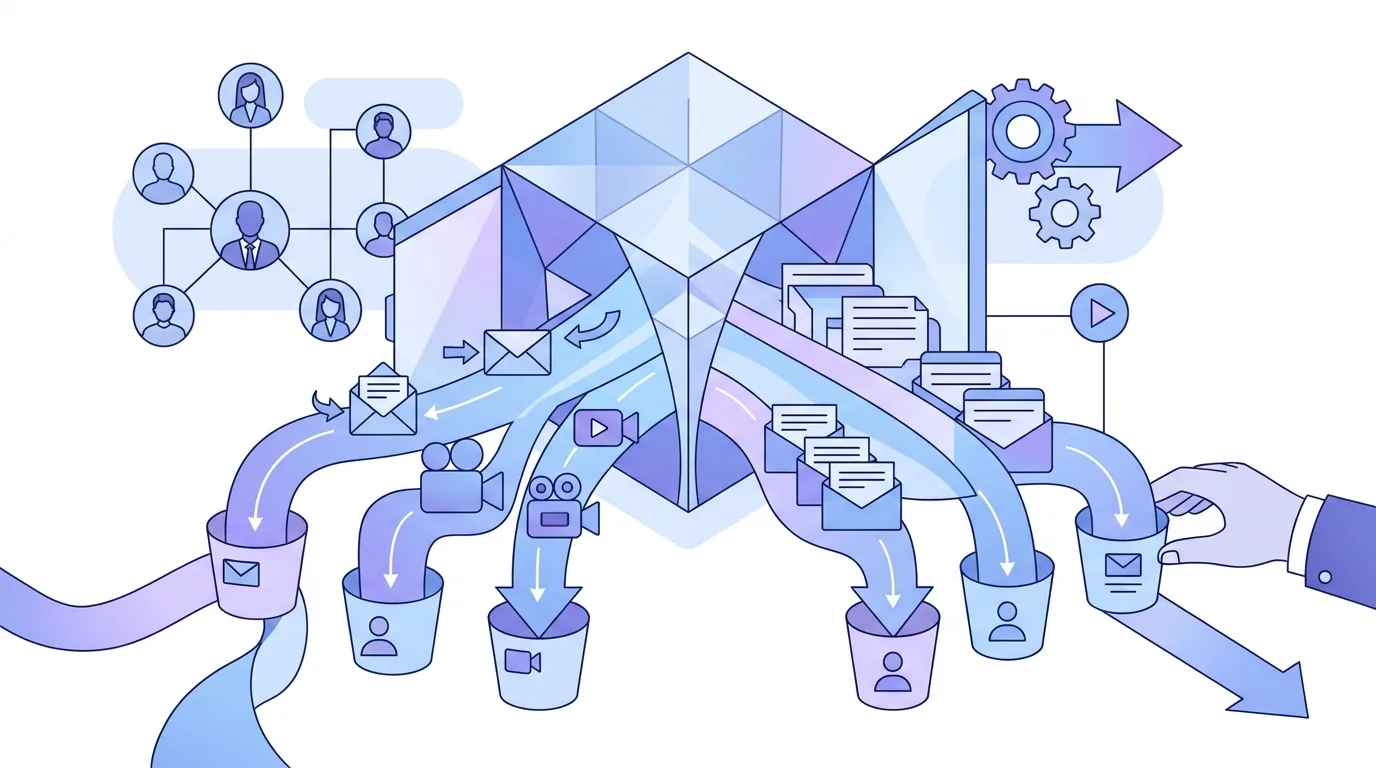
A B2B database provider collects business contact and company records, checks them and sells access, usually through a web app, an export or an API. Google's AI overview for this search names four kinds of data: contact details, company firmographics, intent signals and technology tracking. In practice you get a person record (name, job title, business email, sometimes a direct phone number) linked to a company record (industry, headcount, location, the tech it uses). Some providers add intent data, which tries to show which companies are researching a topic right now.
What you buy is a snapshot. People change jobs, companies move to new domains and mailboxes get shut down. A contact that was correct when it was collected goes stale even if nobody touches it. One of today's top-ranking comparison pages calls databases that keep re-checking their records "dynamic". It says Apollo, ZoomInfo and Seamless re-verify contacts every 30 to 90 days. Even if that's true, a record can go stale between two checks. Verify every export again just before you send, whatever the vendor says about freshness.
Which B2B database providers come up most often?
These are the providers that today's top-ranking pages for this search name most often, with what those pages say about each. The pages are vendor-written or affiliate lists, and none of them measured accuracy for your segment. Use this as a shortlist to test, not as a ranking.
- ZoomInfo: named in four of the nine top results. Google's AI overview says it suits mid-market and enterprise go-to-market teams. One comparison page puts it among the providers that re-verify contacts every 30 to 90 days.
- Apollo.io: named in five of the nine top results, more than any other vendor. The same comparison page puts it in the 30-to-90-day re-verification group.
- Cognism: named in four of the nine top results. It's first on a list of sixteen providers dated April 20, 2026.
- Seamless.AI: third on that April 2026 list, and in the 30-to-90-day re-verification group on the page that ranks by accuracy.
- GrowMeOrganic: a ranking page dated March 9, 2026 describes it as a database of 575M+ professionals and 15M+ companies with unlimited credits. Those figures come from that page, not from an independent count.
- Veridion and Coresignal: both are on a list of six providers dated July 23, 2025, alongside ZoomInfo, Apollo.io, Kaspr and Cognism. They're positioned around company-level data rather than individual contacts, so check whether they include person-level emails before you assume they do.
- Lusha, UpLead, Kaspr, RocketReach, Lead411, Datanyze, LeadIQ, Adapt and Demandbase: each is on at least one of the current top lists. Check plans, coverage and export options in each vendor's own documentation, because the ranking pages don't agree on them.
So which kind should you use? A large platform suits a team that wants contacts, company data and intent signals under one contract and has the people to run it. A lighter lookup tool suits a small team that only needs verified emails for a short list of named accounts. A company-data provider suits you if you build your own account list and get contacts elsewhere. What decides it is coverage of your region, industry and job titles. No published list measures that, so the sample test below is how you find out.
How do you compare B2B database providers on the same terms?
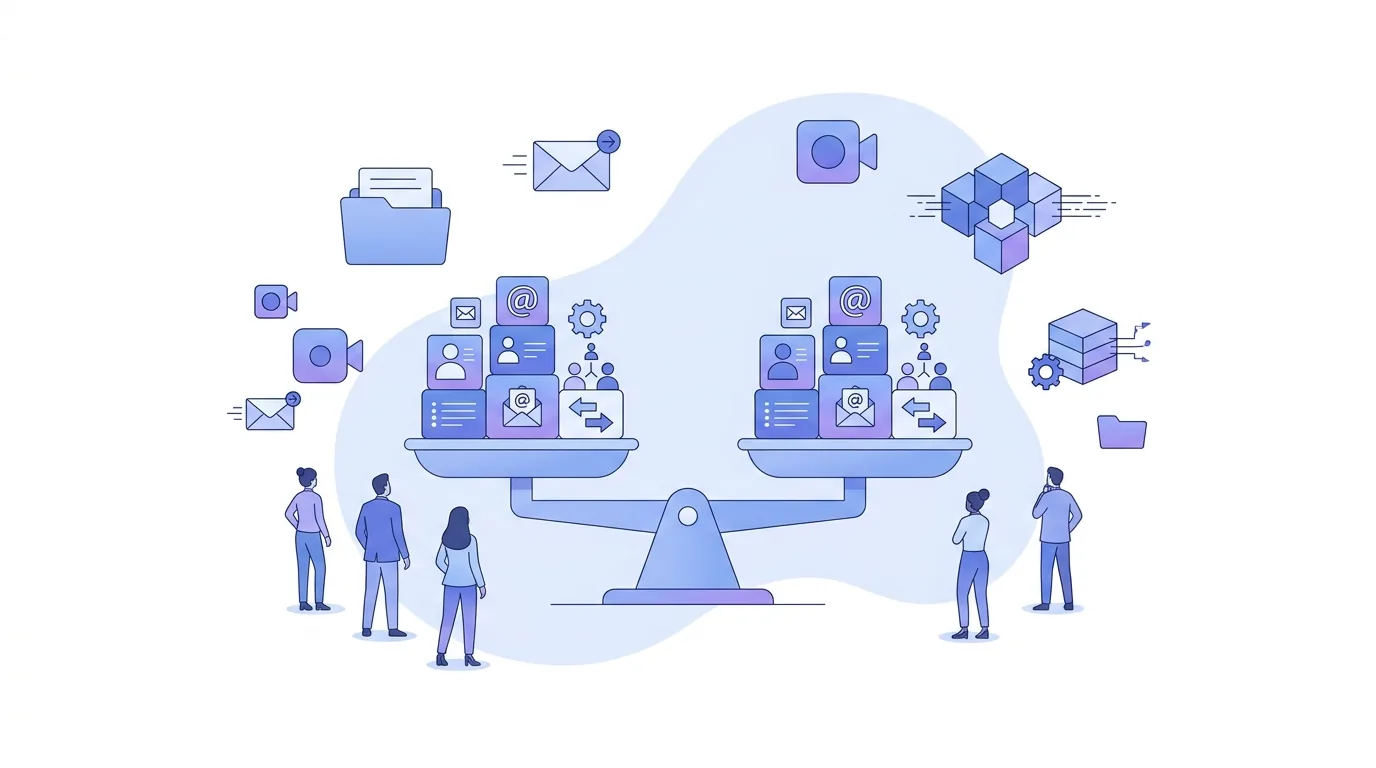
Apply the same criteria to every vendor on your shortlist and score each one from your own test data, not from the sales demo. These six criteria decide whether the data is usable for email outreach.
| Criterion | What to ask the vendor | How to check it yourself | What goes wrong if you skip it |
|---|---|---|---|
| Coverage of your segment | How many contacts do you have for my exact titles, countries and company sizes? | Search a set of accounts you already know and count the hits | The database looks big but has few of the people you actually sell to |
| Email accuracy | How and how often do you verify emails? | Run the sample through your own verification tool | Hard bounces land on your own sending domain |
| Freshness | When was each record last checked? | Compare the titles with each person's current public profile | You email people who've left the company |
| Catch-all handling | How do you flag addresses on accept-all domains? | Count the share marked catch-all or unknown | Addresses that look valid bounce later or never reach a person |
| Data source and legal basis | Where does each record come from, and what legal basis do you rely on? | Ask for the source description and privacy notice in writing | You can't tell a data subject where you got their address when they ask |
| Export and usage terms | Can I export to CSV? How are credits counted? Can I reuse exports? | Read the contract terms, not the pricing page | The data can't leave the vendor's app, practically or legally |
How to test a B2B database provider before you buy
- Write down your ideal customer profile: industries, countries, company size and the exact job titles you email.
- Pick a set of real target accounts you already know well, including some where you know who holds which role.
- During the trial, pull the contacts for those accounts from every provider on your shortlist.
- Run every email through verification: a syntax check, an MX lookup and an SMTP probe, with the results sorted into valid, catch-all and unknown.
- Check the job titles by hand against the people you already know at those accounts.
- Ask each vendor for its data source description and the legal basis it relies on, in writing.
- Compare the providers in the same columns: hits, valid share, catch-all share, wrong titles and how clear their answers on sources were.
Verification has limits that affect this test. Greylisting servers and catch-all domains can make the results unreliable, which is why email verification works on probabilities, not certainties. A provider that marks catch-all addresses as valid will look better inside its own app than it does in your test.
What does a bad database do to your sending domain?
When you send from your own domain through your own Brevo account, there's no shared sender to absorb a bad list. Mailbox providers record every hard bounce against your domain and your sending setup. Correct SPF, DKIM and DMARC records show that the mail really comes from you, but they can't make up for addresses that don't exist. The receiving server decides whether a message reaches the inbox, and a high bounce share is one of the signals it weighs.
Here's how it usually goes wrong. A team buys a large export, imports it straight into a sequence and gets a wave of "user unknown" hard bounces in the first few days. The fix has to happen before you send: verify the list, drop the unknowns and put catch-all addresses in a small batch of their own. Our guide to email list hygiene for cold outreach covers removal rules, and our page on email bounce codes explains what each server response means.
What do EU rules require when you buy B2B contact data?
Under the GDPR, a business email that contains a person's name is personal data. If you didn't collect the data from that person yourself, the GDPR requires you to tell them, and that includes telling them where the data came from. If you use the data to contact them, you have to give that information no later than the first contact. Many B2B senders rely on legitimate interest as their legal basis, which needs a documented balancing test. The GDPR also gives recipients a right to object to direct marketing. Once someone objects, you have to stop using their data for it.
Unsolicited electronic mail is covered separately by the EU ePrivacy Directive. Each member state puts it into its own national law, so the rules differ by country. Germany does this in its Unfair Competition Act (UWG), which is stricter on cold email than many others. Buying from a provider doesn't hand these obligations to the provider. You stay responsible for the data you import and email. Ask the vendor for its source description before you sign, and get legal advice for your own setup.
Where does a B2B database fit in lead generation and sales?
What counts as B2B leads?
B2B leads are people at a target company who might buy, recorded with enough data to contact them. A database record only becomes a lead once it matches your customer profile. A verified email for someone outside that profile is just a contact. Emailing them adds bounce and complaint risk with no fit to show for it.
What is B2B lead generation?
B2B lead generation means finding and qualifying potential business buyers. It can be inbound, where they come to you through content or forms, or outbound, where you contact them first. A database provider serves the outbound side by supplying names and addresses. It doesn't create interest; the message and the follow-up do that. Our lead generation examples for inbound and outbound show both written out in full.
How does B2B email lead generation use the database?
In B2B email lead generation, you export verified contacts, import them into a sending tool and email them in small daily batches from a warmed-up, authenticated domain. The database decides who gets the email. Your SPF, DKIM and DMARC records and your domain's reputation influence how receiving servers treat it.
Where does the database sit in the B2B sales process?
The database sits at the very start of the B2B sales process, in prospecting, before first contact, qualification, discovery, proposal and close. Wrong titles surface later as stalled deals, because you reached someone who can't buy. We cover the full B2B sales process with follow-ups in a separate guide.
How do B2B value proposition examples relate to list data?
A B2B value proposition says who you help, with what, and why they should pick you over an alternative. The database fields you buy, such as industry, headcount and technology, decide which version of that statement each recipient sees. If you don't have a clear value proposition for a segment, leave that segment out of the export. Our value proposition examples for B2B outreach show weak and strong versions side by side.
How EmailFlow OS uses the list you bring
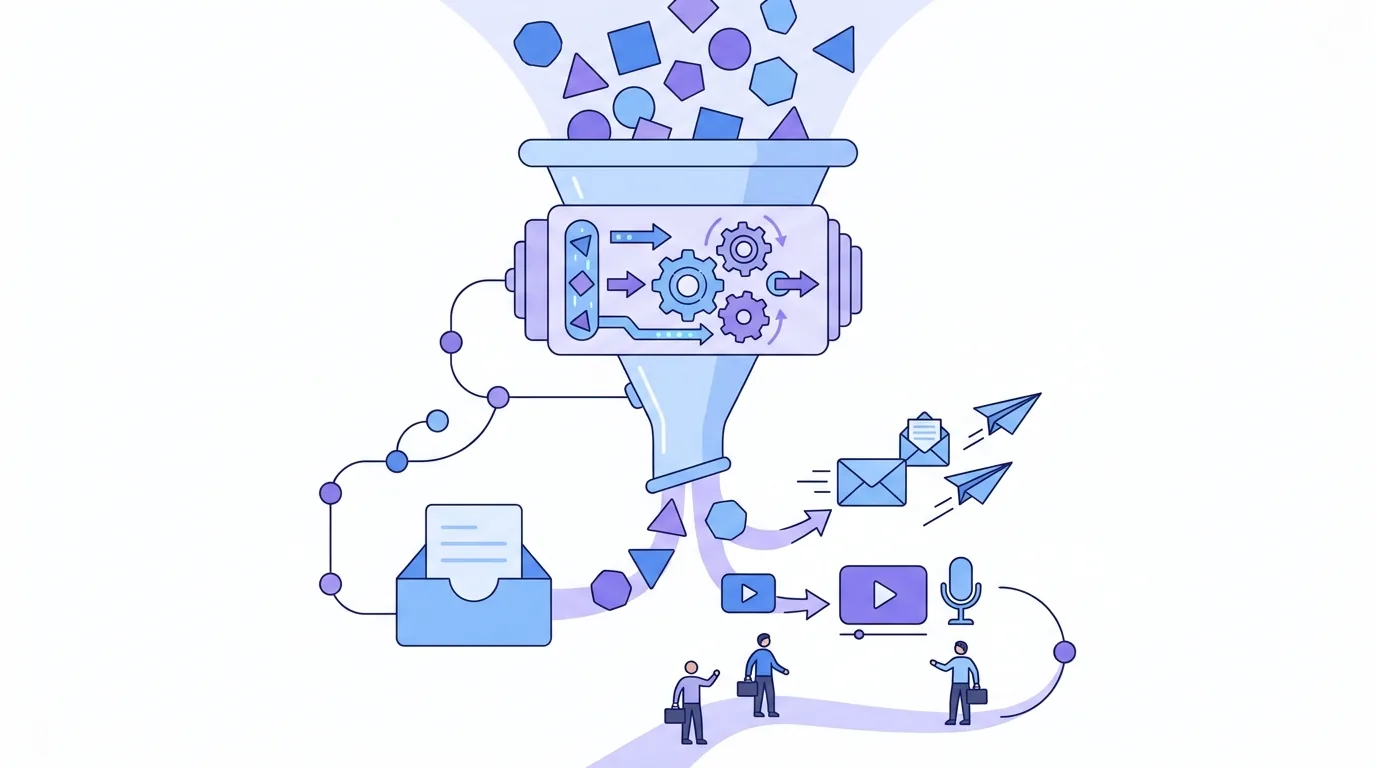
EmailFlow OS isn't a data provider. It picks up where the database leaves off. You import your verified prospect list into EmailFlow OS, record one video and upload it, then connect your own Brevo account and your own sending domain. EmailFlow OS personalises that single recording for each recipient on the list, not once per company. It sends each version from your own inbox, through your Brevo account and your domain, never through a shared platform sender. That's why database quality matters so much here: every address on the list gets its own email from your domain. The EmailFlow OS home page shows how personalised video email works.
Questions people ask
- What is the difference between a B2B data provider and a B2B contact database?
- A B2B contact database is the product: searchable person and company records. A B2B data provider is the company that compiles, verifies and sells it, sometimes along with intent or technology data and API access. One vendor can sell several products, for example a web app for reps and a raw data feed for analysts.
- How often should B2B contact data be re-verified?
- Re-verify just before every send, whatever the vendor's own schedule is. One current comparison page says some providers re-check contacts every 30 to 90 days. People can still change jobs between those checks, and when an address bounces, the bounce counts against your domain, not the vendor's.
- Is a bigger B2B database always better?
- No. The total record count tells you nothing about coverage of your exact titles and regions. A smaller provider that returns more valid contacts for your sample accounts is worth more than a larger one full of catch-all or outdated records. Compare hit counts and valid share on the same test accounts.
- Do I need consent to email contacts from a purchased B2B list in the EU?
- It depends on the member state. The EU ePrivacy Directive leaves the rules on unsolicited email to national law, and Germany's Unfair Competition Act is stricter than many others. Separately, the GDPR requires you to tell recipients where you got their data, at the latest when you first contact them. Get legal advice for your setup.
