11 min read Alle Artikel auf Deutsch Tous les articles en français Todos os artigos em português
Business Development Definition: Examples
The short answer
Business development is the work of creating long-term value for a company from customers, markets and relationships. In practice you pick where to grow, research partners, segments and target accounts, contact named people, qualify need, authority and timing, agree terms, then hand over to sales or account management. Sales closes a specific deal. Marketing creates demand at scale. Business development decides where the company should grow and makes the first contact.
In this article
- What does business development mean?
- Business development vs sales vs marketing
- What does business development consist of?
- What are the 7 stages of business development?
- What are the top 5 skills for business development?
- When does business development not work?
- Is a BDE an IT role?
- Which tools does business development use?
- How EmailFlow OS handles the outreach step
- Email terms you'll meet in business development
- EOD definition
- Business email follow up
- Business email closers
- Questions people ask
Business development definition: business development is the creation of long-term value for an organisation from customers, markets and relationships. That wording comes from Scott Pollack in Forbes (2012, checked November 2026). In practice, a business development team decides where the company should grow, makes first contact with the partners or accounts that lead there, and hands qualified relationships to sales, which closes the individual deals.
What does business development mean?
Pollack's three sources of value (customers, markets and relationships) tell you what the job covers. Customers means new accounts and bigger accounts. Markets means new regions, industries or segments. Relationships means partners, resellers, suppliers and integrations, so the job isn't only about buyers. Older pages that rank for this term define it more narrowly as 'helping a business develop its relationships', which boils down to networking every day. That reading is too small. A partnership that never produces revenue or market access isn't business development. It's just a contact list.
Here's a concrete example. A payroll software company wants to sell to small accounting firms. Business development finds an accounting-software vendor whose customers are those firms. It contacts that vendor's partnerships lead, agrees an integration and referral terms, and arranges joint introductions. Sales then closes the individual firms. The first half of that chain is business development. The second half is sales.
A second example, this time about entering a market: a fleet-tracking software vendor that sells to road hauliers looks at refrigerated transport as a new segment. Business development checks which carriers run cold-chain fleets, works out that temperature logging is the requirement those carriers have to meet, and emails the operations director at each target carrier to propose a pilot. Once a pilot proves the fit, pricing and contracts for the rest of the segment go to sales. If no carrier agrees to a pilot, that's a useful result too, because the company finds out the segment isn't worth entering before it spends a sales budget on it.
Business development vs sales vs marketing
The three functions overlap, and companies draw the lines differently. One page in the current results (as of November 2026) notes that some firms treat business development as 'partnerships and alliances' while others treat it as 'whatever it takes to develop the business'. The table below uses the most common split.
| Business development | Sales | Marketing | |
|---|---|---|---|
| Main question | Where should we grow, and with whom? | Will this account buy now? | How do we create demand at scale? |
| Typical output | Partnership, new segment, qualified first conversation | Signed contract | Leads, awareness, positioning |
| Time horizon | Long term, often months before revenue | Current quarter or deal cycle | Campaign cycle |
| Contact style | One-to-one with named people | One-to-one with a buying group | One-to-many |
| Hands off to | Sales, account management, product | Account management or customer success | Sales or business development |
What does business development consist of?
Business development is made of five kinds of work. Each one produces something you can check, and a team that skips one usually finds out a few months later.
- Market and account research: deciding which segments, regions or partner types are worth the effort, and writing that down as a target profile.
- Outreach: contacting named people at target accounts or partner companies by email, phone, LinkedIn or introduction.
- Qualification: checking whether a target has the need, the authority and the timing, before anyone spends time on a proposal.
- Deal structuring: referral terms, reseller margins, integration scope or pilot conditions, agreed in writing.
- Relationship upkeep: regular contact with partners after the deal is signed, because a partnership nobody maintains stops producing introductions.
What are the 7 stages of business development?
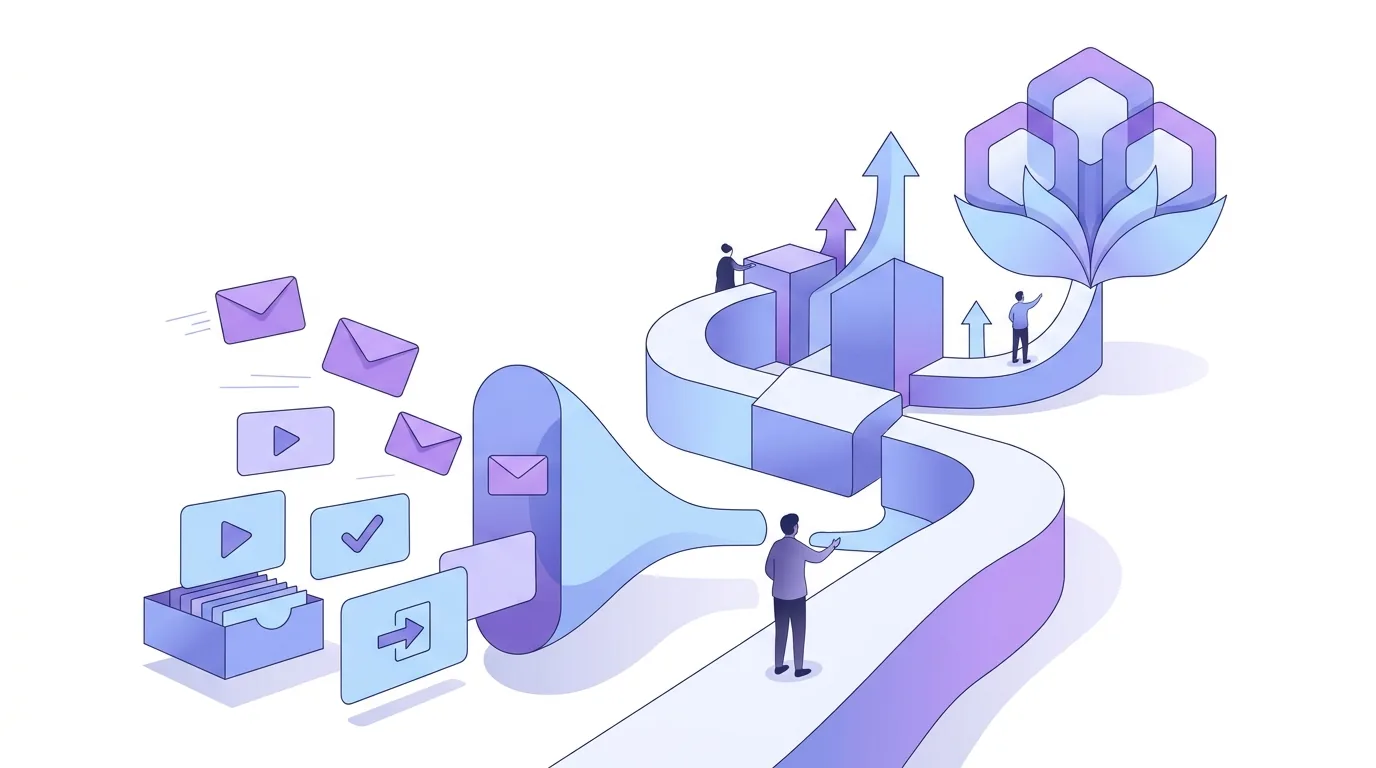
There's no standard seven-stage model. No standards body or law defines one, and different training providers count different stages. The sequence below is a working model that matches the activities above. Use it as a checklist, not as a fixed rule.
- Define the target: segment, region or partner type, with the criteria a fit has to meet.
- Research accounts and people: build a named list of companies and the roles you need to reach in each one.
- Make first contact: a short, specific message to one person, saying why you picked them.
- Qualify: find out whether there's a real need, who decides, and when.
- Propose: a written offer, partnership outline or pilot scope.
- Negotiate and agree: terms, responsibilities and how success is measured.
- Hand over and maintain: pass the deal to sales or account management, and keep contact with the partner.
This sequence usually breaks at stage three. When the list from stage two is unverified, or the first message is a generic blast, bounces and complaints build up on the sending domain. That damage carries over to every later message from the same domain.
What are the top 5 skills for business development?
- Research: reading an annual report, a job posting or a product changelog and spotting a reason to make contact.
- Written communication: a first email that names the recipient's situation and asks for one thing.
- Listening and qualification: asking open questions and accepting a 'no' early, so time goes into accounts that can actually buy.
- Negotiation: trading terms rather than conceding them, and putting agreements in writing.
- Commercial and financial understanding: job listings in the current search results (as of November 2026) ask for the ability to explain ROI, profitability and business impact, because partners and buyers judge a proposal in those terms.
When does business development not work?
Business development fails in a few predictable places, and each one has a cause you can check for before it costs a quarter.
- No written target profile: without fit criteria from stage one, qualification has nothing to filter against, and proposals go to accounts that were never going to buy.
- Partnerships without measurable terms: if the agreement doesn't say what each side delivers (introductions, referrals, an integration), nobody can tell after six months whether it's working.
- Handover without notes: when sales gets a contact but not the qualification answers, it asks the same questions again and the prospect notices.
- Volume instead of relevance: sending the same message to a large unverified list raises bounces and complaints, which the receiving servers record against your domain.
- Measuring BD on this quarter's closed revenue: that pushes the team into sales work, and long-horizon work like market entry or partner building gets dropped.
Is a BDE an IT role?
No. BDE stands for business development executive, and it's a commercial role, not a technical one. The confusion comes from job boards. Many BDE openings are posted by IT services and software companies, so the job title sits next to IT vacancies. In those companies a BDE sells software or development services and needs enough technical knowledge to follow a client's requirements. Writing code or running systems isn't part of the job, though. A related title is BDR, or business development representative. In many companies a BDR does the same first-contact and qualification work as an SDR before handing over to an account executive.
Our guide to the sales development representative role and pay covers the SDR side of that handover.
Which tools does business development use?
Most business development teams work with three kinds of tool. A CRM such as Salesforce, HubSpot or Pipedrive stores accounts, contacts and deal stages, so you can see who was contacted and what was agreed. A research source such as LinkedIn Sales Navigator helps you find the people behind a target account. An email setup sends the outreach, and that's where most technical failures happen. If the sending domain has no valid SPF and DKIM records, or no DMARC policy, receiving servers have less to go on when deciding whether a message is legitimate. If the domain is new and suddenly sends at volume, it has no history for receivers to judge. And in the EU, consent and legitimate-interest rules decide whether you may email a person at all. That's a legal question about how you operate, and no tool settles it for you.
The definition of a cold email, and where it stops being acceptable, is explained in our article on cold email meaning and limits.
How EmailFlow OS handles the outreach step
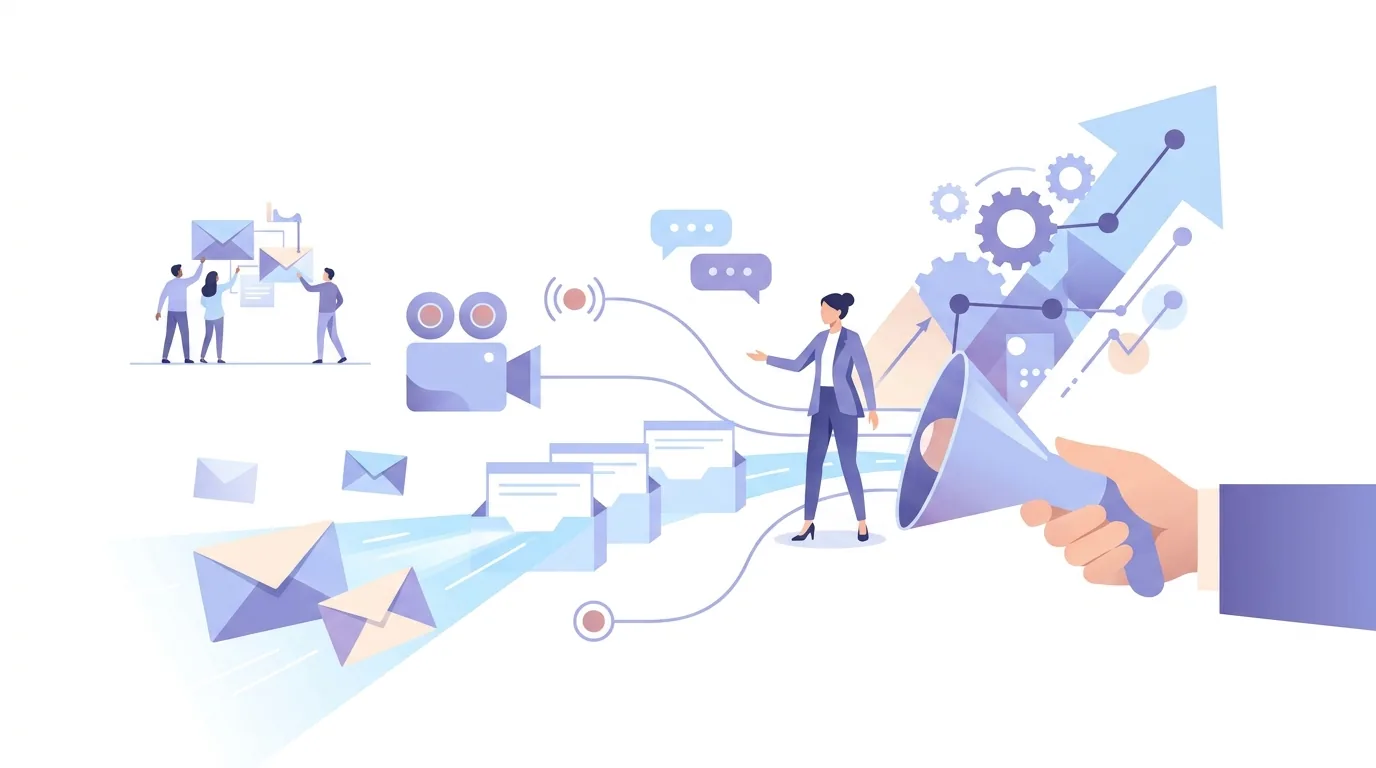
EmailFlow OS covers one part of the business development sequence: first contact by email. You record one video and upload it to EmailFlow OS. You connect your own Brevo account and your own sending domain, and you import your prospect list into EmailFlow OS. EmailFlow OS then creates a personalised version of that single recording for each recipient. That's per person, not per company, so two contacts at the same account each get their own version. Every version goes out from your own inbox, through your Brevo account and your domain, not through a shared platform sender. Your SPF, DKIM and DMARC records and your domain's sending history stay under your control. The receiving server still decides where each message lands. More details are on the page about personalised AI video email for B2B cold outreach.
Email terms you'll meet in business development
EOD definition
EOD means 'end of day', so 'by EOD' means before the working day ends. In business development email the trouble is the time zone. A partner in another region may read 'EOD' as the end of their day, not yours, and the two can be most of a working day apart. Name a clock time, a weekday and a time zone instead, so both sides read the same deadline. Our EOD article also covers the military and medical meanings.
Business email follow up
A business email follow-up is a second message sent when the first one got no reply or a meeting needs a next step. It works best as a reply in the same thread, so the recipient sees the context. It should add one new piece of information and repeat a single ask. A follow-up that only says 'just checking in' gives the reader nothing new to respond to. Our guide on how to write and time a follow-up email walks through examples.
Business email closers
The phrase has two meanings. First, it means the closing line and sign-off of a business email, such as 'Best regards' plus a name, role and company. In outreach, the closing line is where the single ask goes. Second, 'email closers' are salespeople who take over a qualified lead and close the deal by email instead of on a call. That's the same final stage that a high ticket closer handles by phone.
Questions people ask
- What is the definition of business development?
- Business development is the creation of long-term value for an organisation from customers, markets and relationships, as Scott Pollack defined it in Forbes in 2012 (checked November 2026). It covers choosing where to grow, making first contact with partners or target accounts, and qualifying them. Sales differs because it closes individual deals. Marketing differs because it creates demand one-to-many.
- What is business development in simple words?
- In simple words, business development means finding new ways for a company to grow and opening the doors that lead there: a partner who brings customers, a new industry, or a large account nobody has contacted yet. Sales walks through those doors and closes the deal. A BD person answers 'where and with whom', while a salesperson answers 'will this buyer sign now'.
- What does a business development manager do?
- A business development manager picks target segments or partner types, builds a named list of accounts and contacts, makes first contact, qualifies need, authority and timing, and negotiates partnership or pilot terms. After agreement, the deal goes to sales or account management. The manager title usually adds owning targets and coordinating representatives (BDRs), who do the first-contact work at volume.
- What is biz dev short for?
- Biz dev is short for business development: creating long-term value for a company from customers, markets and relationships. People use it for the function as a whole and for the team doing it. It's narrower than 'growth', which also covers product and pricing, and wider than sales, which closes individual deals.
- Is business development the same as partnerships?
- Partnerships are one part of business development, not the whole of it. A partnerships manager negotiates integrations, reseller or referral agreements with other companies. Business development also covers entering new segments and opening relationships with direct customers. Some companies use the two titles for the same role, so check the job description, not the title.
