12 min read Diesen Artikel auf Deutsch lesen Lire cet article en français Ler este artigo em português
What Is a High Ticket Closer? Role and Pay
The short answer
A high ticket closer is a salesperson who takes leads that a setter, ad funnel or SDR has already qualified and booked. The closer runs the deciding phone or video call, works through objections and asks for a commitment on an expensive offer. Most of the pay is commission on closed deals. Closers rarely prospect. Cold outreach and the emails around the call usually belong to someone else or to a separate system.
In this article
- What does a high ticket closer actually do?
- What is considered a high ticket offer, and is high ticket sales a thing?
- Setter vs closer vs SDR vs account executive
- Do closers make a lot of money?
- What is a remote closer?
- What is high ticket affiliate marketing?
- What are email closers?
- Which tools does a high ticket closer use?
- Where EmailFlow OS fits: a EmailFlow OS product
- Questions people ask
What does a high ticket closer actually do?
A high ticket closer is the salesperson who runs the final, deciding sales call for an expensive offer. They're paid mostly as commission on deals they close. They don't find the leads. An ad, a webinar, a content funnel, an appointment setter or an SDR has already done that, so by the time a call lands on the closer's calendar the prospect has shown interest and answered some qualifying questions. The call itself usually runs through a fixed sequence:
- Before the call: read the setter's notes and the application or form answers, and confirm the meeting so fewer prospects fail to show up.
- Opening and agenda: say how long the call will take and that a yes-or-no decision is expected at the end.
- Discovery: ask open questions about the current situation, the goal, what has already been tried and the cost of doing nothing.
- Presentation: connect the offer only to the problems the prospect named, not to every feature.
- Objections: price, timing, needing to ask a partner or boss, doubt that it'll work for them.
- The ask: a direct request for commitment, followed by payment or a signed agreement on the call, or a dated next step.
- After the call: CRM notes, a written recap and a follow-up for anyone who hasn't decided.
Here's a B2B example. A consultancy sells a done-for-you outbound setup. A setter calls a founder who filled in the application form, checks that they have their own sending domain and a sales team to take the meetings, and books a call. On that call the closer finds out the founder's real worry: a previous agency sent from a shared domain and the founder had no say over reputation. The closer only presents the parts of the offer that answer that worry, handles the question of whether the board needs to see it first, and ends with a signed agreement or a meeting with the board on a fixed date.
Discovery and objection handling take up most of the call. For both, a practical walkthrough of sales objection handling steps and replies goes deeper than this overview.

What is considered a high ticket offer, and is high ticket sales a thing?
An offer counts as high ticket when its price is big enough that most buyers won't buy from a checkout page without talking to someone first. No standard sets a price line. Whether an offer is high ticket depends on the price relative to the buyer: something trivial for an enterprise budget can be a major decision for a solo founder. In practice, three things mark a high ticket offer: the buyer considers it for a long time, the buyer needs a live conversation before paying, and the seller makes enough per deal to pay a person to run that conversation. Coaching programmes, done-for-you services, B2B consulting, software with implementation and some courses are typical.
So yes, high ticket sales is a real thing. It's ordinary consultative selling with a separate role for the final call. The term gets a dubious reputation from training programmes that sell "become a closer" courses. Those programmes are a product in their own right and don't define the job. The sales motion around a high ticket offer, meaning the cadence and the emails before and after the call, is covered in our article on what high ticket sales are.
Setter vs closer vs SDR vs account executive
People mix these titles up. They describe different parts of one pipeline, and the differences matter when you're reading a job ad or a commission contract.
| Role | Where it sits | Typical tasks | Usually paid on |
|---|---|---|---|
| Appointment setter | Between lead and call | Calls or messages inbound leads, qualifies them, books calls on the closer's calendar | Booked or attended calls, sometimes a share of closed deals |
| High ticket closer | Final call | Runs the sales call, handles objections, takes payment or a signed agreement | Commission on closed deals, sometimes with a small base |
| SDR | Top of a B2B pipeline | Cold outreach and qualification, then a handoff to an AE | Base plus variable pay on meetings or pipeline |
| Account executive | From first meeting to contract | Owns the deal through several calls, the proposal and negotiation | Base plus commission against a quota |
The key difference between a closer and an account executive is scope. A closer usually decides in one or two calls. An AE manages a multi-stakeholder deal that can run for weeks. If your offer needs a buying committee, you need the AE model. How the SDR handoff works is described in SDR in sales: role, handoff and follow-ups.

Do closers make a lot of money?
Some do and many don't. The commission structure explains why. Closer pay is usually a percentage of the cash collected on closed deals, so income is calculated as attended calls × close rate × deal value × commission rate. Each of those four factors sits partly outside the closer's control:
- Lead flow: if marketing or setters don't fill the calendar, a commission-only closer earns nothing, however skilled they are.
- Show rate: booked calls that never happen pay nothing.
- Lead quality: poorly qualified leads lower the close rate. Overpromising to make up for it leads to refunds.
- Refunds and clawbacks: many contracts take commission back if the client cancels or asks for a refund within a set window. Read that clause before you sign.
- Payment plans: commission may only be paid as each instalment arrives, not on the full contract value.
Because the formula multiplies, one weak factor drags the whole result down: a closer with a strong close rate still earns little if half the booked calls don't show. Before accepting a role, ask how many calls a week the company actually books, what share of those calls show up, and how refunds are handled. Pay mix, thresholds, accelerators and clawbacks are explained in our article on on-target earnings and pay mix.
What is a remote closer?
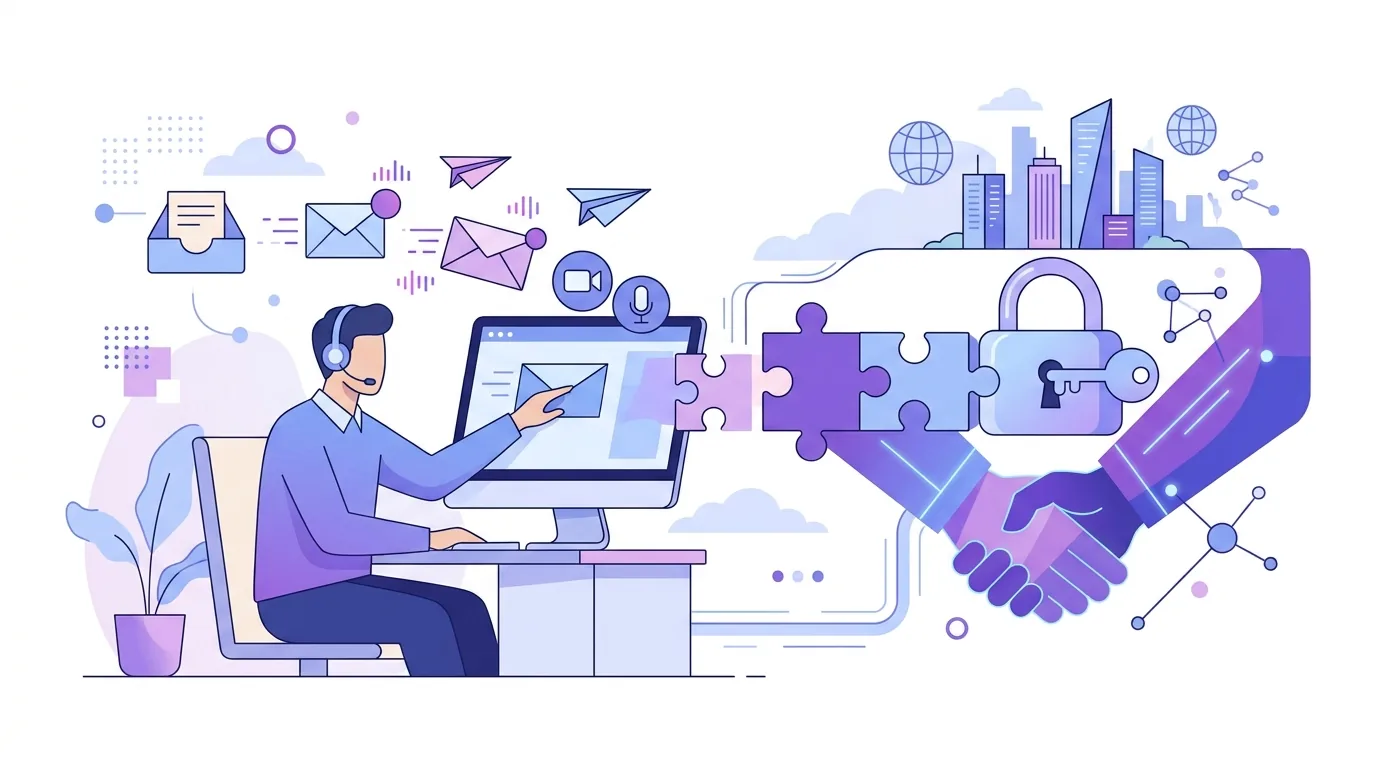
A remote closer does the same job over Zoom, Google Meet or the phone, from anywhere, often as a contractor for several offers instead of one employer. The remote setup brings a few specific problems. Contractor status usually means no base pay and no benefits. Your calendar depends on another company's ad spend. Call recording is common for coaching, but the rules differ between jurisdictions. In the EU, the GDPR requires a lawful basis for processing a recording and requires telling the person about the processing when the data is collected. In the US, some states, California among them, require the consent of all parties before a confidential call is recorded, while other states only need one party to consent. Find out what applies where you and the prospect are before you press record. Remote closing also fails when the offer itself is weak: a better closer can't fix a product that buyers keep refunding.
What is high ticket affiliate marketing?
High ticket affiliate marketing is a different job that's easy to confuse with closing. An affiliate promotes someone else's expensive offer through content, ads or an email list and gets a commission when a referred buyer purchases. The tracking runs through an affiliate link or code. The affiliate usually never speaks to the buyer. If the offer needs a call, the vendor's own closer runs it. So the affiliate is paid for bringing in demand and the closer is paid for turning that demand into revenue.
Affiliates carry obligations of their own. In the US, the FTC's Endorsement Guides require affiliates to disclose their material connection to the seller, such as a commission. If you send promotional email to a list, commercial email rules apply to you as the sender. The CAN-SPAM Act requires a working opt-out in every commercial message, prompt handling of opt-out requests and a valid physical postal address. In the EU, the ePrivacy Directive makes prior consent the rule for unsolicited electronic marketing, with a narrow exception for existing customers buying similar products. Member states implement it in national law, so the details vary by country.
What are email closers?
"Email closers" means two different things, so make sure you know which one you need. The first meaning is a salesperson who closes by email instead of on a call. That works for lower-commitment or repeat purchases, and for buyers who won't get on a call. For most high ticket offers it doesn't work well, because objections come up in a slow written thread and the closer can't hear hesitation or answer it on the spot. Email still has a job on the call-based path. It carries the confirmation before the call, the written recap afterwards and the follow-up to prospects who said "let me think about it". Templates for that last step are in follow-up email after a sales call.
The second meaning is the closing line of an email: the sign-off and the call to action just above it. A closer's recap should end with one specific ask, such as a date, a decision or a payment link, not a vague "let me know". For example: "Can we put Thursday's call with your CFO in the calendar, or would you rather I send the agreement today?" gives the prospect two concrete options. Wording options are collected in how to end an email.

Which tools does a high ticket closer use?
A closer's stack is small, and every tool in it supports the call. The table compares common options by one yardstick: what each tool does for a closer and where its job ends. Features and plans change, so check each vendor's own documentation before you commit.
| Job | Common options | What it covers for a closer | Where it stops |
|---|---|---|---|
| Booking calls | Calendly, Cal.com, HubSpot Meetings | Prospects pick a slot, and the tool sends invites and reminders | Doesn't qualify leads unless you add questions to the form |
| Running the call | Zoom, Google Meet, Microsoft Teams | Video call, screen share, optional recording | Recording consent and storage are your responsibility |
| Tracking deals | HubSpot CRM, Pipedrive, Close | Call notes, deal stages, follow-up tasks | Only as accurate as the notes reps enter |
| Taking payment | Stripe, PayPal | Payment links and instalment plans | Refund and chargeback rules are set by the provider and your contract |
Where EmailFlow OS fits: a EmailFlow OS product
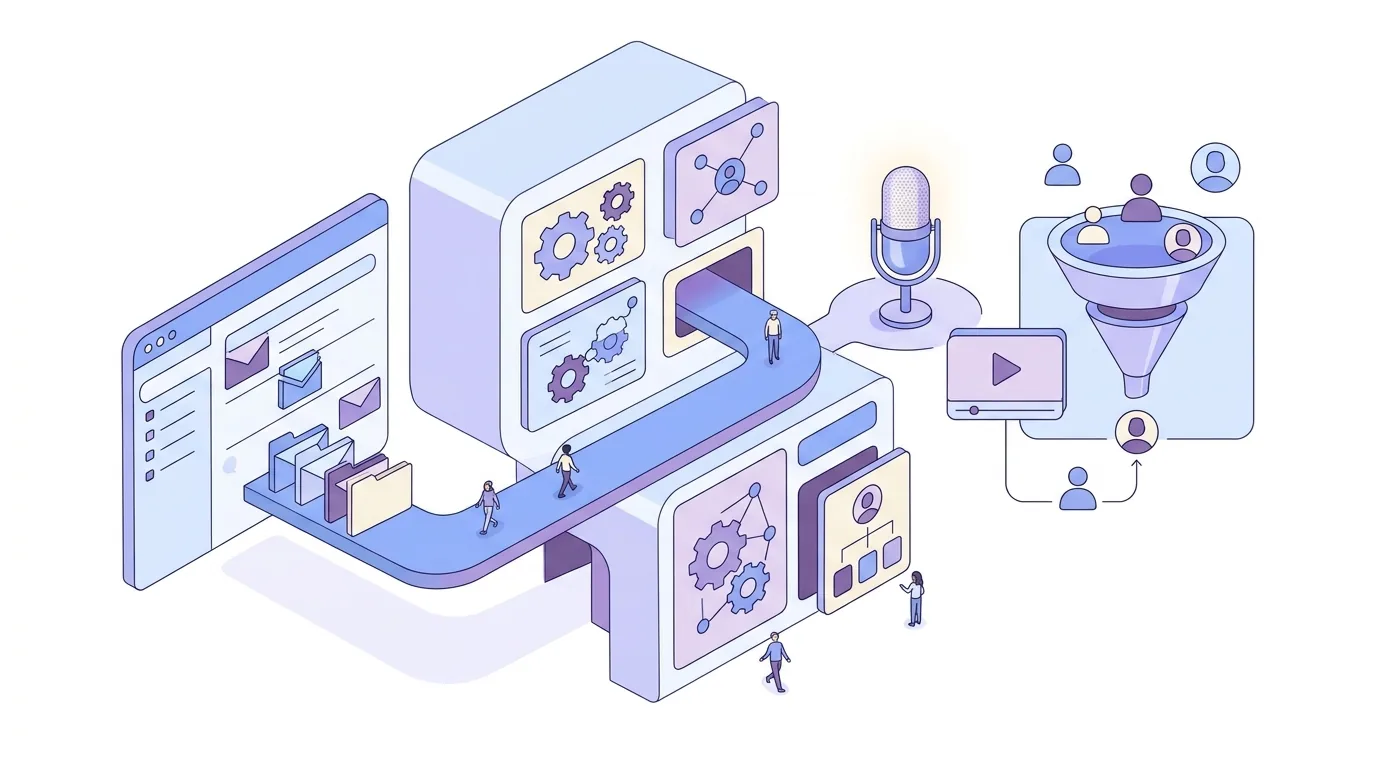
A closer works warm leads, so EmailFlow OS isn't part of the closing call. It sits earlier in the pipeline, in the B2B cold outreach that fills the calendar, and it can carry the follow-up after a call. Here's how it works. You record one video and upload it to EmailFlow OS, connect your own Brevo account and sending domain, and import your prospect list into EmailFlow OS. EmailFlow OS then makes a personalised version of that single recording for each recipient (per person, not per company). Each version goes out from your own inbox, through your Brevo account and your domain. It never goes through a shared platform sender. The sender reputation built up on that domain stays under your control.
The domain also needs SPF, DKIM and DMARC in place before you send, because receiving servers check them. Each one is defined in its own IETF standard. SPF limits how many DNS lookups a check may trigger, so a record that includes too many sending services fails with a permerror even though every include is correct on its own. DKIM fails when the public key in DNS doesn't match the key Brevo signs with, and DMARC fails when neither SPF nor DKIM aligns with the visible From domain. Google's email sender guidelines require bulk senders to Gmail addresses to set up all three, offer one-click unsubscribe and keep their reported spam rate low. The setup for each record is covered in DKIM, DMARC and SPF for cold email senders. Whether a message reaches the inbox is decided by the receiving server, not by EmailFlow OS.
Questions people ask
- What is a high ticket closer?
- A high ticket closer is a salesperson who runs the final sales call for an expensive offer after a setter, funnel or SDR has qualified and booked the lead. The closer handles discovery and objections, then asks for payment or a signed agreement. Unlike an account executive, a closer usually decides the deal in one or two calls and is paid mostly commission.
- Do high ticket closers do cold outreach?
- Usually not. A high ticket closer works leads that marketing, an appointment setter or an SDR has already qualified and booked. Cold outreach is the setter's or SDR's job. In small B2B teams one person sometimes does both. Then the role is closer to a full-cycle account executive than to a closer in the usual sense.
- How is a high ticket closer different from an appointment setter?
- A setter qualifies inbound leads and books calls. A closer runs the booked call and asks for the sale. Setters are usually paid on booked or attended calls, sometimes with a share of closed deals. Closers are mostly paid commission on cash collected. The setter controls how many calls happen, and the closer controls how many of those calls end in a purchase.
- Is high ticket closing commission-only?
- Often, though not always. Many remote closer roles are commission-only contractor agreements. Some companies pay a small base plus commission. Whatever the structure, check three clauses: whether commission is paid on the full contract or on each instalment, the refund clawback window, and who is responsible for filling your calendar.
- Can a remote closer record sales calls?
- It depends on where both parties are. Under the GDPR, recording needs a lawful basis and the person has to be informed about the processing. Some US states, California among them, require every party's consent to record a confidential call, while one-party-consent states don't. The safe habit is to announce the recording at the start and stop if the prospect objects.
