10 min read Diesen Artikel auf Deutsch lesen Lire cet article en français Ler este artigo em português
How to Increase Conversions: Steps and Tests
The short answer
To raise conversions, first define one conversion event and its denominator. Then measure the baseline for each funnel step and find the step where most people drop out. Change one thing at that step, A/B test it against the current version, and keep it only if the test holds at the sample size you fixed beforehand. In outbound sales, check that mail is actually delivered before you test copy, because a message in spam can't convert.
In this article
- What does "increase conversion rate" mean?
- What is CVR vs CTR?
- Worked example: one campaign, three conversion rates
- How to increase conversions: the testing procedure
- How to increase conversion rate in digital marketing
- Which tools do the measuring and testing?
- How to increase conversion rate in sales
- Where EmailFlow OS fits in the outbound funnel
- Questions people ask
To increase conversions, find the one funnel step where the largest share of people drop out, change a single thing at that step, and test the change against the current version with a sample size you set before starting. Keep the change only if the final outcome (a purchase, a held meeting, a signed deal) holds up, not just the step you changed. In cold email the first step is delivery, so an unauthenticated domain will cap every rate that comes after it, whatever the copy says.
What does "increase conversion rate" mean?
A conversion is one action you've decided counts: a form submitted, a demo booked, a purchase, a reply to a sales email. The conversion rate is the number of those actions divided by the number of people who had the chance to take them, expressed as a percentage. When people talk about increasing a conversion rate, they mean a bigger share of the same audience completes that action. It doesn't mean more total actions bought with more traffic.
The denominator decides what the number means. Sessions, unique users and delivered emails all give different rates for the same campaign. If you switch denominators halfway through, you get a jump that has nothing to do with buyer behaviour. Keep macro conversions (the purchase, the signed deal) separate from micro conversions (a pricing-page view, a video play). A micro conversion can rise while the macro one stays flat. That happens when a change pulls in curious people instead of buyers.
What is CVR vs CTR?
CTR (click-through rate) is clicks divided by impressions or by delivered messages. It tells you whether people moved from seeing something to clicking it. CVR (conversion rate) is conversions divided by visitors or clicks. It tells you whether the people who arrived went on to do the thing you wanted. The two measure different steps, and they can move in opposite directions.
Here's a common way it goes wrong. An ad or email subject line written to get clicks pulls in people whose expectations the page doesn't meet. CTR goes up and CVR goes down. That's why both numbers need to be read together, with the same time window and the same attribution rule. In email, opens are an even weaker measure than clicks. Apple Mail Privacy Protection loads tracking pixels on the recipient's behalf, and some corporate security scanners open links before a person ever does. Both inflate the counts without any human action. The open-rate article explains the limits of email open tracking for cold senders.
Worked example: one campaign, three conversion rates
Take one outbound campaign and follow it through. An SDR sends a batch of cold emails. Some addresses hard-bounce, the receiving servers accept the rest, a handful of recipients reply, and a few of those book a meeting. The meetings are the same in every case, yet the rate you report depends entirely on what you divide them by.
| Rate | Calculation | What it measures | What it hides |
|---|---|---|---|
| Meetings per email sent | Meetings ÷ emails sent | The whole campaign from list to meeting | Mixes list quality and delivery problems into the result |
| Meetings per email accepted | Meetings ÷ emails accepted by receiving servers | Outreach after hard bounces are removed | Accepted isn't inbox: spam-folder placement is still counted |
| Meetings per reply | Meetings ÷ replies | The reply-to-meeting step only | Says nothing about how many people the outreach reached |
Two things follow. First, cleaning the list so fewer addresses bounce raises the first rate without a single extra meeting. Second, none of these rates shows inbox placement, because the receiving server doesn't report back whether it filed a message as spam. If you want to compare campaigns, fix one denominator and keep it.
How to increase conversions: the testing procedure
The top-ranking guides list tactics. A tactic only helps when it fixes the step that's actually losing people, and the procedure below is how you find that step and check a fix.
- Define the conversion event. Write down exactly what triggers it (for example, the thank-you page loading after a demo form) and which denominator you'll use.
- Record a baseline. Take the current rate over a period long enough to include normal weekday and weekend swings, and note any campaigns running during it.
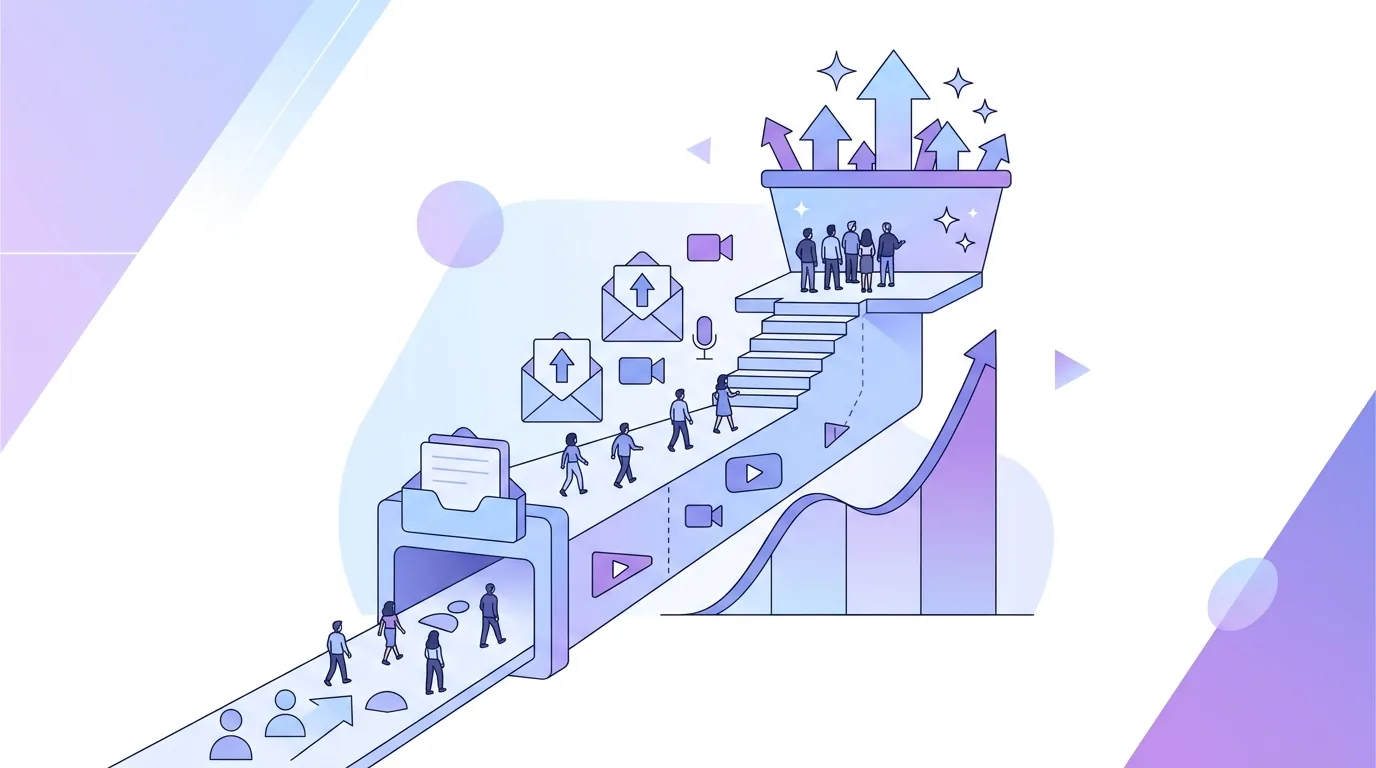
- Map the funnel and find the biggest drop. Count people at each step (landing, form start, form submit, meeting held). The step with the largest proportional loss is where you test first.
- Look at why people drop there. Session recordings, form analytics and support questions tell you what to change. Opinions in a meeting don't.
- Write one hypothesis per test. For example: removing the phone field from the demo form will raise form completion without lowering meeting attendance.
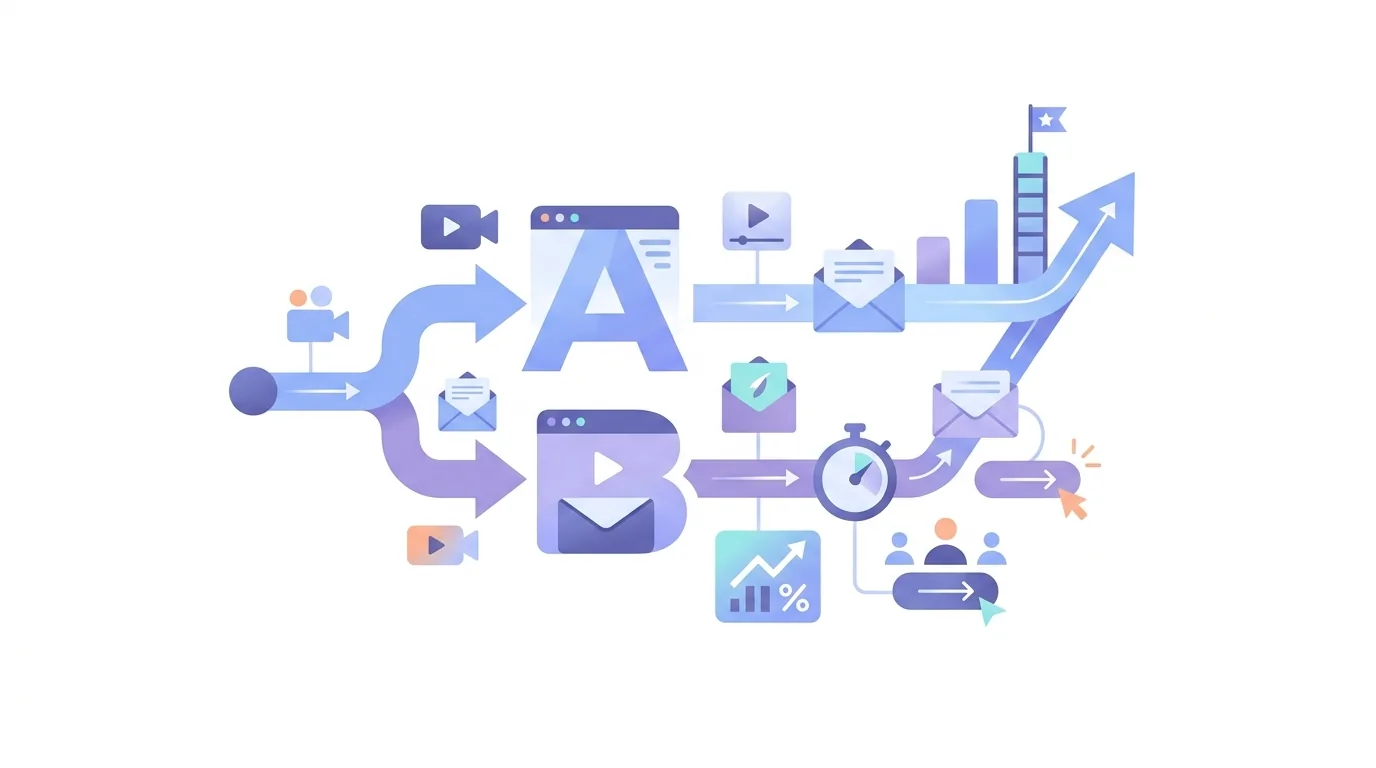
- Run an A/B test of that single change. Decide the sample size and run time before you start, and don't stop early because one version looks ahead.
- Check the downstream metric. A form change that gets more submissions but fewer qualified meetings is a loss, so keep the change only if the macro conversion holds.
Two things don't work. If you change the headline, form and offer at the same time, you can't tell which change caused the result. And if you check a running test every day and stop it as soon as it crosses significance, false positives become far more likely than the nominal significance level suggests.
How to increase conversion rate in digital marketing
In digital marketing, the chain usually breaks somewhere between the ad or email and the page it leads to. Check these points first:
- Message match: the headline on the page repeats the promise of the ad or email that brought the visitor. If it doesn't, visitors leave because they think they've landed in the wrong place.
- Value proposition in the first screen: what you offer, for whom, and how it differs, without jargon.
- Form length: every required field is a reason to stop. Ask only for what the next step really needs.
- Page speed and mobile layout: a page that shifts while loading or hides the button below a cookie banner loses people before they can act.
- Tracking under EU consent rules: the EU ePrivacy Directive requires consent before non-essential cookies are stored on a visitor's device. Consent-gated analytics count fewer visitors than actually arrived, so compare rates only within the same consent setup.
For writing the first-screen message, see these value proposition examples for B2B outreach.
Which tools do the measuring and testing?
| Tool | Main job | Where it stops |
|---|---|---|
| Google Analytics 4 | Event-based web analytics: define conversion events, build funnel reports | Shows where people drop out, not why; consent-gated in the EU |
| Microsoft Clarity | Session recordings and heatmaps | Shows behaviour on the page; doesn't run A/B tests |
| Hotjar | Heatmaps, recordings and on-page surveys | Qualitative input; doesn't run A/B tests |
| VWO | A/B and multivariate testing on web pages | Needs enough traffic to reach a result on the tested page |
| Optimizely | Web and feature experimentation | Same traffic requirement; set up for teams with developers |
None of these tools fixes a page on its own. Analytics and recordings find the problem, and a testing tool checks the fix. Pages with low traffic often can't reach a reliable test result. On those pages, qualitative research and careful before-and-after comparisons are the realistic option.
How to increase conversion rate in sales
In outbound sales the funnel looks different: delivered, replied, meeting booked, meeting held, opportunity, closed. Each stage has its own rate, and the first one depends on infrastructure, not copy. If the receiving server puts a message in spam or rejects it, nothing after that can happen. Google's email sender guidelines require bulk senders to Gmail to authenticate with SPF and DKIM, publish a DMARC record and support one-click unsubscribe. Every receiver applies its own filtering on top of that. Check SPF, DKIM and DMARC for cold email senders before you treat a low reply rate as a copy problem.
Once delivery is in order, the usual reasons for losing people are these: a message that could have gone to anyone, more than one ask, and a list that includes people outside your buyer profile. Pruning the list raises the rate by shrinking the denominator, but not the number of deals. Also read conversion across the handoff. The SQL vs MQL conversion ratio article shows how a looser qualification rule can push one stage's rate up and the next one's down.
Here's one example from outbound that tactic lists tend to skip. Testing two email versions only tells you something if both go out from the same domain, at the same daily volume, to comparable parts of the list. If version B goes out from a freshly registered domain that hasn't been warmed up, you're measuring the domain's reputation, not the copy. The same applies when you send a test batch the day after a spike in bounces.
Where EmailFlow OS fits in the outbound funnel
EmailFlow OS, a EmailFlow OS product, handles the step where a cold email has to be specific to the person reading it. You record one video and upload it to EmailFlow OS. Then you connect your Brevo account and sending domain and import your prospect list into EmailFlow OS. EmailFlow OS personalises that single recording for each recipient, not just each company. Each version goes out from your own inbox, through your own Brevo account and your own sending domain, never through a shared platform sender.
For conversion work, that matters in two ways. The sender reputation that decides delivery belongs to your domain, so the DNS records and warm-up you control are the ones that count. And replies come back to your inbox, so you measure reply and meeting rates against your own delivered count. Whether any of it converts still depends on your list, your offer and the receiving servers. The home page shows how personalised video email from your own domain works.
Questions people ask
- What is an example of a CRO?
- CRO stands for conversion rate optimisation. A typical example: funnel data shows most visitors start a demo form but don't finish it. Recordings show them stopping at a required phone field. The team A/B tests the form without that field against the original and keeps the shorter version only if completed meetings, not just submissions, hold up over the planned sample.
- What are the 7 principles of conversion?
- There's no standard list of conversion principles, and different blogs list different ones. The list most often cited is Robert Cialdini's principles of persuasion. His book Influence named reciprocity, commitment and consistency, social proof, authority, liking and scarcity; he later added unity in Pre-Suasion. They describe how people decide, so they're not a testing method.
- How to increase conversion in retail?
- In retail, the conversion rate is transactions divided by visitors. Physical stores count visitors with door counters, and online shops count sessions. Use the same procedure as online: find where shoppers drop out, whether that's the shelf, the fitting room, the queue, the cart or the checkout. Then test one change there, for example extra checkout staff at peak hours or a guest checkout online.
- Does a higher conversion rate always mean more sales?
- No. The rate is a ratio, so it also goes up when the denominator shrinks. Cutting traffic or pruning an email list down to the most likely buyers raises the rate even if the number of deals stays the same or falls. That's why you should track total macro conversions next to the rate.
- How do I increase conversions from cold email?
- Start with delivery, not wording. Check that your sending domain publishes SPF, DKIM and DMARC, and that bounces stay low after list cleaning. Then compare reply and meeting rates against delivered emails, not sent ones. Test one change at a time, such as a single ask instead of two, sent from the same domain at the same volume, so the domain's reputation doesn't distort the comparison.
