9 min read Diesen Artikel auf Deutsch lesen Lire cet article en français Ler este artigo em português
Account Based Marketing Strategy: Plan, Tools
The short answer
An account based marketing strategy starts from a named list of target companies, not a pool of leads. You score accounts on fit and intent, pick a tier (one-to-one, one-to-few or one-to-many), map the buying group inside each account, run coordinated plays to each person, and measure results per account. The choices that matter most are tier size, data source, and whether outreach goes out per contact from your own domain or as one blast.
In this article
- What is an account-based marketing plan?
- Which ABM tier fits: one-to-one, one-to-few or one-to-many?
- Account scoring: which model decides your target list?
- Account scoring models compared
- Marketing prospecting inside an ABM strategy
- Digital marketing prospecting
- Why an email marketing blast doesn't fit ABM
- Which tools run an account based marketing strategy?
- Where EmailFlow OS fits: per-recipient video from your own domain
- What your own sending domain needs before ABM outreach
- What goes wrong in account-based marketing?
- Questions people ask
What is an account-based marketing plan?
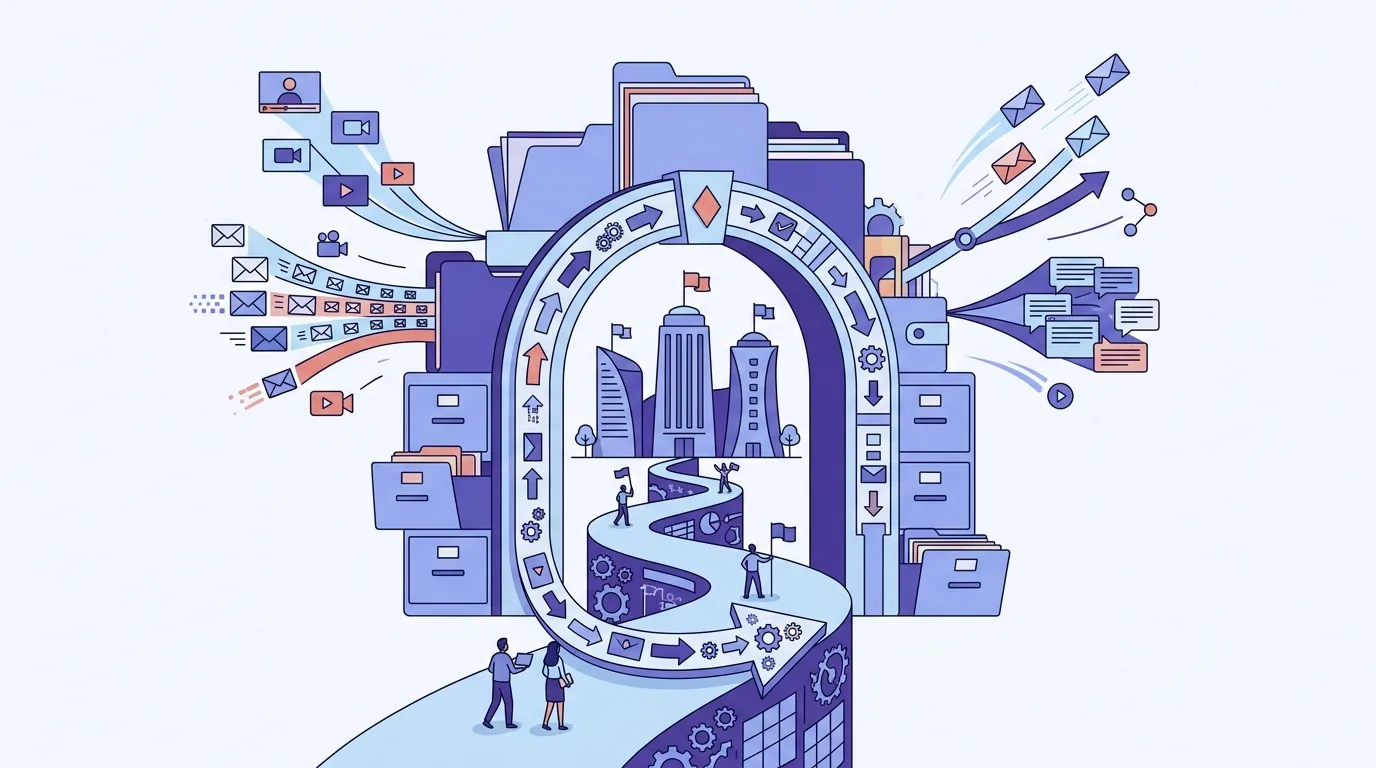
An account-based marketing plan is a written agreement between marketing and sales. It sets out which companies you'll pursue, who at each company you need to reach, what each person gets, and how you'll judge progress. The unit is the account, not the lead. A lead-based funnel counts form fills. An ABM plan asks whether the CFO, the operations lead and the IT reviewer at one named company have all engaged.
Here's a concrete example. A software vendor builds a list of logistics companies that run their own warehouses. For each company, the plan names the roles in the buying group, one trigger (a new site, a new hire, a tender), the message each role gets, and who sends it. That might be the account executive, an SDR, or a marketing campaign. A good plan also has an exit rule: when an account goes quiet after the agreed touches, it goes back into the scoring pool and doesn't get endless follow-ups. Without a written exit rule, ABM tends to slide back into volume emailing without anyone deciding it should.
Which ABM tier fits: one-to-one, one-to-few or one-to-many?
Most ABM frameworks split programmes into three tiers, based on how many accounts each programme serves and how much is built for each one. Your choice of tier decides your workload more than any tool does.
| Tier | What gets personalised | Typical work per account | Where it breaks |
|---|---|---|---|
| One-to-one (strategic) | Content, offer and outreach for each single account and each person in its buying group | Research, account plan, coordinated sales and marketing touches | Doesn't scale. Each account needs substantial research before the first message |
| One-to-few (cluster) | Messaging for a small group of accounts that share an industry, problem or trigger | One plan per cluster, with per-person tweaks | Clusters that are too loose produce messages that fit no one |
| One-to-many (programmatic) | Segments built from firmographic and intent data, often with tooling | Rules, templates, ad audiences | Slides into a blast if per-person outreach is dropped |
Account scoring: which model decides your target list?
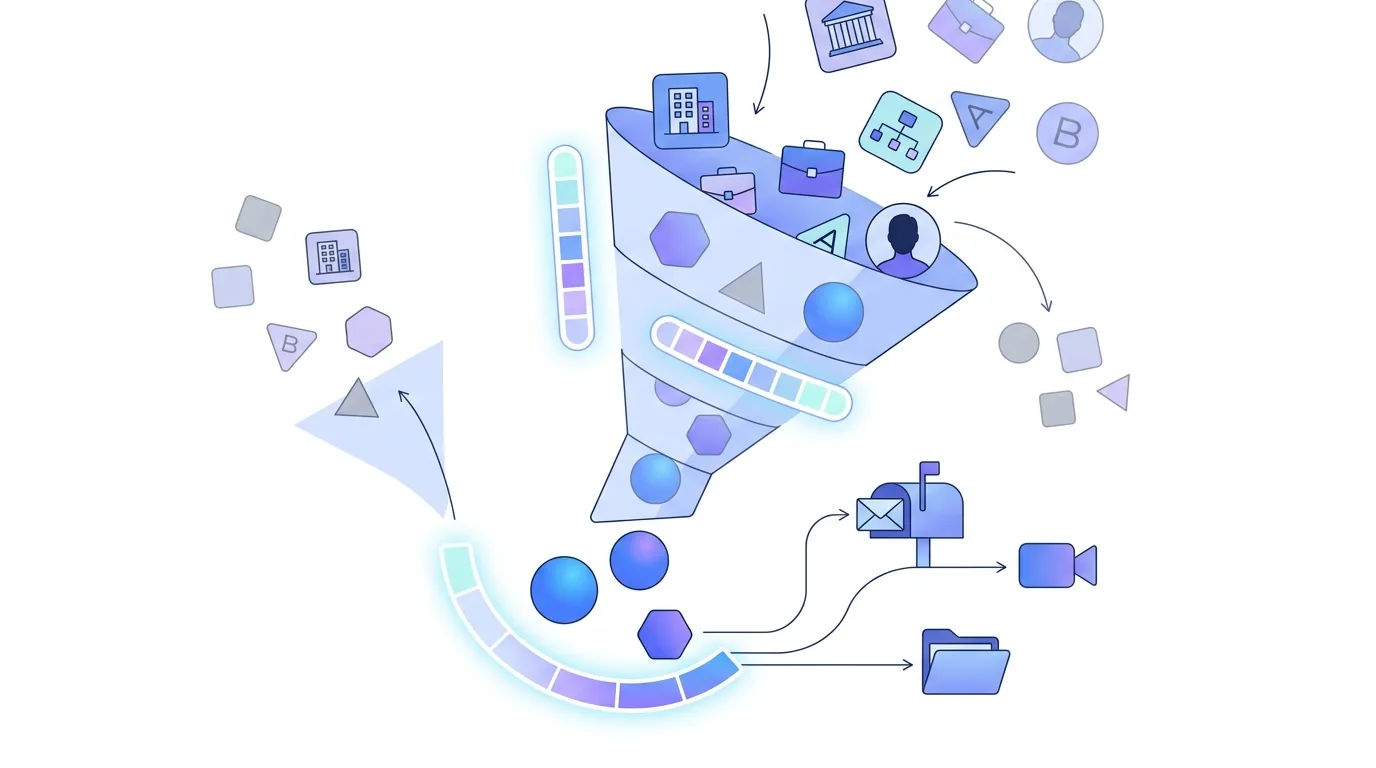
Account scoring ranks companies by how likely they are to buy and how much they're worth to you, so the target list rests on criteria rather than gut feeling. Scoring decides which accounts go into which tier, and a bad score sends your most expensive one-to-one effort to companies that were never going to buy. Our guide on account scoring models, tools and mistakes covers building the model step by step.
Account scoring models compared
- Fit model: points for firmographic match, such as industry, headcount band, region and tech stack. It's stable and easy to explain, but it can't tell you when a company is ready to buy.
- Intent model: points for research signals, such as visits to your pages or third-party topic research. It catches timing, but the signals are noisy, and much intent data is inferred rather than observed.
- Engagement model: points for replies, meetings and site visits from known contacts. Be careful with email opens. Image blocking and privacy proxies record opens that no person made, so an open-weighted score inflates cold accounts.
- Combined model: fit sets eligibility, then intent and engagement set priority. Many teams end up here, assigning tiers from fit and moving accounts between tiers on intent.
Marketing prospecting inside an ABM strategy
Marketing prospecting means finding and qualifying potential buyers through marketing channels before sales spends time on them. In classic demand generation, that means content and forms that capture whoever turns up. In ABM it works in reverse: the account list already exists, so prospecting means finding the right people inside those accounts and confirming they're reachable. For how this splits between sales and marketing, see our explainer on prospecting in sales vs marketing.
Digital marketing prospecting
Digital marketing prospecting uses online channels like account-targeted ads, LinkedIn, website visitor identification and email to surface and warm up contacts. In an ABM plan, digital channels serve the named list: ad audiences get matched to target companies, and email goes to contacts you've mapped in the buying group. The limit is attribution. Seeing an ad and reading an email often happen without a trackable click, so digital prospecting results should be judged at the account level (meetings, opportunities), not by impressions.
Why an email marketing blast doesn't fit ABM
An email marketing blast sends one identical message to a whole list at once. That's the opposite of ABM's premise that each account, and each person within it, gets something specific. Blasts also cause practical damage. When the same body goes to many recipients at one company, it looks like bulk mail to their filters. And complaints from people who didn't expect it land on your sending domain's reputation. Our article on what an email blast is, and its limits, shows the mechanism in detail.
Blasts still have a place for announcements to customers or subscribers who opted in. They don't work as the outreach layer of an account based marketing strategy, where the CFO and the IT lead at the same account need different reasons to reply.

Which tools run an account based marketing strategy?
No single tool covers ABM from end to end. Teams put together a stack by job. The table below compares tool types from other vendors, using the same properties for each. Feature sets change, so check each vendor's current documentation before you decide.
| Tool type | Named examples | Job in an ABM plan | Where it stops |
|---|---|---|---|
| CRM with account records | Salesforce, HubSpot | Holds the account, its contacts, the buying-group roles and the pipeline per account | Only as good as the data that gets entered or synced. It doesn't find new accounts on its own |
| ABM and intent platforms | Demandbase, 6sense | Account-level data, intent signals and account-targeted advertising | Built for account-level programmes. Contract scope and data coverage need checking for your market |
| Contact and company data providers | ZoomInfo, Apollo.io, Cognism | Find people per buying-group role and fill in firmographics for scoring | Contact data decays. Under the GDPR you still have to be able to say where personal data came from |
| Social selling | LinkedIn Sales Navigator | Account lists, finding people by role, research before outreach | Messaging stays inside LinkedIn's own rules and limits |
| Email sending service | Brevo, Mailchimp | Sends authenticated email from your domain, manages lists and suppression | List-oriented. It doesn't plan per account or build per-person content by itself |
If email is your main ABM channel, the sending setup counts as much as the ABM platform. Our comparison of cold email marketing setups goes through the options.
Where EmailFlow OS fits: per-recipient video from your own domain
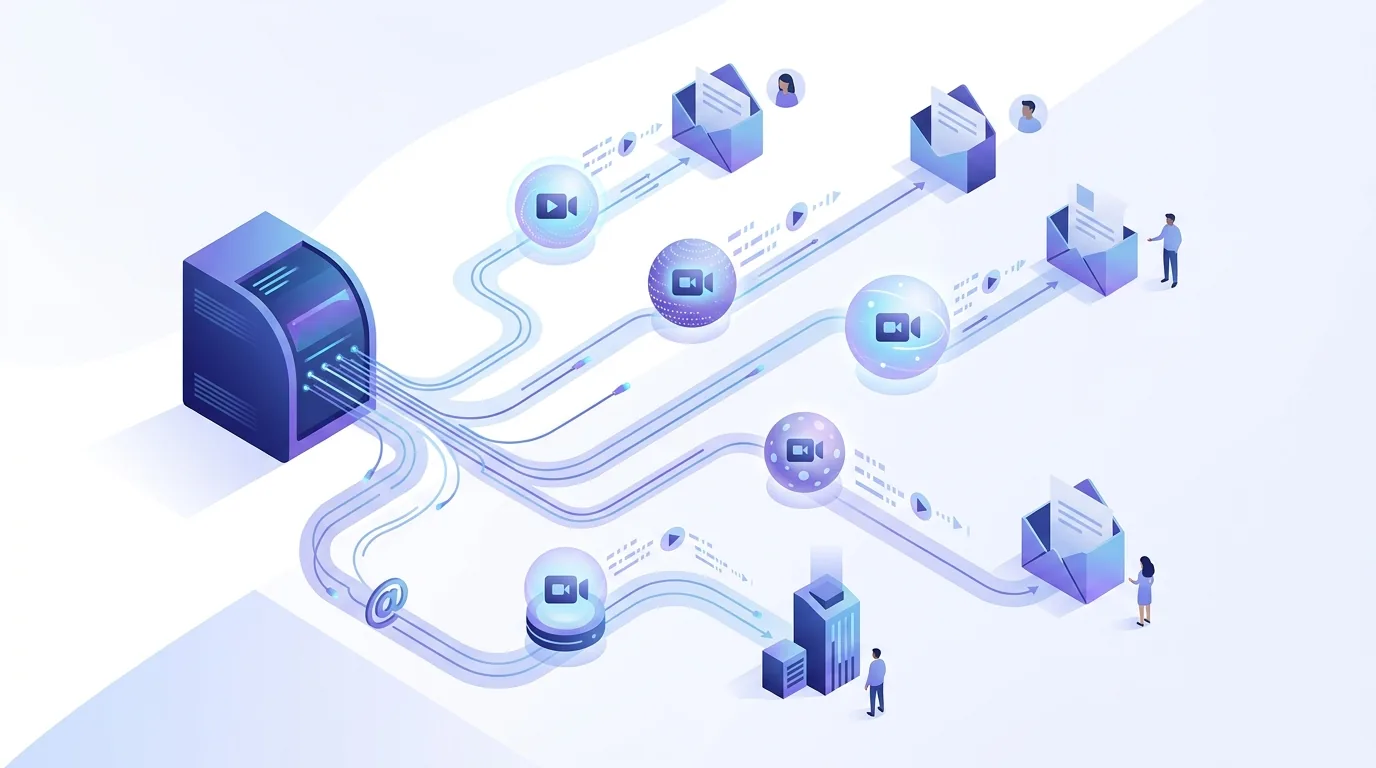
EmailFlow OS is a EmailFlow OS product for the outreach layer of an ABM plan, the point where each person in a buying group needs their own message. Here's how it works. You record one video and upload it to EmailFlow OS. You connect your own Brevo account and your sending domain. Then you import your prospect list into EmailFlow OS, where it lives. EmailFlow OS personalises that single recording for each recipient, not for each company, so the CFO and the operations lead at the same account each get their own version. Every version goes out from your own inbox, through your Brevo account and your domain. There's no shared platform sender.
For ABM, that means one recording can serve a whole one-to-few cluster or a programmatic segment without becoming a blast, while your Brevo account and sending domain stay under your control. The home page explains how EmailFlow OS personalises one video per recipient, and our article on personalised video messages per recipient covers it in more depth.
What your own sending domain needs before ABM outreach
- SPF: a TXT record on your domain that lists the services allowed to send for it, including Brevo if you send through Brevo.
- DKIM: a signing key published in DNS, so receivers can check that the message wasn't changed and that it belongs to your domain.
- DMARC: a policy record that tells receivers what to do when SPF or DKIM alignment fails, and where to send reports. Google's sender guidelines require bulk senders to authenticate with SPF, DKIM and DMARC.
- Warm-up: a new domain or one that hasn't been used has no sending history, so increase volume gradually rather than starting with your full account list.
- EU rules: the GDPR requires a lawful basis for processing contact data, such as legitimate interest under its Art. 6(1)(f). Some member states set stricter rules for email advertising; Germany's Act against Unfair Competition (UWG), § 7, is one example. Check the rules in each recipient's country.
Even with all of these in place, the receiving server decides whether a message reaches the inbox. Our guide to DKIM, DMARC and SPF for cold email senders explains the records field by field.
What goes wrong in account-based marketing?
- Too many tier-one accounts: the research can't be done properly, so 'one-to-one' turns into templates with a company name dropped in.
- Scoring on opens: machine opens push uninterested accounts up the list.
- One contact per account: if your champion leaves or goes quiet, the account stalls, because no one else in the buying group knows you.
- Sales and marketing working off different lists: the same person gets an ad, an SDR email and an AE email that contradict each other.
- Sending from a shared or brand-new domain at full volume: reputation problems hit every account in the programme at once.
Questions people ask
- What are the 5 C's of a marketing plan?
- The 5 C's are company, customers, competitors, collaborators and context. In ABM, 'customers' gets narrowed to the named target accounts and their buying groups. 'Context' covers the triggers, such as funding, new sites or regulation, that you use to time outreach. The framework shapes situation analysis. It doesn't replace an account list.
- What are four marketing strategies?
- One common answer is the Ansoff matrix. Market penetration sells existing products to existing markets. Market development takes existing products into new markets. Product development brings new products to existing markets. Diversification puts new products into new markets. ABM can serve any of the four, because it decides how you go after accounts, not which market you enter.
- What are 5 marketing activities?
- A workable set is research, segmentation and targeting, content creation, promotion or outreach, and measurement. In ABM, segmentation becomes account selection and scoring. Outreach becomes coordinated touches for each person in a buying group. Measurement tracks accounts, such as meetings and opportunities per account, rather than counting leads.
- How is ABM different from lead-based marketing?
- Lead-based marketing collects individuals from a broad audience and qualifies them one by one. ABM works the other way round: it picks companies first, then works out who inside each company is involved in the purchase. Success is measured per account rather than by lead volume, so one engaged buying group counts for more than many unconnected sign-ups.
