10 min read Diesen Artikel auf Deutsch lesen Lire cet article en français Ler este artigo em português
Cross Selling: Meaning, Examples, B2B Email
The short answer
Cross selling means offering an existing customer a product or service that goes with something they already bought, such as a backup add-on for a hosting customer or a training package for a software buyer. Start from purchase data: pick the accounts whose first product creates the need, name that link in the offer, and send it to the person who uses the product. Under the EU existing-customer email exemption, only similar products qualify, and every message needs an opt-out.
In this article
- What is cross selling?
- Cross selling meaning in one sentence
- Cross selling examples from B2B and retail
- How does cross selling work in B2B?
- Which cross selling products should you offer?
- Can you email existing customers a cross-sell offer in the EU?
- Which domain should a cross-sell email come from?
- How EmailFlow OS fits a cross-sell email
- Questions people ask
What is cross selling?
Cross selling is selling an additional, related product or service to a customer who has already bought from you or is buying right now. The second offer has to follow from the first purchase: the customer bought A, A creates a need, and B meets that need. A hosting customer who's offered managed backup is a cross-sell. The same customer getting an unrelated newsletter isn't.
It happens at one of two moments. In retail and e-commerce it's usually at checkout, through 'customers also bought' boxes and bundles. In B2B it's usually after the first purchase. Once the customer is using the product, someone notices a gap the first product doesn't fill and offers the add-on, often by email. This article covers that second case, where the offer is a message from a named person to a named contact at the customer.
Cross selling meaning in one sentence
Cross selling means selling something different to someone who already buys from you. Here 'different' means a separate product line, not a bigger version of what they already have. That's why a dictionary definition only needs two parts: an existing customer and a different but related product. Timing, channel and wording are all execution. There's a simple test you can apply: if the customer would replace their current product with your offer, you're upselling. If they'd use your offer alongside it, you're cross selling.
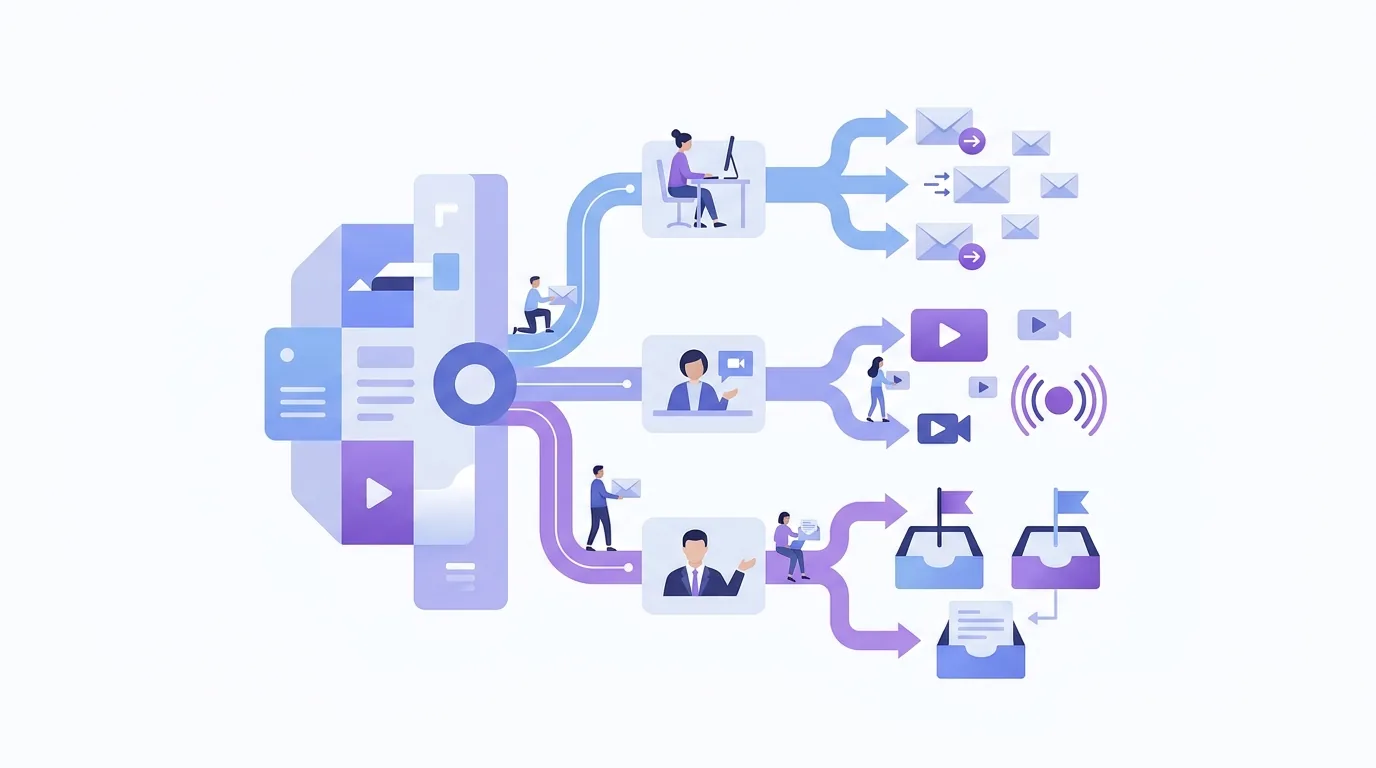
Cross selling examples from B2B and retail
Every example below follows the same pattern: the first purchase, the need it creates, and the offer that meets that need.
| First purchase | Need it creates | Cross-sell offer |
|---|---|---|
| Laptop (retail) | Carrying and protecting the device | Sleeve, bag or extended warranty |
| Web hosting plan | Recovering data after a failure | Managed backup add-on |
| CRM software licence | Getting the team to use it | Onboarding or training package |
| Payroll software | Handling expense claims | Expense management module |
| Office cleaning contract | Restocking supplies | Supplies delivery service |
| Business bank account | Taking card payments | Payment terminal or merchant service |
When a cross-sell fails, the cause is usually easy to see afterwards. Sometimes the offer arrives before the first product is up and running, so the customer is still busy with the original problem. Sometimes it goes to the person who signed the contract instead of the person who would use the add-on. And sometimes the link between A and B makes sense inside your company but not to the customer. If you can't explain the link in one sentence of the email, the customer won't see it either. For more person-to-person offers, see our article on personal selling examples for B2B and email.
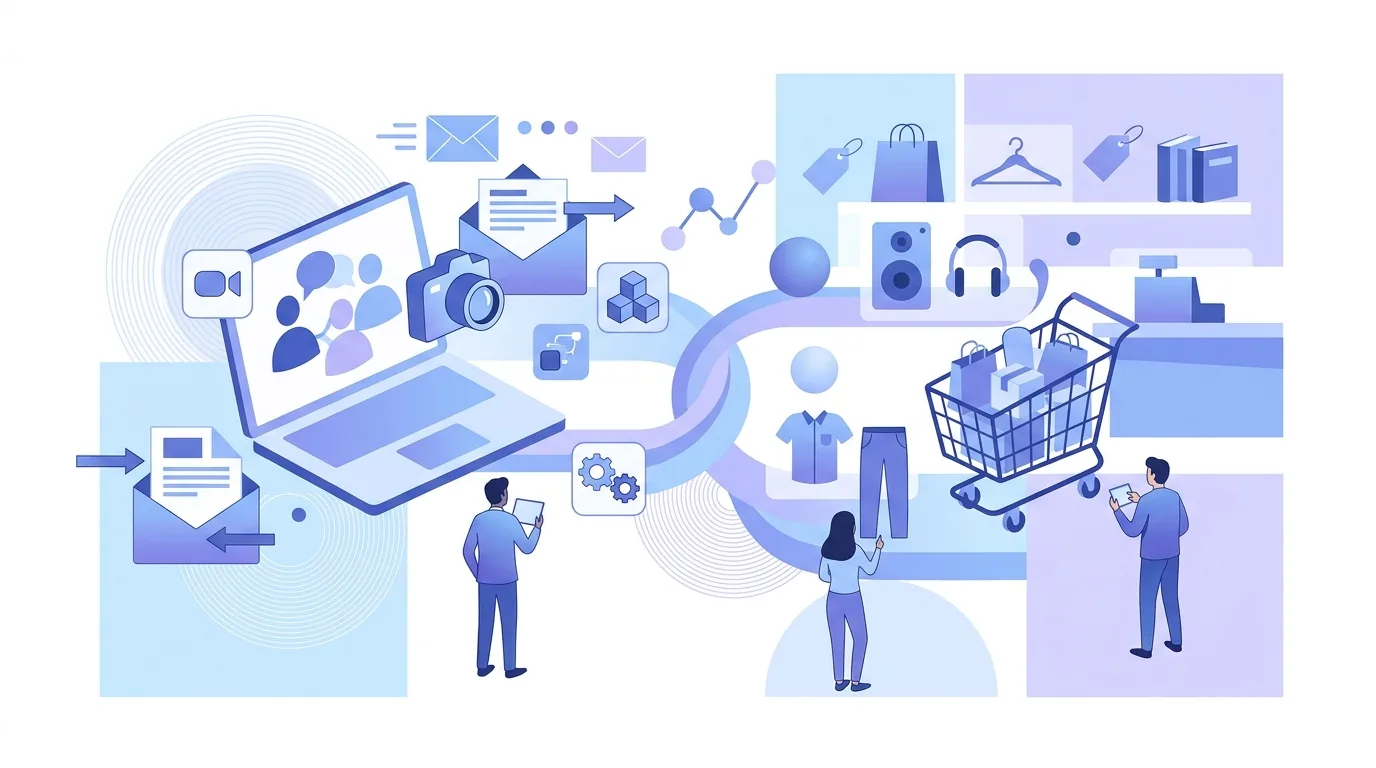
How does cross selling work in B2B?
Cross selling in B2B runs on account data and named contacts, not on a checkout widget. The trigger is something that happens in the account after the first sale, such as a support ticket, a new team starting to use the product or a contract renewal. The offer then goes to the person who would use the add-on, and the customer treats it as a separate purchase decision. In practice it follows these steps:
- Pull purchase and usage data from your CRM or billing system: which product each account bought and since when.
- Map each first product to the need it creates and the add-on that meets it, using pairings customers have already bought on their own.
- Define the trigger event that shows the need has appeared, for example a ticket about data recovery for a hosting customer.
- Identify the contact who owns that need. This is often a different team from the original buyer, such as IT for a security module or HR for training.
- Write the offer so it names the link in one sentence: what they use now, the gap you noticed, and the add-on.
- Agree who sends it. Usually the account manager who owns the relationship sends it, not a cold outreach team, so the customer gets one consistent contact.
The limits are specific to B2B. A new product line often needs a new approval, a procurement step or a contract amendment, so a single email starts the decision rather than closing it. If the first product is barely in use, the customer has no reason to add a second one, and the offer reads as pressure. And the EU existing-customer email exemption covers the contact whose address you collected in the sale. The new contact in another team usually isn't covered.
Which cross selling products should you offer?
Good cross selling products share three properties. You can check each one against your own data before you write anything.
- Dependency: the product only makes sense, or makes more sense, once the first product is in use. You can check this in your order history. Look at which second products customers bought on their own, and after which first product.
- A separate budget line or owner: an add-on that another team uses, such as training for HR or a security module for IT, reaches a different person than the original buyer. That changes who the email goes to.
- Low switching risk: the add-on works with what the customer already has. If it needs a migration or replaces part of the current setup, it's a project, not a cross-sell, and an email offer won't carry it.
Showing your whole catalogue to every customer doesn't work. If no first purchase leads to a product, it won't cross-sell, however you frame it.
Can you email existing customers a cross-sell offer in the EU?
The EU ePrivacy Directive contains an exemption for existing customers. If a seller got a customer's email address in the course of a sale, it can use that address to market its own similar products or services without asking for separate consent. The condition is that the customer gets a clear, free and easy way to object, both when the address is collected and in every message after that. Germany carries this exemption into its Act against Unfair Competition (UWG), and one of its conditions is that the customer hasn't objected. The GDPR also gives people a right to object to direct marketing at any time; once someone objects, their data may no longer be used for it.
This limits cross selling in two ways. First, 'similar' sets a ceiling. An add-on to the product someone bought is close to what the exemption covers, but an unrelated product line isn't. Second, the exemption only covers the customer whose address you collected in the sale. A colleague at the same company who never bought anything isn't covered, so emailing them counts as cold outreach, which has its own rules. In the US, commercial email to customers still falls under CAN-SPAM, which asks for a working opt-out, prompt handling of opt-out requests and the sender's physical postal address in the message. National rules differ, and none of this is legal advice for your own setup.
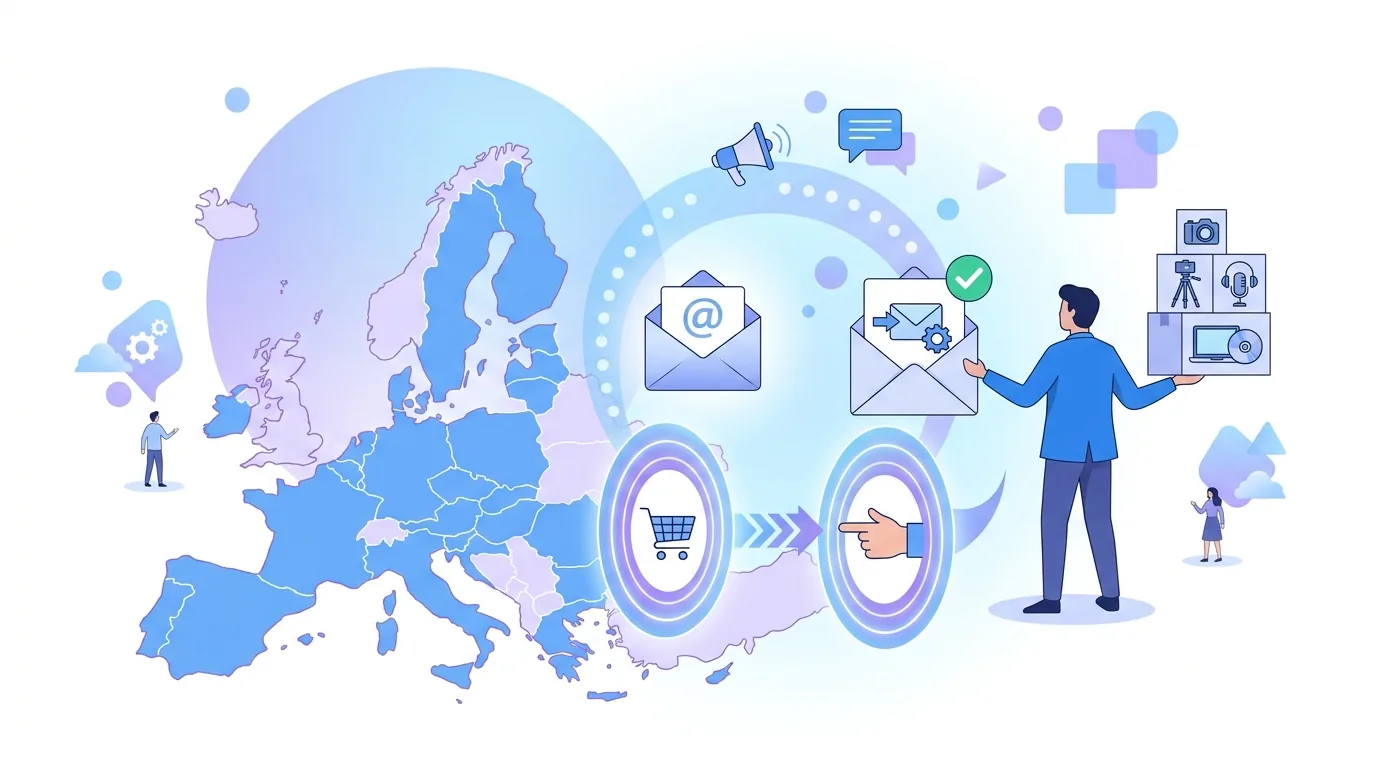
Which domain should a cross-sell email come from?
Most companies send invoices, password resets and support replies from their main domain. A cross-sell email sent from the same domain shares its sender reputation. Gmail's sender guidelines ask senders to keep the spam rate shown in Google Postmaster Tools low, and set stricter requirements for bulk senders. If customers mark a cross-sell mailing as spam, that rate rises for the domain your invoices come from as well. Two things lower the risk. Send only to a cleaned list of current customer contacts, and make sure every message passes SPF, DKIM and a DMARC check aligned with the From domain. Our guide to DKIM, DMARC and SPF for cold email senders covers the setup.
Customer lists go stale faster than most people expect. Contacts change jobs, and their old mailbox either bounces or gets turned into a catch-all. Run the checks from our email list hygiene guide before any cross-sell send. Also avoid sending one identical message to every customer at once. An email blast ignores the dependency between products that a cross-sell relies on.
How EmailFlow OS fits a cross-sell email
EmailFlow OS is a EmailFlow OS product built for personalised video email in B2B outreach, and it follows the same steps when the recipients are existing customers. You record one video that explains the add-on and why it follows from what the customer already uses, then upload it to EmailFlow OS. You connect your own Brevo account and your own sending domain, and import your list of customer contacts into EmailFlow OS. EmailFlow OS then creates one personalised version of that single recording for each recipient, not one per company, so two contacts at the same customer each get their own version. Every version is sent from your own inbox, through your Brevo account and your domain, never from a shared platform sender. The sending reputation stays with the domain you already manage. For how the per-recipient step works, see personalised video messages per recipient, or start from the EmailFlow OS home page.
Questions people ask
- What is an example of cross selling?
- A web host whose customer already runs a site offers a managed backup add-on after that customer opens a support ticket about lost data. The hosting plan created the need, the backup add-on meets it, and the offer goes to the admin who filed the ticket rather than the person who signed the contract. In retail, the laptop-plus-sleeve offer at checkout is the familiar case.
- How does cross selling work in B2B?
- In B2B, cross selling starts from account data rather than a checkout page. A trigger event, such as a support ticket or a new team using the product, shows that a gap has appeared. The account owner then offers the related add-on to the contact who'd use it, often in another team, and the customer approves it as a separate purchase.
- What is the difference between upselling and cross-selling?
- Upselling offers a bigger or better version of the same product, such as a higher plan tier or more seats, and it replaces what the customer already has. Cross-selling offers a different, related product that's used alongside the first one, such as a backup add-on next to hosting. The test is simple: if the offer replaces the current product, it's an upsell. If it sits next to it, it's a cross-sell.
- Is a cross-sell email to a customer cold email?
- Not if it goes to the customer whose address you collected in the sale and it offers a similar product. In the EU, the existing-customer exemption in the ePrivacy Directive covers that case, as long as the person can easily opt out. An email to a colleague at the same company who never bought anything is cold outreach, and the consent rules for cold outreach apply to it.
- When should you send a cross-sell offer to a B2B customer?
- Send it once the first product is running and the need for the add-on has come up, not during onboarding. A practical trigger is a CRM event that reveals the gap, such as a hosting customer opening a support ticket about data recovery. If you send the offer before the first product works, it competes with a problem the customer still hasn't solved.
- Is cross selling the same as bundling?
- No. Bundling sells several products together as one package at the point of purchase, usually for a single price. Cross selling offers the second product as a separate decision, either during the purchase or later. For the customer, a bundle is one decision and a cross-sell is two, so the second product needs its own reason to buy.
