12 min read Diesen Artikel auf Deutsch lesen Lire cet article en français Ler este artigo em português
Customer Profile Example: B2B ICP Template
The short answer
A B2B customer profile describes the company you sell to: its industry, size, region and tools, the event that makes it look for a fix, its pains, and who signs. A buyer persona then describes one role inside that company. To build a profile, take your best existing customers, note what they have in common, and write each shared trait down as a filter you can check. Then use those fields to pick prospects and write each email.
In this article
- What is a customer profile, and how is it different from a persona?
- Customer profile example: a filled-in B2B ICP
- Buyer persona example for the same profile
- How to develop an ideal customer profile
- What customer characteristics should a profile include?
- Turning the profile into emails
- Follow up sales email example
- Cross sell email example
- Dear Sir or Madam letter example
- Which sending domain does the profile assume?
- Where EmailFlow OS fits once the profile exists
- When a customer profile doesn't work
- Questions people ask
What is a customer profile, and how is it different from a persona?
A customer profile is a written description of the type of buyer you're aiming at. In B2B the term usually means the ideal customer profile (ICP), which describes a company, not a person. A buyer persona sits one level below it and describes a role inside that company: what the person is measured on, what they worry about, and how they like to be contacted. People mix the two up all the time, and that's where outreach lists go wrong. A list built from personas alone ends up full of Heads of Operations at companies that could never buy. A list built from the ICP alone gets the right companies and the wrong inbox.
| Ideal customer profile (ICP) | Buyer persona | Contact record | |
|---|---|---|---|
| Describes | A type of company | A role within that company | One named person |
| Typical fields | Industry, size, region, tech stack, trigger event, budget owner | Goals, KPIs, objections, preferred channel | Name, title, email address, source of the data |
| Personal data under GDPR? | No, as long as it stays at company level | No, if it's a generalised role | Yes, because it identifies a person |
| Used for | Deciding which accounts belong on the list | Deciding what the message says | Sending the message |
That last row matters if you send in the EU. The ICP and the persona are abstractions. Once you attach a name and an email address, the record becomes personal data. The GDPR defines personal data as any information relating to an identified or identifiable natural person, and a work address like anna.berger@company.com identifies one. You then need a lawful basis for processing the record. The GDPR's recitals say direct marketing may count as a legitimate interest, but you still have to document a balancing test. The person can also object to processing for direct marketing at any time, and once they do, you have to stop using their data for it.
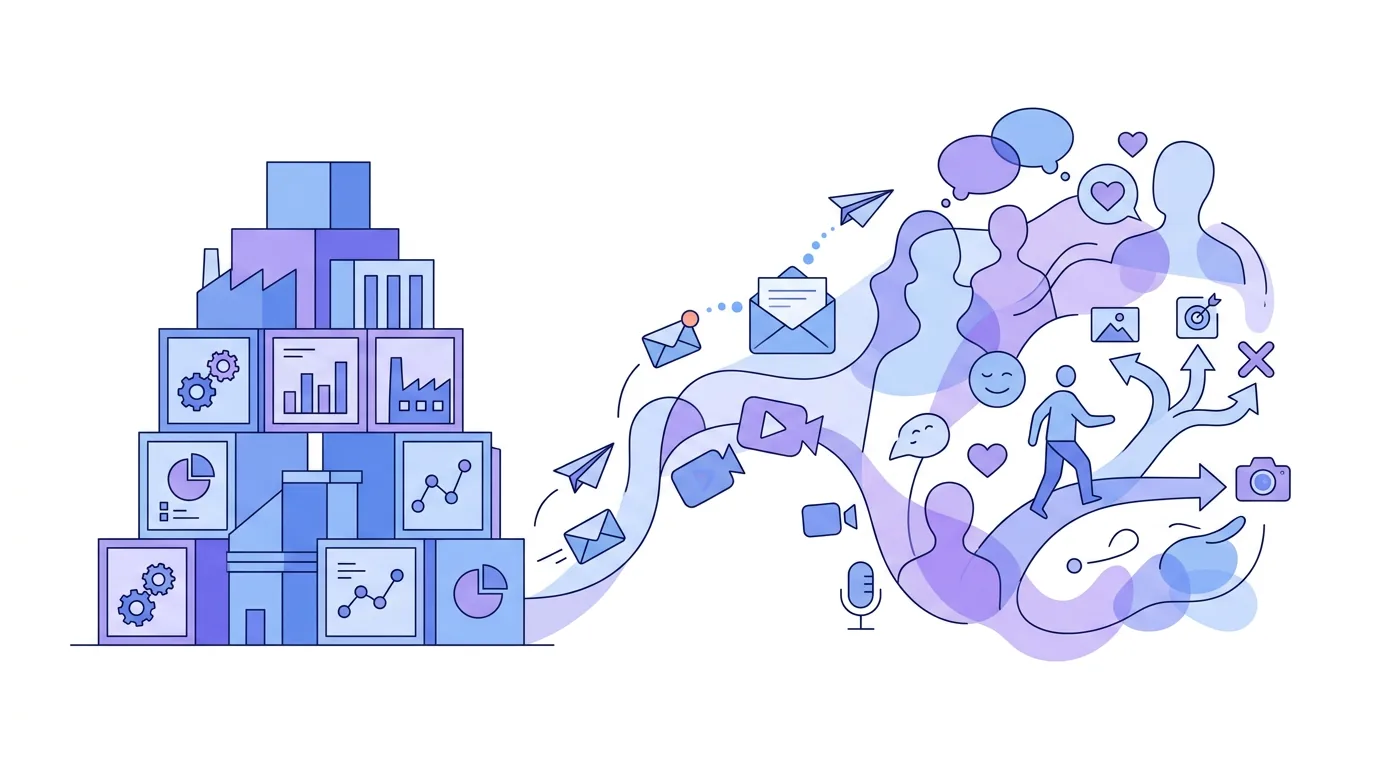
Customer profile example: a filled-in B2B ICP
The example below is made up for illustration. It's for a company that sells maintenance-scheduling software to logistics firms. Look at how each field is written: you can check every one of them against a prospect before anyone writes an email. You can't check a field like "innovative companies", so it doesn't belong in a profile.
| Field | Example value | How you check it on a prospect |
|---|---|---|
| Industry | Road freight and contract logistics firms that run their own vehicle fleet | Company website, trade register category |
| Size | Large enough to have a dedicated fleet or operations manager, small enough to have no in-house software team | Job titles visible on LinkedIn, careers page |
| Region | EU, with operations in at least one country you can support in its language | Registered address, depot locations |
| Current tooling | Maintenance planned in spreadsheets or in the telematics vendor's basic module | Job ads that mention the tools, conversations |
| Trigger event | New depot, fleet expansion, or a failed roadside inspection | News, press releases, hiring for depot roles |
| Main pain | Vehicles off the road because of missed services; no single view of due dates | Discovery calls with past customers |
| Decision maker | Head of Operations; finance signs off | Org chart, past deals |
| Disqualifier | Fleet fully leased with maintenance included in the lease | Ask in the first reply |
Most templates leave out the disqualifier row. Writing down when a company is not a fit cuts wasted sends at the source, because it removes accounts before they ever reach the list. If you sell into one industry, the same logic shapes your whole vertical market approach, so that article is worth reading alongside this one.
Buyer persona example for the same profile
- Role: Head of Operations at the logistics firm above.
- Measured on: vehicle availability, on-time delivery, cost per route.
- Daily reality: spends the morning re-planning routes around vehicles that ended up in the workshop unexpectedly.
- Objection you'll hear: "Our telematics system already does this." Your answer has to point to the specific gap, not repeat the feature.
- Channel: reads email between depot calls, often on a phone, so the first lines have to make sense without scrolling.
How to develop an ideal customer profile
- Pull your best existing customers. Decide what "best" means before you start, for example how long they've stayed, how much they've expanded, or how easy they were to serve. Don't just pick the logos you're proudest of.
- List what they share. Note industry, size band, region, tools and who bought. Only keep a trait if most of the group shares it.
- Find the trigger. Ask each customer what changed just before they started looking. That's usually the event your outreach should key on.
- Write the pains down in the customer's own words. Take the phrases from call notes and emails, not from your marketing copy.
- Add disqualifiers. Use lost deals and churned accounts to spell out who you shouldn't contact.
- Turn every field into a filter. Each trait needs a data source you can check on a prospect, such as the trade register entry, the careers page or a job ad.
- Test the profile on real outreach and revise it. Replies that say "wrong person" or "not relevant" show you which field is off.
If you score accounts against the profile instead of using it as a yes/no filter, the weighting brings its own failure modes. The guide to account scoring models covers them.
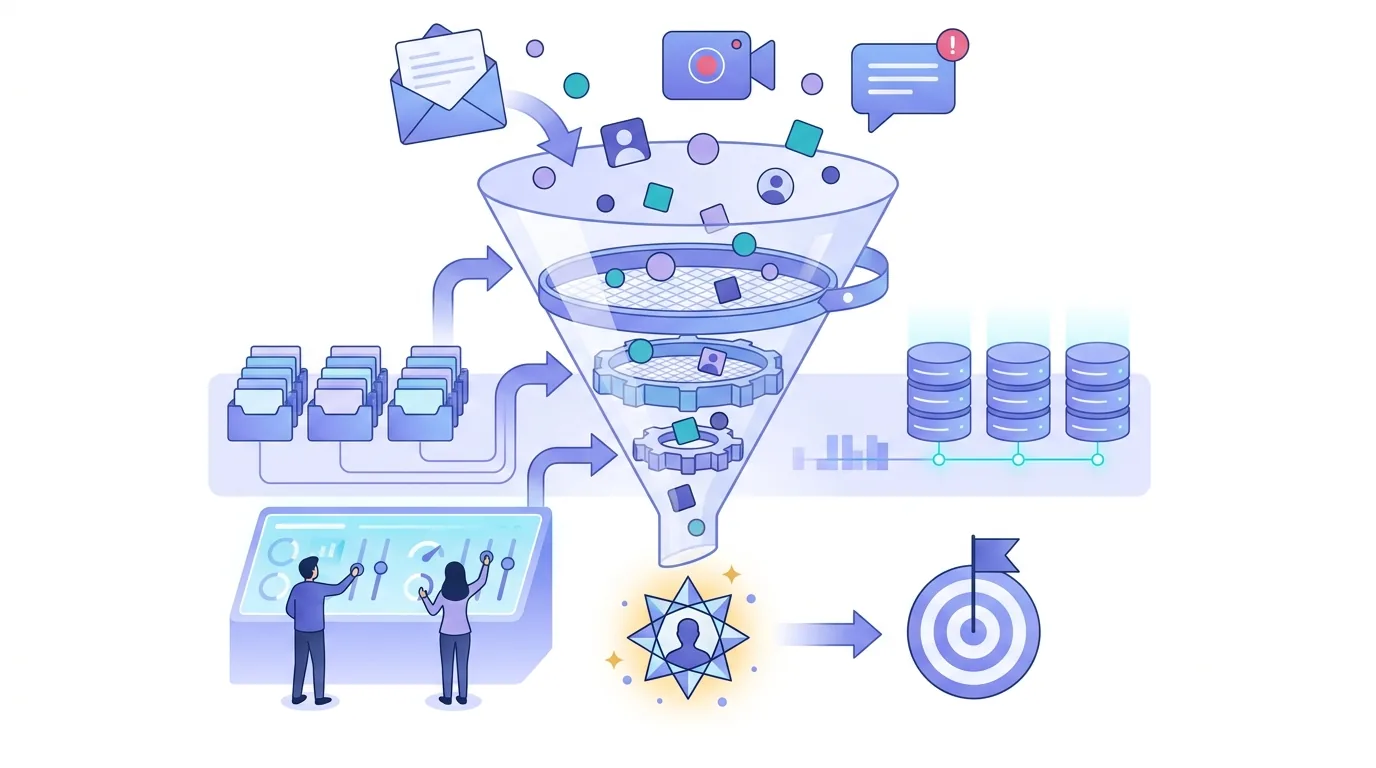
What customer characteristics should a profile include?
In B2B, customer characteristics fall into five groups. Firmographics cover industry, size, region and legal form. Technographics cover the tools the company already runs. Situation covers trigger events, growth or restructuring. Needs cover pains and goals. Buying process covers who decides, who signs and who blocks. Consumer profiles use demographics and psychographics instead, such as age, income and interests. Those fields don't carry over to a buying group, where nobody decides alone.
A high-profile customer is one whose name carries public weight, such as a well-known brand or a market leader. Winning one can help you sell to others. But being high-profile isn't an ICP trait. If the account doesn't match your filters, it will often cost more to serve than it brings in.
Turning the profile into emails
A profile only pays off when its fields show up in the message itself. Each example below uses the trigger, the pain and the persona from the ICP above.
Follow up sales email example
Subject: Re: service planning at the new depot. Hi Anna, one thing I left out last week: when a depot opens, its service due dates usually sit in a separate spreadsheet from the rest of the fleet for the first few months. That's where a missed service tends to turn into a vehicle off the road. Would a short look at how other operations teams merge the two be useful, or have you already solved that?
Here's why it's built like that. It's a reply in the same thread, so the earlier message is right there for context. Mail clients group a reply into its thread using the In-Reply-To and References headers. A follow-up sent as a new message with the subject line copied over doesn't carry those headers, so it can show up as a separate conversation. The email adds one new fact tied to the trigger event and ends with a question the persona can answer in one line. You'll find more follow-up sales email examples for different stages in the template collection.
Cross sell email example
Subject: Tyre checks in the same plan. Hi Anna, your team now plans services in the scheduler. Last month's review showed tyre inspections are still on paper at two depots. The tyre module puts them in the same calendar. Want me to switch it on for one depot as a trial? If you'd rather not get product updates like this, just reply and I'll stop.
In the EU, the ePrivacy Directive lets you send email marketing to existing customers about your own similar products or services. Three conditions apply: you got the contact details in the context of a sale, the customer could object free of charge when you collected the address, and they can object with every message. That's why the example ends with a way to opt out. Each country implements the directive in its own law, so check the version that applies to you. The B2B side is covered in cross selling examples for B2B email.
Dear Sir or Madam letter example
"Dear Sir or Madam" is the formal salutation for when you know the organisation but not the person, for example on a letter to a company's purchasing department. In outreach built on a profile, it's a sign the contact research isn't finished. If the persona names the role, write "Dear Head of Operations" or find the person's name. Here's a letter example: "Dear Sir or Madam, I am writing about vehicle maintenance planning at your new depot in Lyon…" That works for a formal enquiry. In cold email, it usually tells the reader the message went to a whole list. The guide to Dear Sir or Madam alternatives has more salutation samples.
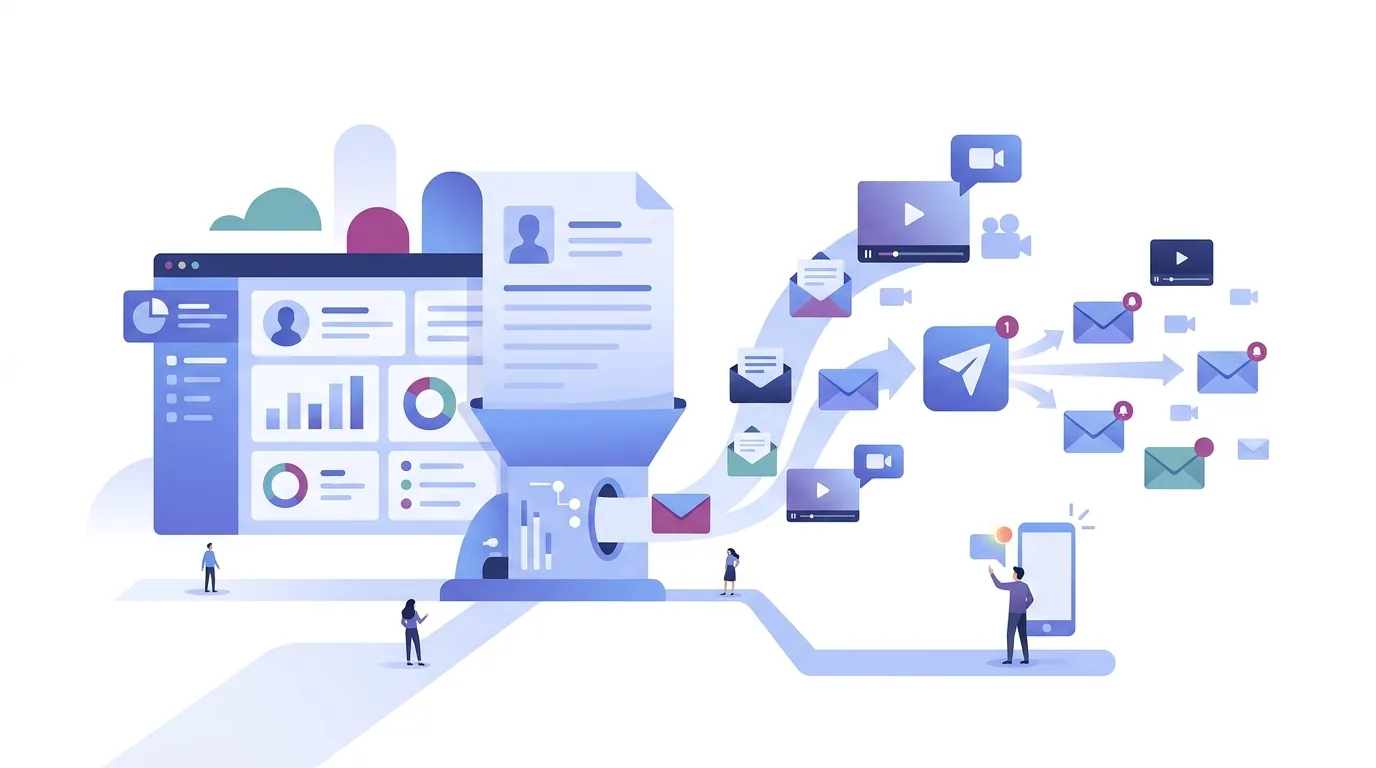
Which sending domain does the profile assume?
Who you write to decides which domain you send from. A logistics manager judges the sender before reading the first line, so the address should belong to your company and pass authentication.
- Email domain example: in anna@example.com, the domain is example.com. The IETF reserves example.com, example.org and example.net for documentation, which is why guides use them instead of real company domains.
- Email domain name example: the domain name is everything after the @. Mail from you@yourcompany.com uses your own domain. Mail from a free webmail address uses the provider's domain. You don't control that domain's DNS, so you can't publish SPF, DKIM or DMARC records for it.
- DMARC record example: a TXT record at _dmarc.yourcompany.com with the value v=DMARC1; p=none; rua=mailto:dmarc@yourcompany.com. The v and p tags are required. The p tag takes none, quarantine or reject, and rua says where aggregate reports go. DMARC only passes if SPF or DKIM passes for a domain that aligns with the visible From address.
- SPF lookup limit: the SPF specification caps how many DNS lookups one check can trigger through include, a, mx, ptr, exists and redirect. Each sending service you add with its own include counts towards that cap. Going over it returns a permerror, and receivers treat that as an SPF failure.
Google's Email sender guidelines require bulk senders to Gmail to have SPF, DKIM and a DMARC record in place. The overview of email domain types compares the different kinds of domain and the DNS records each one needs. A common mistake is starting at p=reject before you've read the reports. Any legitimate service you forgot about, such as invoicing or a helpdesk, then fails DMARC, and receiving servers may refuse its mail. The DMARC setup guide walks through the rollout from none to reject step by step.
Where EmailFlow OS fits once the profile exists
EmailFlow OS comes in once the profile has done its job and you have a list of people who match it. You record one video and upload it to EmailFlow OS, connect your Brevo account and your sending domain, and import the prospect list into EmailFlow OS. EmailFlow OS then makes a separate version of that one recording for each person on the list, not one per company, so two contacts at the same logistics firm each get their own version. Every version goes out from your own inbox, through your own Brevo account and your own domain, never through a shared platform sender. That means the SPF, DKIM and DMARC records described above are the ones that apply. The EmailFlow OS home page explains how it works.
When a customer profile doesn't work
- It's built from wishes, not customers. If no current customer matches the profile, nothing has tested it yet.
- Its fields can't be checked. You can't filter on "values innovation", so the list ends up built on guesswork.
- It never gets updated. If replies keep saying "wrong person" and the persona stays the same, the profile drifts away from the market.
- It replaces research on the person. A profile tells you which accounts to approach. It doesn't tell you what one contact cares about this quarter.
Questions people ask
- What should a customer profile template include?
- At a minimum: industry, company size band, region, current tools, trigger event, main pain, decision maker, and at least one disqualifier. Each field also needs a data source you can check on a prospect, such as the company website, job ads or the trade register. A template without disqualifiers only tells you who to add to the list, never who to leave off.
- Is an ideal customer profile the same as a target market?
- No. A target market is the whole segment you could sell to, such as EU logistics companies. An ideal customer profile narrows that down to the accounts most like your best customers, using filters you can check, like tooling, trigger events and buying structure. One target market can hold several ICPs, for example one for single-depot firms and one for multi-depot firms.
- How often should an ICP be revised?
- Revise it whenever the evidence shifts: a run of lost deals with the same objection, replies that say "wrong person", or a new product that changes who can buy. The habit of checking matters more than a fixed schedule. Compare closed-won and closed-lost accounts field by field, and change any field that no longer tells them apart.
- Does a customer profile contain personal data?
- An ICP describes a type of company and a persona describes a generalised role, so neither normally identifies a person. Once you attach a name, job title and email address, the record is personal data under the GDPR's definition. You then need a lawful basis for holding it and for emailing that person, and they can object to direct marketing at any time.
