12 min read Diesen Artikel auf Deutsch lesen Lire cet article en français Ler este artigo em português
SDR in Sales: Role, Handoff, Follow-Ups
The short answer
In sales, SDR means sales development representative, the rep who owns the top of the funnel. An SDR researches accounts and contacts prospects by email, phone and LinkedIn. They ask qualifying questions and book a meeting only once the agreed criteria are met. The account executive then runs discovery and closes the deal. Between touches, the SDR sends follow-ups as replies in the original thread, from a domain that passes SPF, DKIM and DMARC.
In this article
- What does SDR stand for in sales?
- Where does the SDR sit in the sales process?
- What goes wrong at the SDR-to-AE handoff?
- SDR vs BDR: what's the difference?
- What is prospecting in sales?
- Sales follow-up emails an SDR sends
- Sales follow-up email template
- Sales follow-up email examples
- Follow-up email after a sales call
- Which tools does an SDR use?
- How EmailFlow OS handles an SDR's video email
- What an SDR's sending domain needs before the first email
- Questions people ask
What does SDR stand for in sales?
In sales, SDR stands for sales development representative. An SDR finds, contacts and qualifies prospects, then books a meeting for an account executive (AE), who closes the deal. The SDR doesn't close anything. Their output is a qualified meeting the AE accepts. An SDR in sales does the work that happens before a deal exists. They build a list of accounts that fit the ideal customer profile, find the right person at each one, make first contact and qualify the replies. Most companies hire SDRs into an entry-level sales job, so this is usually where people learn prospecting, cold email and objection handling before they carry a quota for closed deals.
Here's an example. An SDR at a payroll software vendor looks for mid-sized companies that have just opened a second office. They find the head of HR and send a short email that mentions the new office. They follow up twice in the same thread and get a reply asking about migration. Then they ask a few qualifying questions and book a call with the AE. Once the AE accepts that meeting, the SDR is done with the account. This page covers how the role fits into the sales process. For daily tasks and how pay is structured, see our guide to the sales development representative job and pay.

Where does the SDR sit in the sales process?
The SDR owns every stage up to the first qualified meeting. Each stage needs an exit criterion that the buyer meets, not a box the rep ticks. Without one, the handoff turns into an argument about what 'qualified' means. The table shows a common split. Your company may draw the line somewhere else. Our article on sales pipeline stages and exit criteria goes into more detail.
| Stage | Owner | Exit criterion |
|---|---|---|
| Account and contact research | SDR | The account matches the ideal customer profile and has a named contact with a verified address |
| First contact | SDR | The prospect replies, or the sequence's stop rule ends it |
| Qualification | SDR | The prospect confirms need, their role in the purchase and timing in their own words |
| Handoff | SDR to AE | The AE accepts the meeting and the context notes |
| Discovery and proposal | AE | The buyer confirms the problem, the budget owner and the next step |
| Close | AE | Contract signed or deal marked lost |
What goes wrong at the SDR-to-AE handoff?
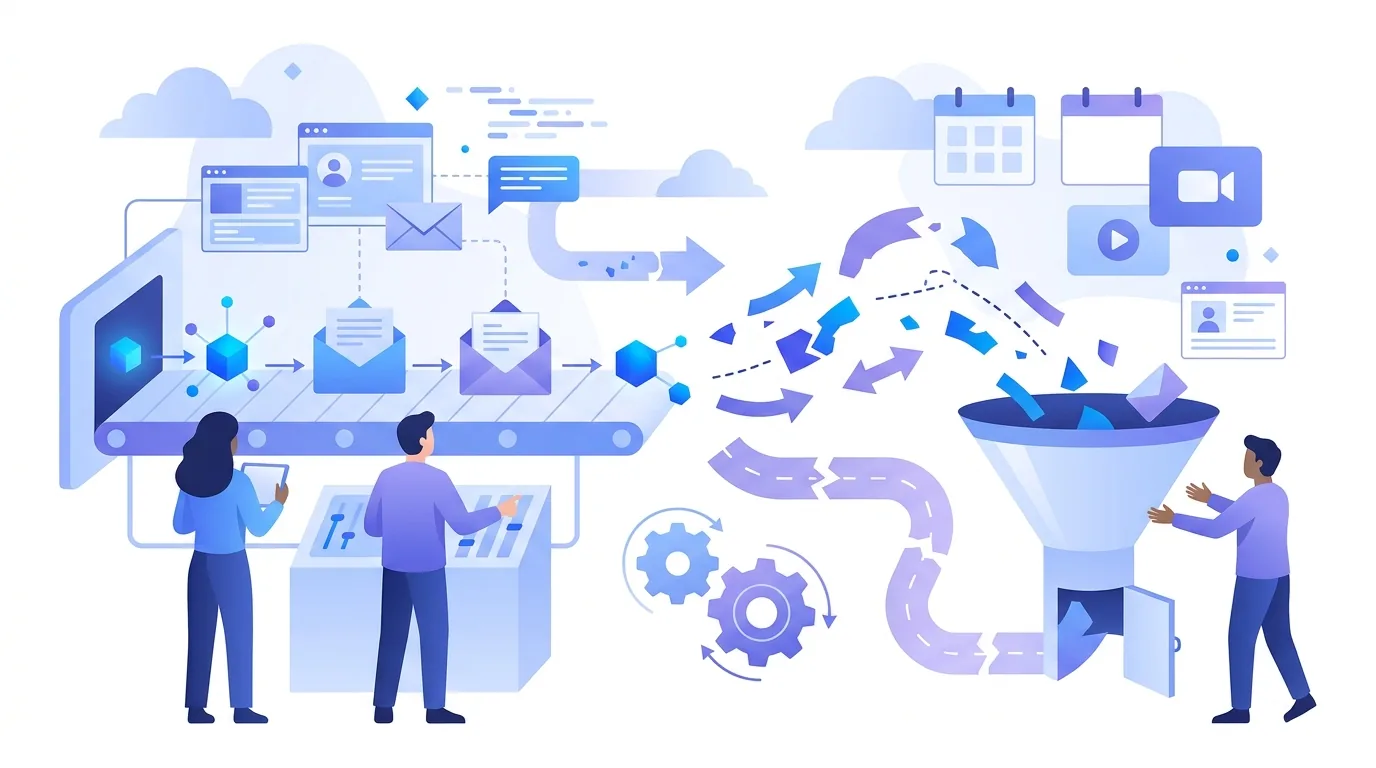
Most of the friction between SDRs and AEs comes from the handoff. The same failure modes keep showing up, and each has a specific cause:
- Meetings booked to hit a number. If the SDR's variable pay counts meetings booked instead of meetings the AE accepts, unqualified calls fill the calendar. The fix is the definition in the comp plan, not more coaching.
- Context lost in transit. The AE starts the call without the thread, the trigger or the problem the prospect described. The handoff note should quote the prospect's reply, not summarise it.
- No-shows. A prospect who agreed to 'a quick chat' never agreed to a sales meeting. A calendar invite with a one-line agenda shows them what they said yes to.
- Qualification that's too strict. If the SDR has to confirm budget before booking, early-stage buyers who don't have a budget yet drop out.
A handoff note that avoids the second failure fits in five lines. Using the payroll example: Trigger: second office opened, HR roles posted for the new site. Contact: head of HR, replied to follow-up two. Quote: 'We're running two payroll systems until the new office is migrated.' Confirmed: she owns the migration, wants it done before the next financial year. Open for the AE: who signs off on budget. The AE can read that quickly and open the call with the prospect's own words.
Set qualifying questions for each stage so it's clear what the SDR confirms before booking and what the AE leaves for discovery. Our list of qualifying questions by stage shows which ones belong before the meeting. After the AE takes the call, the pitch and objection work is theirs. But SDRs still hit early objections on first contact, so many teams train both roles on the same sales objection handling steps.
SDR vs BDR: what's the difference?
People use the two titles interchangeably, and the definitions vary by company. Amplemarket's BDR vs SDR page, among others, describes one common split: SDRs work inbound leads and warm prospects, and BDRs (business development representatives) go after new accounts outbound. Plenty of companies do it the other way round, or call both roles 'SDR'. Go by the job description, not the title.
| SDR (common usage) | BDR (common usage) | |
|---|---|---|
| Lead source | Inbound form fills, trial sign-ups, event leads | Outbound: accounts that haven't raised their hand |
| Main activity | Quick response and qualification | Research, cold email, cold calls, LinkedIn |
| Usually measured on | Meetings from inbound that the AE accepts | Meetings or opportunities created from outbound |
| Hands off to | Account executive | Account executive |
What is prospecting in sales?
Prospecting in sales means finding people who could buy and starting a conversation with them before they've shown any interest. It has two parts. Research decides who to contact: the ideal customer profile, a trigger such as a new hire, a funding round or a new location, and a named person with a working address. Outreach is the first contact plus the follow-ups. Prospecting ends when the person replies and qualification begins. It fails most often at the research step. A bought list that nobody verified produces hard bounces, and those hurt the sending domain's reputation before anyone has read a word. For how marketing-led and sales-led prospecting differ, see what prospecting means in sales and marketing.

Sales follow-up emails an SDR sends
Most first emails get no reply, so follow-ups take up much of an SDR's day. Each follow-up should go out as a reply in the original thread, which mail clients handle through the In-Reply-To and References headers of the internet message format standard. A follow-up sent as a new message with a typed 'Re:' subject lacks those headers, so many clients show it as a separate conversation. It should add one new fact and ask one question. A follow-up that only says 'bumping this' gives the reader nothing new to respond to.
Sales follow-up email template
Use this sales follow-up email template for the second touch after a cold email. Send it as a reply in the same thread so the subject stays as 'Re:' plus your original subject. Body: 'Hi [First name], one thing I left out last time: [new fact tied to their trigger, e.g. teams that open a second office often run payroll in two systems for a while]. Is that something you're dealing with at [Company], or is it already solved? [Your name]'. Keep it to one fact and one yes/no question. For more variants by situation, see our sales follow-up email templates.
Sales follow-up email examples
- New-fact follow-up: 'Saw you posted new HR roles in Leeds this week. Will the new office run on the same payroll setup as the main one?'
- Resource follow-up: 'Here's the short checklist we use for multi-site payroll migrations, no form to fill in. Useful, or not your area?'
- Referral follow-up: 'If payroll sits with someone else at [Company], who would you point me to?'
- Closing follow-up: 'I'll stop here so I'm not filling your inbox. If timing changes, a reply to this thread reaches me.' This one ends the sequence for that contact.
Follow-up email after a sales call
An SDR's follow-up email after a sales call confirms what was agreed. It isn't a pitch. Send it the same day. Include a short recap in the prospect's own words, the date and time of the AE meeting with the time zone, the AE's name, and one question the AE wants answered beforehand. If the call ended with 'send me some info', ask which part they want instead of attaching everything. Our article on the follow-up email after a sales call has full templates, and the sales script examples cover the call itself.
Which tools does an SDR use?
An SDR stack usually covers three jobs: keeping the record (CRM), finding contacts and sequencing touches. The products below are the usual names. Each one does a single job well and leaves the rest to other tools. Features differ by plan, so check the details in each vendor's own documentation.
| Tool | Main job | Where it stops |
|---|---|---|
| Salesforce Sales Cloud | CRM: accounts, contacts, opportunities, activity history | It's the system of record, not a contact database, so contact data has to come from elsewhere |
| HubSpot Sales Hub | CRM with email sequences and meeting links | Sequences send through a connected inbox, so deliverability still depends on how your own domain is set up |
| LinkedIn Sales Navigator | Account and lead search on LinkedIn, saved lists, InMail | It works inside LinkedIn and doesn't send email |
| Apollo.io | B2B contact database with sequencing | Database records can go out of date, so verify addresses before you send |
| Outreach / Salesloft | Sales engagement: multi-step sequences across email, calls and tasks | They orchestrate the touches. You're still responsible for the message content and the sending domain's reputation |
How EmailFlow OS handles an SDR's video email
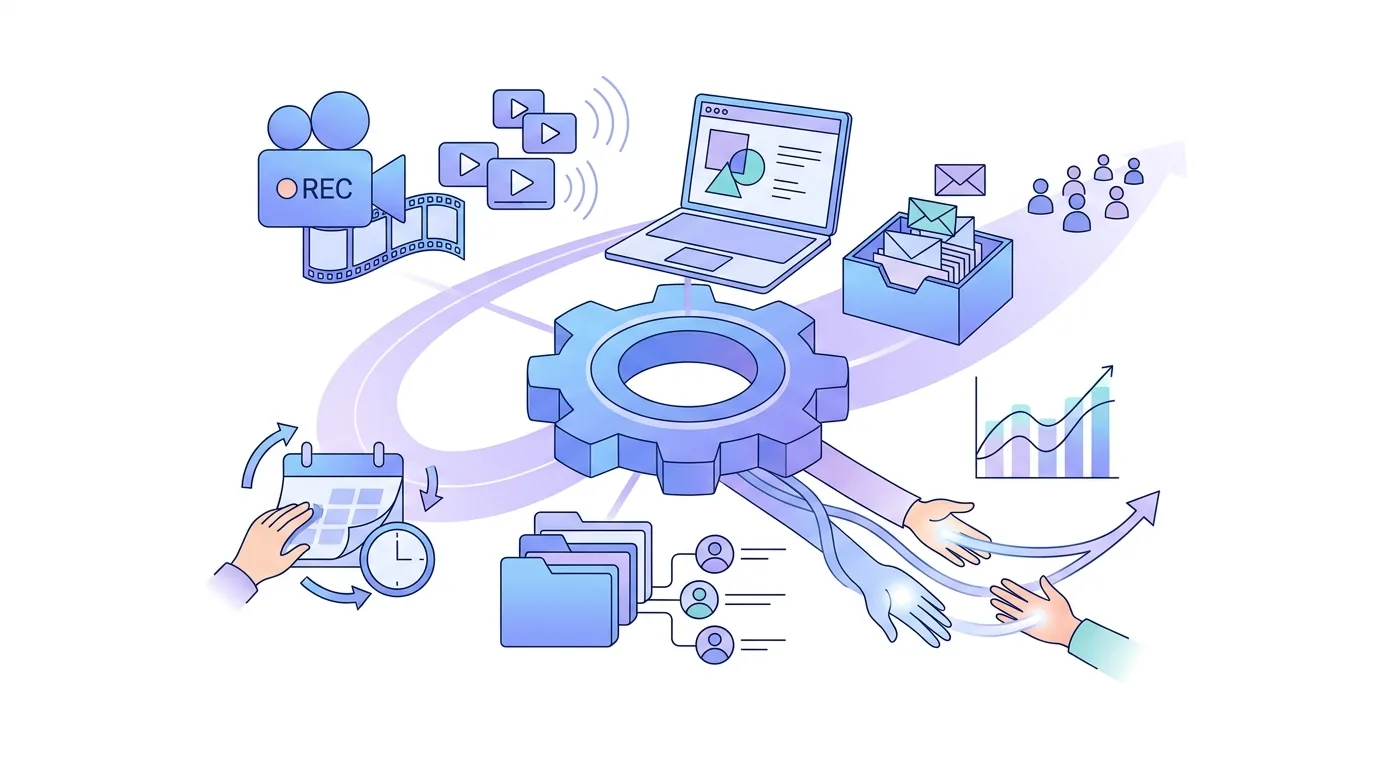
Personalised AI video email for B2B cold outreach is a EmailFlow OS product, and it sits outside the stack above. The SDR records one video and uploads it to EmailFlow OS. Then they connect their own Brevo account and sending domain and import their prospect list into EmailFlow OS. EmailFlow OS turns that one recording into a personalised version for each recipient, not each company, so two contacts at the same account get different versions. Every version goes out from the SDR's own inbox, through their own Brevo account and their own sending domain. No shared platform sender is involved. The domain, its DNS records and its reputation stay under the customer's control. EmailFlow OS sends each message. The recipient's mail server decides where it gets filed.
What an SDR's sending domain needs before the first email
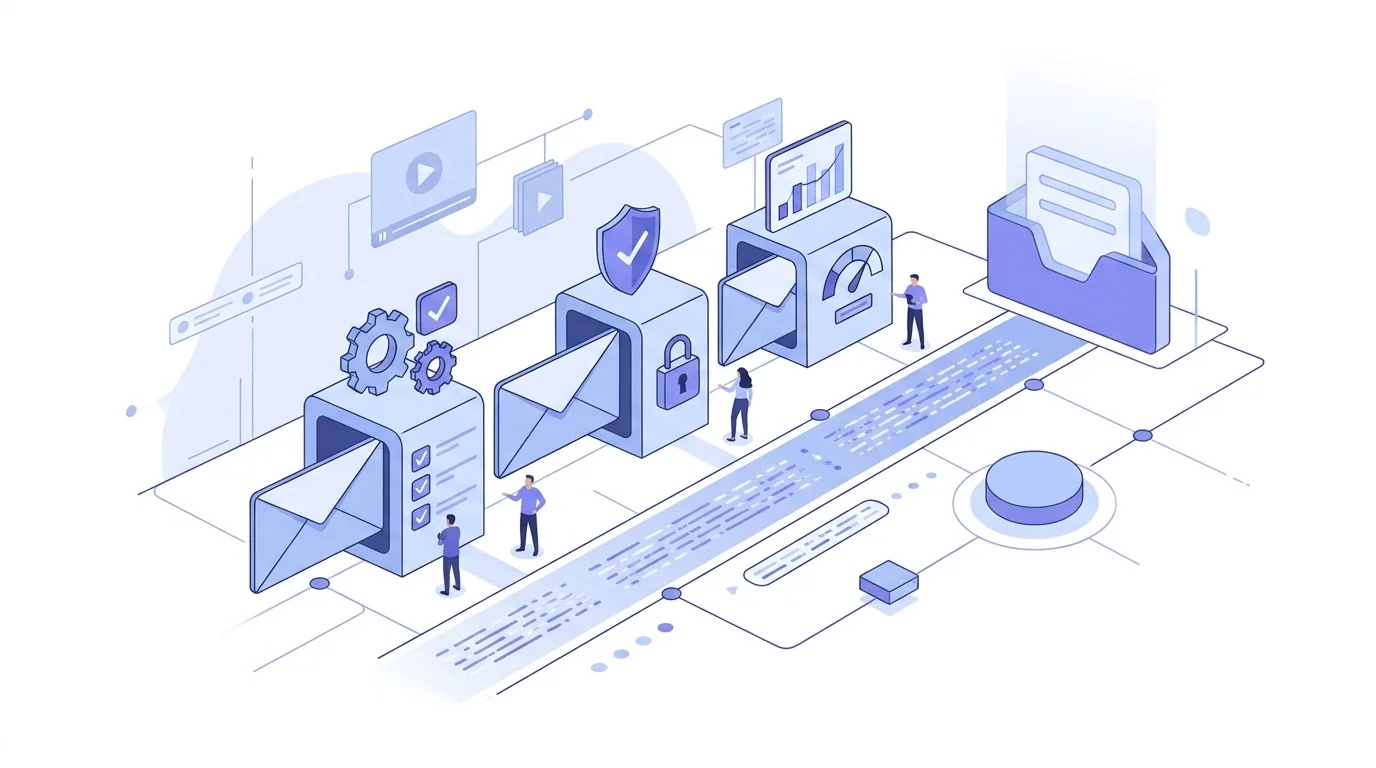
Every follow-up above depends on the domain it comes from. SPF lists the servers allowed to send mail for your domain. The SPF standard caps how many DNS lookups a single SPF check may trigger, so stacking an include: entry for every tool in the stack can make SPF fail with a permerror. DKIM adds a cryptographic signature, which receivers check against a public key published in your DNS. DMARC tells receivers what to do when neither SPF nor DKIM passes in alignment with the From domain. It's a TXT record on the host _dmarc, and a first record usually starts with v=DMARC1; p=none, which collects reports without asking receivers to reject anything. Google's email sender guidelines require bulk senders to Gmail addresses to publish SPF, DKIM and DMARC. Publish the records your sending service gives you, then test them with our SPF, DKIM and DMARC checker. A new domain also needs a gradual warm-up. Sending full sequence volume from day one is a common reason messages get filtered.
Consent rules depend on where the recipient is. In the US, the FTC's CAN-SPAM compliance guide requires truthful headers and subject lines, a valid postal address, and an opt-out honoured within 10 business days, with no exception for B2B mail. In Germany, § 7(2) of the Act Against Unfair Competition (UWG) generally requires prior express consent for email advertising, and that includes B2B. The GDPR covers the personal data in your prospect list wherever you store it; for cold outreach, teams usually assess whether legitimate interest under Article 6(1)(f) applies. The sending tool doesn't settle any of this. It depends on how your team selects people and contacts them.
Questions people ask
- What is the difference between an SDR and an AE?
- An SDR (sales development representative) owns the funnel up to the first qualified meeting: research, first contact, follow-ups and qualification. An AE (account executive) owns everything after the handoff: discovery, proposal, negotiation and close. SDRs are usually measured on meetings the AE accepts; AEs carry a quota for closed revenue. In the payroll example, the SDR's work ends when the AE accepts the call.
- Is SDR the hardest sales job?
- People often call it the hardest because most first contacts get no reply, the work is repetitive, and the SDR is measured on meetings they don't control after the handoff. An AE carries more financial risk per deal, though. How hard the job is depends mostly on list quality and on whether the comp plan defines a qualified meeting the same way the AE does.
- Do SDRs make good money?
- SDR pay is usually a base salary plus commission tied to meetings held, meetings accepted or opportunities created. Whether that adds up to good money depends on how reachable the quota is and on what counts as qualified. Commission is easier to earn on a plan that pays for meetings booked than on one that pays for opportunities the AE accepts. Read that definition before you compare offers.
- Is SDR an entry-level position?
- Yes, at most companies. SDR is the most common first role in B2B sales, and many companies don't ask for prior sales experience. The usual next step is AE, where the rep owns everything from discovery to close. Some companies also hire senior SDRs for enterprise accounts, where the research and reaching several people in a buying group take more experience.
- How many follow-ups should an SDR send?
- There's no universal number, but every sequence needs a stop rule. End it on any reply, any opt-out request and any hard bounce, and close with a final message saying you'll stop. Under CAN-SPAM, an opt-out has to be honoured within 10 business days per the FTC. Each follow-up should add one new fact and go out as a reply in the original thread.
