10 min read Diesen Artikel auf Deutsch lesen Lire cet article en français Ler este artigo em português
Decision Maker: Meaning, Apps, B2B Buyers
The short answer
A decision maker is the person or group with the authority to choose a course of action and answer for the result. Online "decision maker" apps are something else: they pick at random from options you type in. In a B2B sale, the decision maker is whoever can approve the budget and sign. To find that person, ask who else has to sign off. Then write to each member of the buying group with a message meant for them.
In this article
- What is a decision maker?
- Decision maker or decision-maker: which spelling is right?
- How does a decision maker online or a decision maker app work?
- What does an AI decision maker do?
- What are the 5 steps in the decision-making model?
- What is the 10-10-10 rule for decision-making?
- What is a surrogate decision maker?
- Who is the decision maker in a B2B sale?
- How do you reach several decision makers by cold email?
- Questions people ask
What is a decision maker?
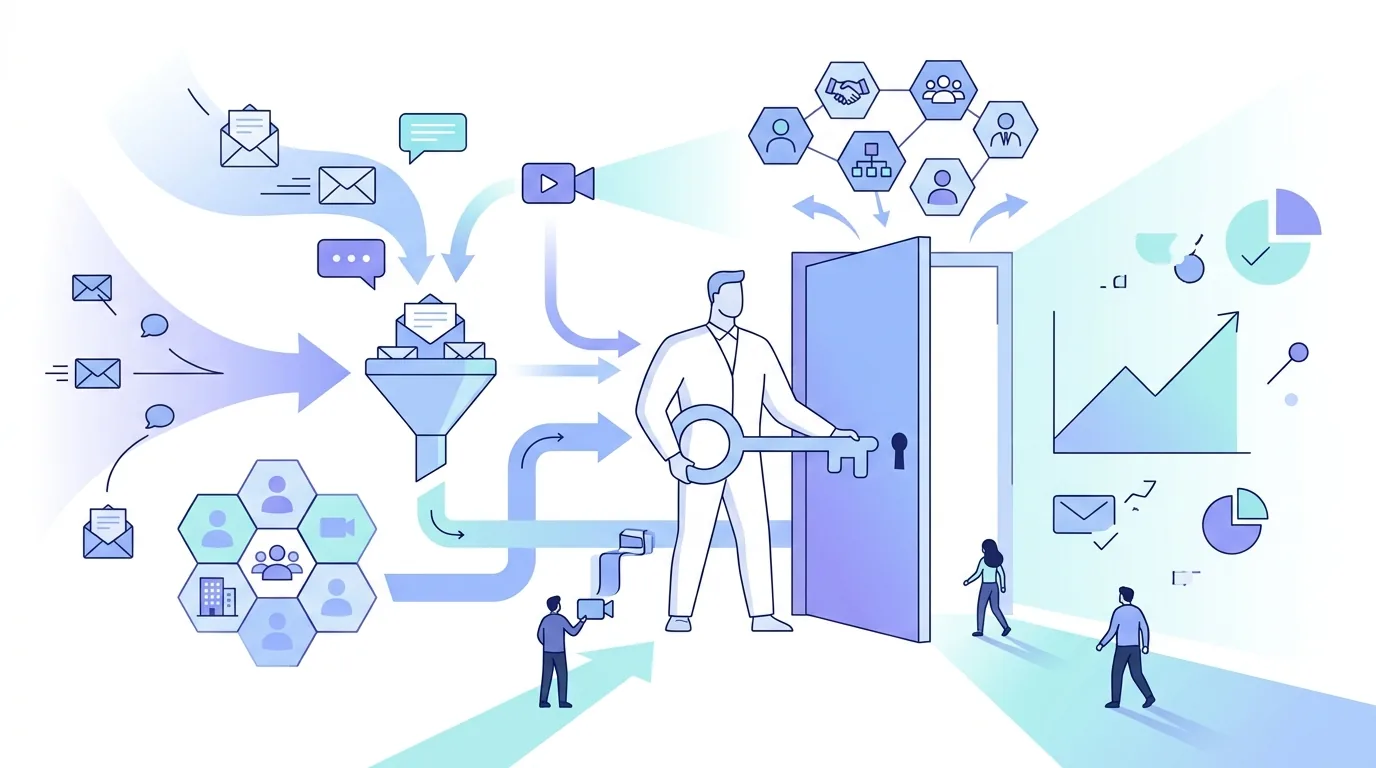
A decision maker is the person or group with the authority to make a choice and the responsibility for how it turns out. In a company, that's whoever can approve the budget and sign. In a hospital, it can be a surrogate acting for a patient who can't decide. In an app store, it's a tool that picks one of your options at random.
Merriam-Webster (entry checked November 2026) defines a decision-maker as someone who is known for making choices or is primarily responsible for making them. The word covers two things people often mix up: the authority to choose and the accountability for what happens next. Someone who gives advice but doesn't carry the consequences is an adviser, not the decision maker. Someone who signs off on a recommendation they never reviewed is still the decision maker, because the result is theirs.
Here's an example. A mid-sized company is choosing new accounting software. The finance lead compares vendors, IT checks security and the warehouse team tests the interface. The CFO approves the spend and signs the contract. Several people shape the choice, but the CFO is the decision maker, because nothing happens without that signature. A decision maker can also be a group, such as a board, a committee or a pair of co-founders. In that case the decision needs a vote or a joint sign-off rather than one person.
Decision maker or decision-maker: which spelling is right?
You'll see the noun spelled three ways. Merriam-Webster lists it with a hyphen: decision-maker (checked November 2026). The open form, decision maker, is common in business writing and in search queries. The closed form, decisionmaker, appears in some American legal and policy texts. All three mean the same thing. Pick one per document and stick with it.
The compound adjective works differently. When the phrase comes before another noun, standard English hyphenates it: a decision-making process, a decision-maker role. Editors usually correct "decision making process" written without the hyphen. The plural goes on the last word: decision-makers or decision makers, never decisions-makers.
How does a decision maker online or a decision maker app work?
Most search results for the term are random choosers, not anything about people. You enter two or more options, then spin a wheel, flip a coin or draw lots, and the tool gives you one option back. Behind it, a random number is mapped to a position in your list. Browser-based wheels usually rely on the browser's pseudo-random number generator. That's fine for settling a tie over lunch. But you can't tell from the page whether it's good enough for a prize draw or anything else that has to be auditable. Another type asks you to score each option against your own criteria and adds up the results. That isn't random, so the answer is only as good as your scores.
| Tool | Where it runs | How it picks | Suits | Where it stops |
|---|---|---|---|---|
| Decision Maker & Chooser | Android app (Google Play) | Randomiser across options you enter | Breaking a tie quickly | Treats every option as equal, with no weighting by importance |
| Decision Maker: Spin the Wheel | Android app (Google Play) | Colour wheel spun over the options you list | Group choices where a visible spin feels fair | Random outcome that says nothing about which option is better |
| Let It Decide – Decision Maker | Android app (Google Play) | Random pick for games, tasks and quick choices | Low-stakes everyday choices | Not built for choices that need evidence or sign-off |
| Decision Maker – Random Decision Wheel | Web browser | Wheel, drawing lots or a yes/no coin | Use on any device without installing anything | Pseudo-random, with no audit trail for a binding draw |
| Tough Decision Maker | Web browser | Scores the options you enter against your input | Choices where you can name your criteria | The result only reflects your own scoring, so biased inputs give biased results |
Random choosers stop working once the options aren't equally acceptable. If one choice would cost money, break a contract or hurt someone, flipping a coin doesn't hand the responsibility to the coin. The person who used it is still the decision maker.
What does an AI decision maker do?
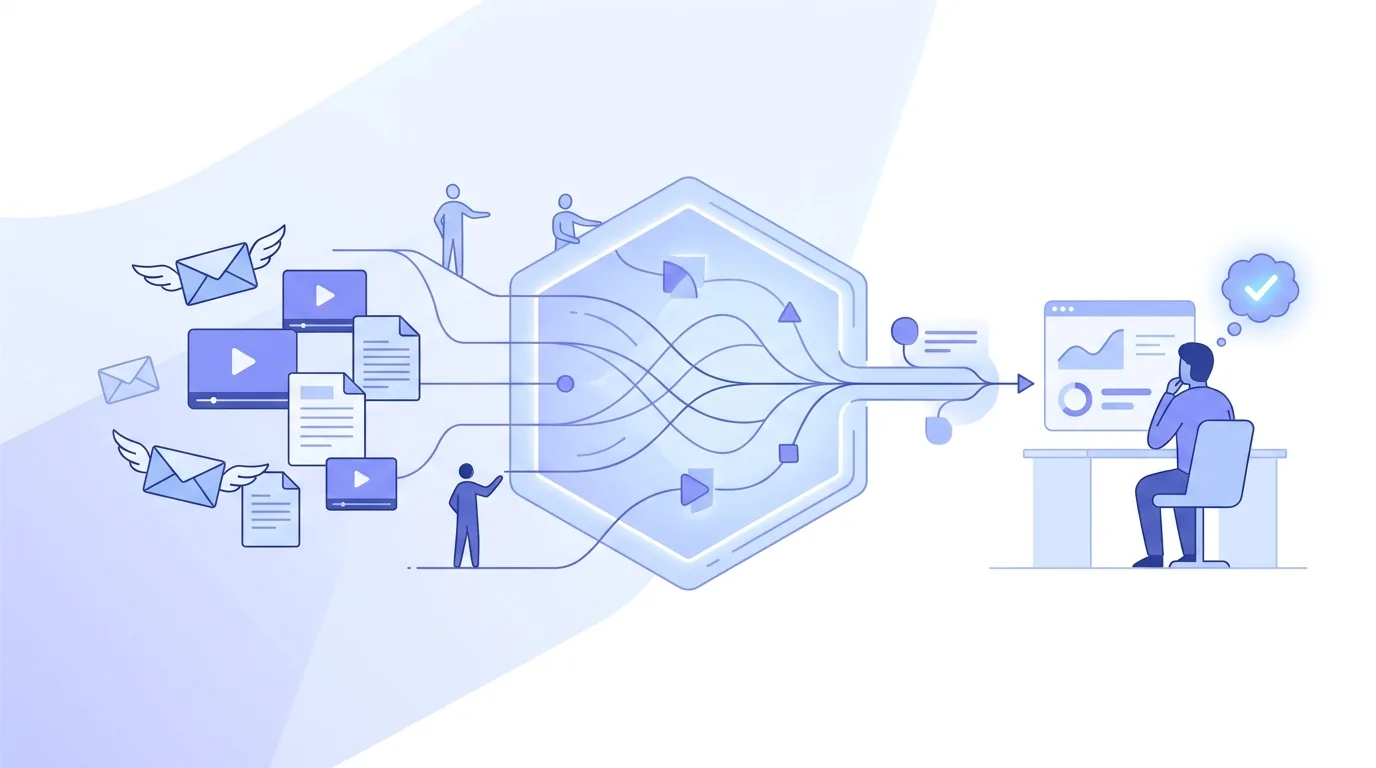
"AI decision maker" usually means a general-purpose chatbot, such as OpenAI's ChatGPT, Anthropic's Claude or Google's Gemini, that you ask to weigh up options. Unlike a wheel, it doesn't pick at random. It writes a reasoned recommendation based on what you describe. That has three consequences. It only knows the constraints you mention, so if you leave out your budget or deadline, its advice ignores them. It can state wrong facts with confidence. And asking the same question in a new session can give you a different answer.
It's most useful before you choose. It can list criteria you hadn't thought of, set out pros and cons, or argue against the option you already prefer. It doesn't replace the decision maker. Medical, legal and financial choices still need a qualified person, and whoever acts on the answer is still accountable for it.
What are the 5 steps in the decision-making model?
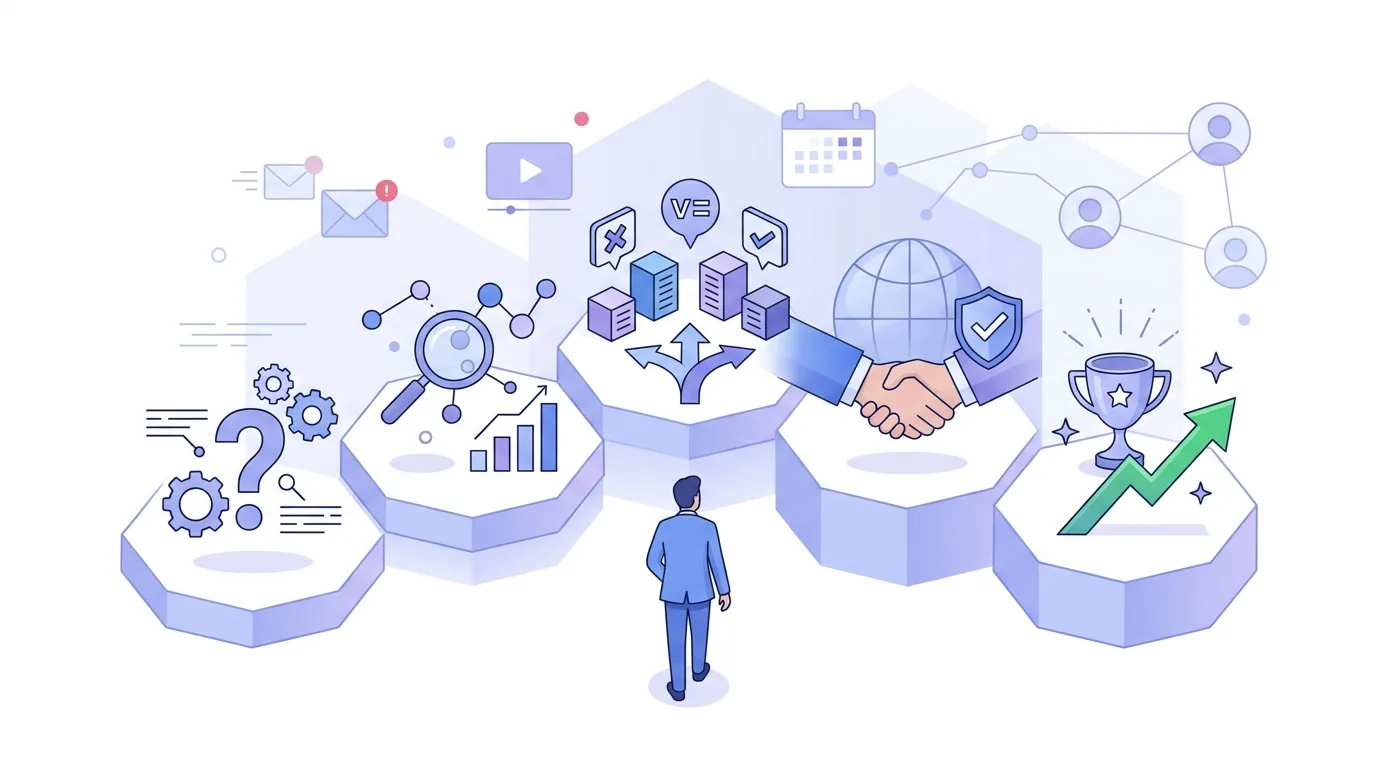
Textbooks phrase it differently, but a common five-step version goes like this:
- Define the decision: what exactly is being chosen, who chooses and by when.
- Gather information: facts, costs, constraints and the people affected.
- List the alternatives, including doing nothing.
- Weigh the alternatives against agreed criteria and pick one.
- Act on the choice, then compare the outcome with what you expected.
The most common mistake is skipping step one. Teams argue about options before agreeing on who decides, which is why decisions get reopened after they've been made.
What is the 10-10-10 rule for decision-making?
The 10-10-10 rule comes from Suzy Welch's book 10-10-10. Before you decide, you ask how you'll feel about each option in 10 minutes, in 10 months and in 10 years. This separates short-term discomfort, like an awkward conversation, from long-term consequences. It doesn't help when every option looks the same over time, and it can't tell you about facts you're missing.
What is a surrogate decision maker?
A surrogate decision maker makes medical decisions for a patient who can no longer decide for themselves, for example after a stroke or while sedated. In the US, a surrogate is chosen in one of two ways. The patient may have named someone in advance through a healthcare power of attorney or an advance directive. If they didn't, state law sets a default order of relatives, and that order varies by state. The surrogate is expected to decide as the patient would have, not according to their own preferences. If you need to set this up, the binding rules are in your state's statutes and in the forms your hospital or attorney gives you.
Who is the decision maker in a B2B sale?
In B2B, the decision maker is the person who can approve the budget and sign. They rarely decide alone. A purchase moves through a buying group, and each role can stall or kill it:
| Role | What they control | What they need from you |
|---|---|---|
| Decision maker (economic buyer) | Budget approval and the final signature | Cost, risk and what changes for the business |
| Champion | Pushes the purchase internally | Material they can forward without rewriting it |
| Technical evaluator | Whether the product fits existing systems | Details on integration, security and data handling |
| End user | Day-to-day adoption | How their work will actually change |
| Procurement / legal | Contract terms and vendor approval | Paperwork, terms and compliance documents |
Job titles can mislead you. A "Head of" may have no budget authority, while a manager may be able to sign anything under an internal threshold. The reliable way to find out is to ask: "Who else needs to approve this?" and "How did you buy the last tool like this?" Our blog has a fuller set of qualifying questions by sales stage. Asking on the discovery call is safer than guessing from LinkedIn. In long sales cycles, map every role. Our guide to enterprise sales covers follow-ups for each stakeholder.
How do you reach several decision makers by cold email?
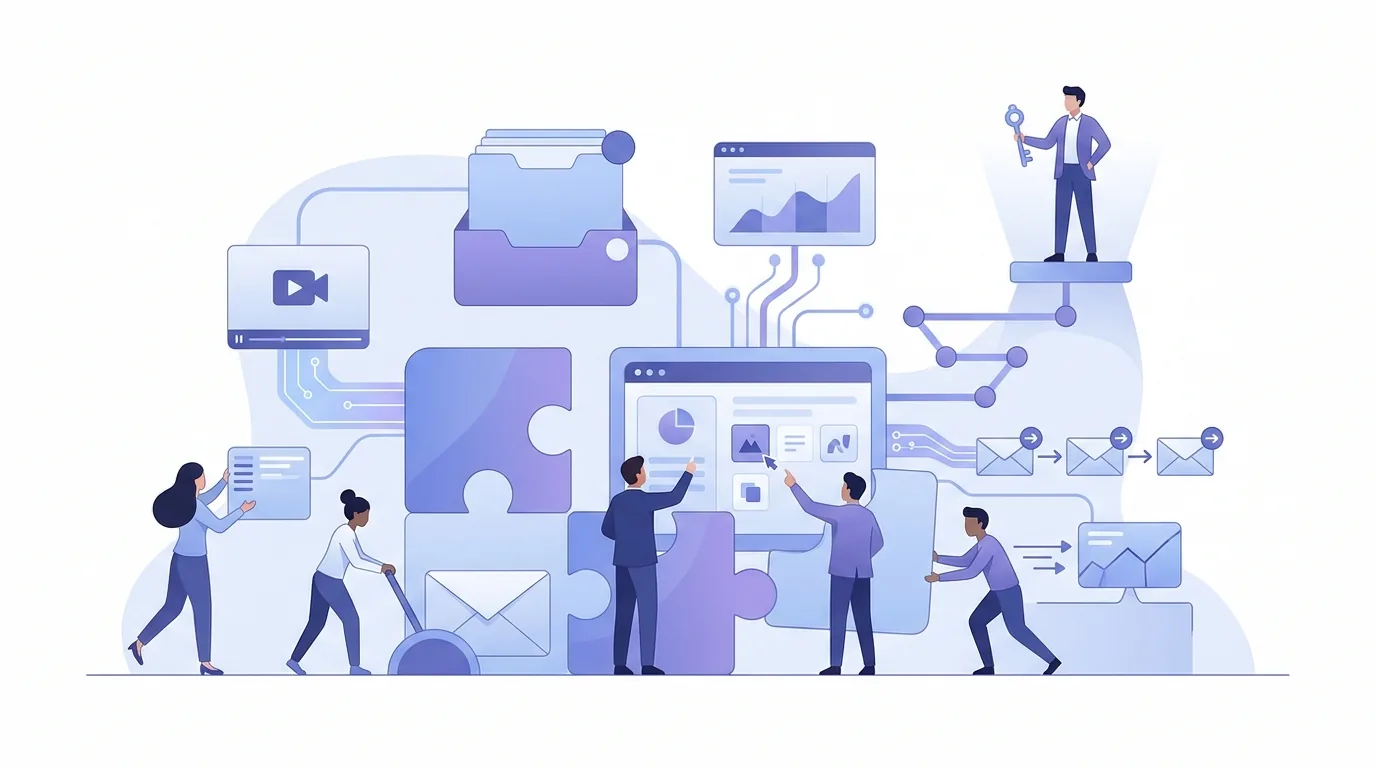
The usual mistake is sending one company-level message to the whole buying group. The CFO, the ops lead and the IT head all get the same email, so it doesn't speak to any of them. Identical messages from one sender to one company domain can also look like bulk mail to the receiving server. This is how EmailFlow OS handles it. You record one video and upload it to EmailFlow OS, connect your own Brevo account and sending domain, and import your prospect list into EmailFlow OS. EmailFlow OS then personalises that one recording for each recipient, not for each company. Three people at the same company each get their own version.
A worked example: you're selling to a logistics firm where the CFO signs, the ops lead champions and the IT head evaluates. In your prospect list in EmailFlow OS they are three separate contacts, not one account row. From your single recording, EmailFlow OS produces three versions, one per person, and each goes out as its own email. If you had listed only the company, two of the three people in the buying group would never hear from you.
Each version goes out from your own inbox, through your Brevo account and your sending domain, not from a shared platform address. So receiving servers judge the mail by your SPF, DKIM and DMARC records and your domain's sending history, and those stay under your control. How a message is filed is the receiving server's decision, not EmailFlow OS's. Our guide on DKIM, DMARC and SPF for cold email senders explains which records to check first. The page about personalised AI video email from EmailFlow OS describes how it works in detail, and so does our article on a personalized video message per recipient.
Consent is up to you, not the tool. In the EU, Article 6 GDPR requires a legal basis for processing a prospect's personal data. In Germany, § 7 (2) UWG requires prior express consent for email advertising, and German courts apply this to business recipients too. Check the rules in each recipient's country before you import a list. Whether your outreach is lawful depends on how you operate, not on the software you send with.
Questions people ask
- What is the meaning of decision maker?
- A decision maker is the person or group with the authority to choose and the accountability for the result. Merriam-Webster (checked November 2026) defines it as someone primarily responsible for making choices. An adviser who recommends but carries no consequences isn't one. In B2B sales it means the person who approves the budget and signs, often called the economic buyer.
- What is another word for decision maker?
- Common synonyms are decider, authority, approver and arbiter. In sales, the closest term is economic buyer: the person who controls the budget. In healthcare, the equivalent role for an incapacitated patient is a surrogate or healthcare proxy. In governance, a board or committee can act as a collective decision maker, deciding by vote instead of a single signature.
- Are decision-makers two words?
- It depends on the style guide. Merriam-Webster spells it with a hyphen: decision-makers. The open form, decision makers, is also common in business writing, and decisionmakers appears in some US legal texts. Used as a compound adjective before a noun, it takes a hyphen: decision-making process. Pick one noun form and use it throughout a document.
- Is a decision maker wheel truly random?
- Mostly not, in the strict sense. Browser-based wheels typically use a pseudo-random number generator, which produces results that look random but come from an algorithm. That's good enough for settling a tie between equal options. For prize draws or anything that has to be auditable, use a method with a documented, verifiable random source and keep a record of the draw.
- What's the difference between a decision maker and an influencer in sales?
- The decision maker can approve the budget and sign the contract. An influencer shapes the choice without having that authority, for example a technical evaluator, an end user or an outside adviser. An influencer can block a deal by recommending against it but can't close one alone. That's why sellers ask early on who has final sign-off.
