15 min read Diesen Artikel auf Deutsch lesen Lire cet article en français Ler este artigo em português
Greeting Email Examples and Email Greetings
The short answer
A greeting email opens with a named salutation, such as "Dear Ms. Lee," or "Hello Priya,", followed by one sentence on why you're writing to that person and one ask. Use "Dear" with title and surname for a formal first contact, "Hello" with the first name as the B2B default, and "Hi" once you've exchanged emails. In cold outreach the greeting is a merge field, so check the name column first. An empty field sends "Hi ,".
In this article
- What is an email greeting, and what's another word for it?
- Formal, semi-formal and casual email greetings compared
- Email greeting examples by situation
- What does a greeting email example look like?
- How to write a greeting email that just says hello
- What are some formal greetings I can use in an email?
- How do I start an email to someone I haven't met?
- Good morning or Good afternoon: the time-zone problem
- Greetings in cold email: what breaks in merge fields
- Which greeting goes in a sales follow-up email?
- Sales follow-up email template with the greeting in place
- Follow-up sales email to a group
- Cold email deliverability: does the greeting matter?
- Emails going to spam: check these before blaming the greeting
- Email deliverability checklist for a send with personalised greetings
- How EmailFlow OS handles the greeting for each recipient
- Questions people ask
What is an email greeting, and what's another word for it?
An email greeting is the first line of the message, above the body. It's usually a greeting word plus the recipient's name and a comma: "Hello Priya,". Other words for it are "salutation", "opening" and "greeting line". Letter-writing guides usually call it a salutation. Punctuation depends on the region. In US business email a comma is standard, and a colon ("Dear Mr. Smith:") still turns up in very formal correspondence. Many British writers leave the punctuation out ("Dear Mr Smith"). Any of these is fine if you stay consistent within the message. The greeting does two jobs: it sets the register for everything that follows, and it shows whether you know who you're writing to. That second job is why getting the right person's name matters more than choosing between "Hi" and "Hello". The sign-off sets the tone at the other end of the message, which we cover in our guide to closings and sign-offs.

Formal, semi-formal and casual email greetings compared
Most greetings fall into one of three registers. Pick the one that fits how well you know the recipient, and keep the rest of the message in that register. A message that opens with "Hey" and then switches to stiff, formal wording reads as inconsistent.
| Greeting | Register | When it fits | Where it goes wrong |
|---|---|---|---|
| Dear Ms. Lee, / Dear Dr. Okafor, | Formal | First contact with senior executives, legal, medical or public-sector recipients, and job applications | Wrong title or gender, or using the surname for someone who signs with their first name |
| Dear Priya, | Formal-warm | Formal settings where first names are already in use | Can read as stiff in fast-moving tech or startup threads |
| Hello Priya, | Semi-formal | The default for a first B2B contact when you're unsure | Rarely wrong, but without the name it reads like bulk mail |
| Hi Priya, | Casual-professional | Ongoing threads and peers; common in cold email to non-executive roles | Too casual for some cultures and sectors on first contact |
| Hey Priya, | Casual | Colleagues and people you already talk to | Comes across as overly familiar from a stranger |
| Good morning/afternoon, Priya, | Semi-formal | Clients and partners whose time zone you know | Lands at the wrong time of day if you get the time zone wrong |
| Hi team, / Hello all, | Group | Several recipients in one thread | Never right for a one-to-one message |
| To Whom It May Concern, / Dear Sir or Madam, | Outdated formal | Only when there's genuinely no named person, such as a general complaints address | Signals you didn't look for a name; "Sir or Madam" assumes gender |
Email greeting examples by situation
The register table shows the options. These examples show which email greeting goes with which situation, with the first line written out. Swap in the real name and keep the rest of the message in the same register.
- First cold email to a senior executive: "Dear Ms. Lee," then, as the first sentence, why you're writing to her specifically.
- First cold email to a manager or specialist: "Hello Priya," or "Hi Priya," depending on how formal the sector is.
- Reply to someone who contacted you first: copy their register. If they wrote "Hi Tom," answer "Hi Priya,".
- Email after a meeting or call: "Hi Priya," with a first line that names the meeting, for example "Thanks for the time on Tuesday."
- Introduction through a referral: "Hello Priya," followed by the referrer's name in the first sentence, so the reader knows why a stranger is writing.
- Getting back in touch after months of silence: "Hello Priya," and a first line that says what changed since you last spoke. Don't open with an apology.
- Message to a shared inbox such as support or billing: "Hello," or "Hello [Company] team," because there's no single person to name.
- Job title only, no name found: "Dear Hiring Manager," or "Dear Head of Procurement,". Use it only after you've looked for the name.
- Several people on the To line: "Hello Priya, hello Marcus," for two, "Hello all," for more.
What doesn't work in any of these: opening with "Dear Sir or Madam" to a person whose name is on the company's team page, or mixing registers, such as "Hey Dr. Okafor,". If you need a formal opening without a name, our list of alternatives to Dear Sir or Madam has samples, and the formal email example shows the full structure from greeting to signature.
What does a greeting email example look like?
A greeting email example is a short, complete email that shows the greeting working together with the line after it: the greeting names the person, the first sentence says why you're writing to them, and the message ends with one ask. The greeting alone doesn't carry the message. "Hello Priya," followed by "I hope this finds you well" still reads like a mass mailing. Here are two full examples, one semi-formal and one formal.
Hello Priya, I saw that your team took over vendor onboarding for the EMEA region this quarter. We help operations teams cut the back-and-forth when new suppliers send incomplete documents. Would a short call next week be useful, or is someone else on your team closer to this? Best, [Your name]
Dear Dr. Okafor, I'm writing because your department published the tender for laboratory data management last month, and I'd like to confirm who handles supplier questions on it. Could you point me to the right contact? Kind regards, [Your name]
How to adapt them: keep the structure of greeting, reason, one ask, and replace the reason with something true about the recipient. Where the examples stop working: copied word for word with only the name changed, they turn into the same template everyone else sends. They also don't fix a wrong name in the greeting, and they don't fit a reply thread, where you mirror the register the other person used.
How to write a greeting email that just says hello
Sometimes the whole email is the greeting: a hello to a new client after signing, an introduction to a new contact who took over an account, or a seasonal note to existing customers. A greeting email of this kind still needs a reason, or it reads as filler. Write it in four steps:
- Greet by name in the register you already use with this person, for example "Hi Priya," for an existing client.
- Say in one sentence why you're writing now: the contract start, the new role, the handover, the end of the year.
- Add one useful detail, such as who their contact is from now on, or the date of the first meeting.
- Close without a sales ask, or with one small ask at most, like confirming a meeting time.
Hi Priya, Welcome aboard, and thanks for signing last week. I'll be your contact from here on, and Marcus from our onboarding team will join our kickoff on [date]. If anyone else on your side should be on that invite, just reply with their name. Best, [Your name]
Where this breaks: a hello email sent cold to a stranger, with no reason and no ask, gives the reader nothing to answer. Seasonal greeting emails sent to a whole list share the merge-field risks covered below, and if it's been a long time since you last spoke, a reconnecting email template fits better than a plain hello.
What are some formal greetings I can use in an email?
- "Dear Mr. / Ms. [Surname]," is the standard formal opening. Default to "Ms." unless the person uses "Mrs." or "Miss" themselves.
- "Dear Dr. [Surname]," or "Dear Professor [Surname]," only if the person holds and uses the title. Check their signature or profile.
- "Dear [First name] [Surname]," is the safe choice when you don't know the person's gender or preferred title.
- "Good morning, Mr. [Surname]," is formal but warmer. Only use it if you know their local time.
- "Dear [Job title]," (for example "Dear Hiring Manager,") is a last resort for when no name can be found. Look first.
Other languages have more levels of formality than English. German business email expects "Sehr geehrte Frau [Surname]" on first contact, and French expects "Madame,". Carrying a casual English "Hi" straight into those languages can read as careless. Match the register the recipient uses in their reply, and only become less formal once they do.

How do I start an email to someone I haven't met?
- Find the name on the company site, the person's profile or the signature in a previous thread. A named greeting beats any generic one.
- Choose the register. "Hello [First name]," works for most first B2B contacts. Use "Dear [Title] [Surname]," for executives, regulated sectors or cultures that expect formality.
- Check the spelling, including accents and hyphens. A misspelled name is the most visible mistake a greeting can make.
- Use the first sentence to say why you're writing to this person, not who you are. Your sender name and signature already cover that.
- Skip filler openers like "I hope this email finds you well". They push your reason for writing further down.
Good morning or Good afternoon: the time-zone problem
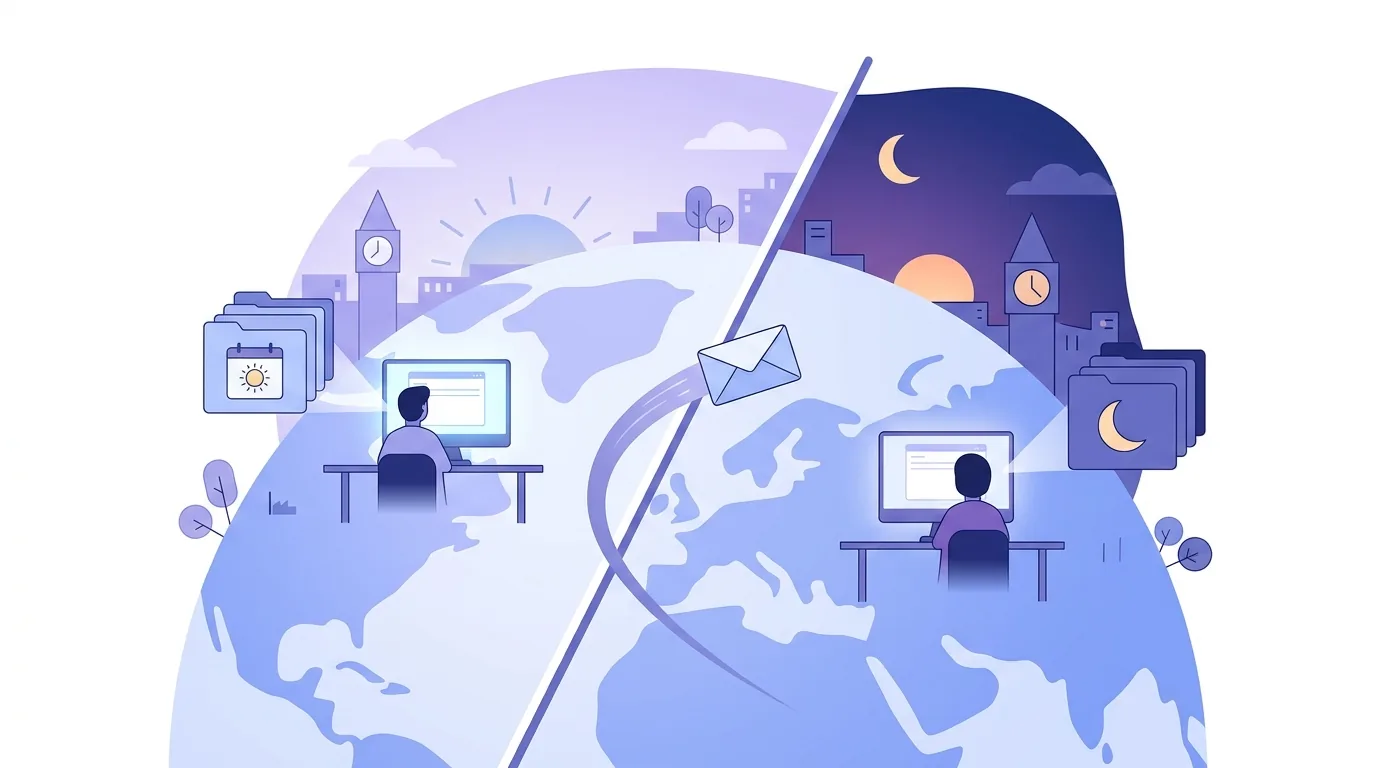
Several top-ranking guides recommend time-of-day greetings. They work in one-to-one email you send by hand, but they fail in a predictable way in scheduled or sequenced sends. The message goes out at the time the sender chose, and the recipient reads it hours later or in another time zone. So "Good morning" arrives in the evening, and a delayed send delivers "Happy Friday" on a Monday. If your prospect list covers several time zones, either schedule by each recipient's local time or use a greeting with no time in it, such as "Hello" or "Hi". Seasonal greetings in a sequence that runs for weeks have the same problem. "Happy New Year" in the third follow-up just shows the email was written in advance.
Greetings in cold email: what breaks in merge fields
In cold outreach you rarely type each greeting by hand. A merge field pulls the first name from your prospect list, so the risk moves from wording to data. These are the usual failures and what causes each one:
- "Hi ," or a stray "Hi there": some rows have an empty first-name column, and there's no fallback or it's applied inconsistently.
- "Hi {FirstName}," sent literally: the placeholder syntax doesn't match the sending tool's, so the tag never gets replaced.
- "Hi JOHN," or "Hi john,": the list was scraped or exported with inconsistent capitalisation.
- "Hi Dr. Jonathan,": the title and first name were imported into the same column.
- "Hi Info," or "Hi Sales,": role addresses such as info@ were imported with the part before the @ used as the name.
- Wrong person: a contact who left the company is still on the list, so their successor gets an email addressed to someone else.
These are all list problems, so you fix them before sending. Sort the name column and look for empty, all-caps and single-letter values. Remove role addresses you can't greet by name. If there are more than a handful of gaps, use a neutral greeting for the whole send rather than mixing named and nameless greetings.
Which greeting goes in a sales follow-up email?
A sales follow-up email should use the same greeting as the first message in the thread. Don't switch from "Hello Priya," to "Hey Priya," between touches. Only change the register after the recipient replies in a more casual tone. Send the follow-up as a reply in the original thread so the earlier message stays visible underneath. A new email with a fake "Re:" doesn't do that. If the prospect replies and signs with a nickname ("Thanks, Pri"), use that name from then on. You'll find more examples in our ten sales follow-up email templates.
Sales follow-up email template with the greeting in place
Hello Priya, Following up on my note from last week about [the specific problem]. One detail I left out: [one new fact relevant to their team]. Would it make sense to look at this for 20 minutes next week, or is someone else on your team closer to it? Best, [Your name]
Follow-up sales email to a group
Once a thread includes several stakeholders, switch to "Hello Priya, hello Marcus," for two people or "Hello all," for more. Only greet by name the people on the To line. If you greet someone who's only in Cc, they won't know whether you expect them to answer.

Cold email deliverability: does the greeting matter?
Cold email deliverability is whether the recipient's mail server accepts your message and where it files it: inbox, spam folder, or rejected outright. The receiving server makes that decision, not the sender. Its main inputs are authentication (whether SPF, DKIM and DMARC pass and align with the domain in the From address), the reputation of your sending domain and IP, your bounce and complaint history, how your sending volume has grown (a new domain that suddenly sends a lot looks different from one warmed up gradually), and the message as a whole. Mailbox providers such as Google publish sender guidelines built around authentication, spam complaints and unsubscribe handling. Whether you open with "Dear" or "Hi" isn't part of those documented requirements. The greeting matters only indirectly: when merge fields break across a large send, recipients see careless bulk mail and are more likely to mark it as spam, and complaints count against your domain. We explain how these signals combine in what decides cold email deliverability.
Emails going to spam: check these before blaming the greeting
If your emails are going to spam, start with the sending setup, not the wording. Read the headers of a test message to see whether SPF, DKIM and DMARC pass for your sending domain. Check whether the domain or sending IP is on a blocklist, and whether bounces jumped after your last list import. A failing SPF result often means the sending service isn't in your SPF record. A DKIM signature for a shared domain instead of yours won't align with your From address. Our guide on why emails go to spam walks through the fixes in order.
Email deliverability checklist for a send with personalised greetings
- SPF includes the service that actually sends your mail.
- DKIM signs with your own domain, not a shared one.
- A DMARC record is published for the sending domain.
- The list is verified, and role and bounced addresses are removed.
- The name column has no blanks, placeholders or broken capitalisation.
- A test send to your own addresses shows every greeting rendering correctly.
Our email deliverability checklist for cold email has the full version, with checks for each record.
How EmailFlow OS handles the greeting for each recipient
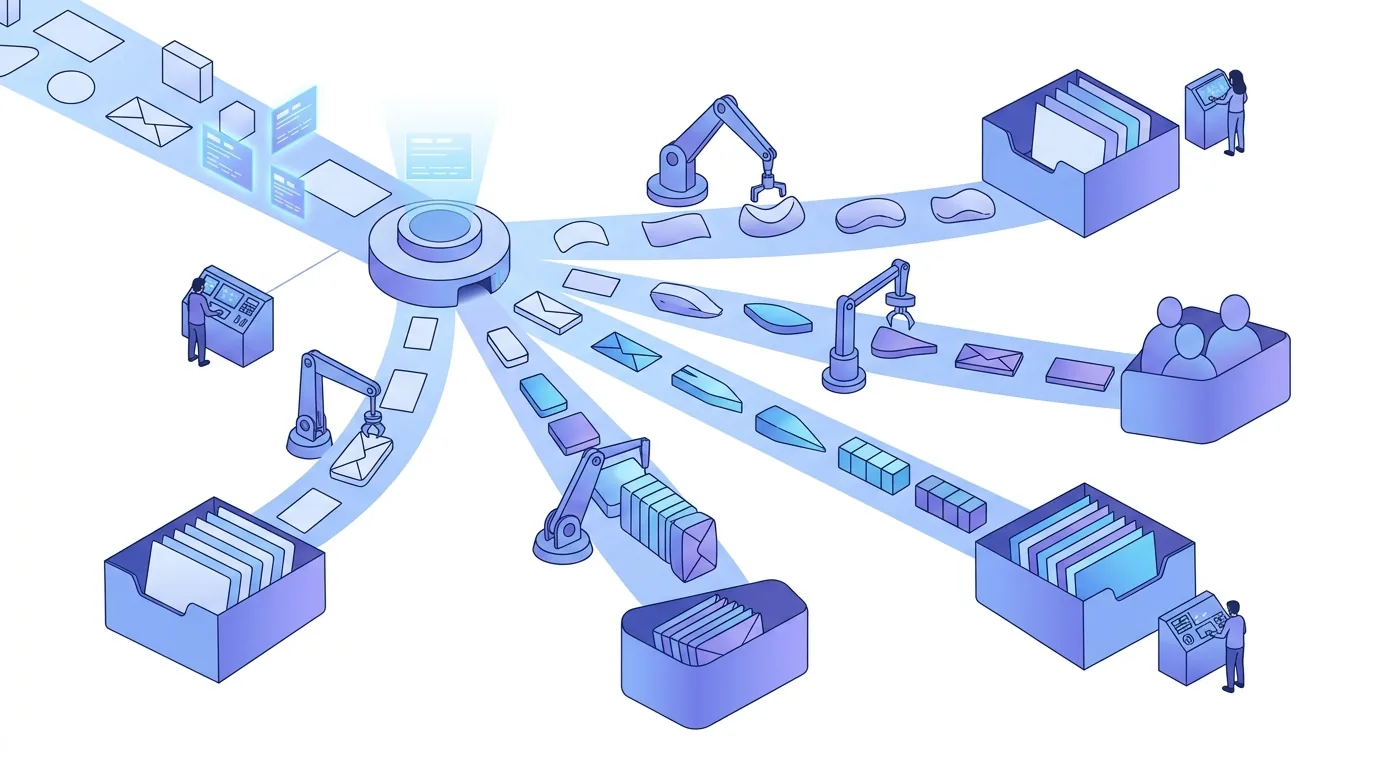
EmailFlow OS is built for personalised AI video email in B2B cold outreach, so here's where the greeting fits in that setup. You record one video and upload it to EmailFlow OS, connect your Brevo account and sending domain, and import your prospect list into EmailFlow OS. EmailFlow OS then makes a separate personalised version of that single recording for each recipient on the list, not one per company, so two people at the same firm each get their own version. Every email goes out from your own inbox, through your own Brevo account and your own sending domain, not through a shared platform sender. Because the personalisation comes from the prospect list, a wrong or missing name in the list ends up in that recipient's version. Run the merge-field checks above before you import. The page on personalised AI video email for B2B cold outreach explains how the per-recipient mechanism works.
Questions people ask
- What is a good greeting email example?
- A good greeting email example has three parts: a named greeting such as "Hello Priya,", a first sentence that gives a reason specific to her, like a new role or a published tender, and one clear ask. Use "Dear Dr. [Surname]," in formal sectors. If you only change the name and keep the rest word for word, it reads like a template.
- What are some good salutations to use in an email?
- For most business email, "Hello [First name]," is the safest salutation. "Dear [Title] [Surname]," fits a formal first contact with executives or regulated sectors, and "Hi [First name]," fits an ongoing thread. Keep "Hey" for people you already know. Avoid "To Whom It May Concern" whenever you can find a name.
- Is "Hey" unprofessional in a work email?
- "Hey" is the most casual of the common greetings. It's fine between colleagues who already talk informally. As a first line from a stranger, especially to a senior or formal recipient, it comes across as overly familiar. "Hi" is just as friendly with less risk, which makes it the better choice for a first contact.
- Should a cold email start with "Dear"?
- "Dear" is correct but formal. It suits cold email to senior executives, to legal, medical or public-sector recipients, and to markets that expect formal address, such as German business correspondence. For most other B2B roles, "Hello" or "Hi" with the first name fits better. Whichever you pick, keep it for the whole thread.
- Can I start an email with just "Greetings,"?
- You can, but "Greetings," with no name works much like "To Whom It May Concern": it tells the reader you didn't know or check who they are. That's acceptable for a general inbox such as a support address. When you're writing to a named person, "Hello [First name]," is better because it shows you know who you're addressing.
