11 min read Alle Artikel auf Deutsch Tous les articles en français Todos os artigos em português
Sales Intelligence Platform: Tools Compared
The short answer
A sales intelligence platform is a searchable B2B database. It gives you contact details, company firmographics and, in some tools, buying-intent signals, so you can pick accounts and find the right person to contact. Choose one by where its data comes from, how it verifies email addresses, which regions it covers and whether it exports cleanly into your CRM. Before you send, verify every exported address and set up authentication on your own domain.
In this article
- What is a sales intelligence platform?
- Sales intelligence tools by type
- How do ZoomInfo, Apollo, Cognism and Sales Navigator compare?
- What should decide which platform you pick?
- What goes wrong after the export?
- How do you write a follow-up sales email from intelligence data?
- Follow-up email format for sales
- Follow-up sales email template
- Follow-up sales email examples and samples
- Where EmailFlow OS fits after the platform
- Questions people ask
What is a sales intelligence platform?
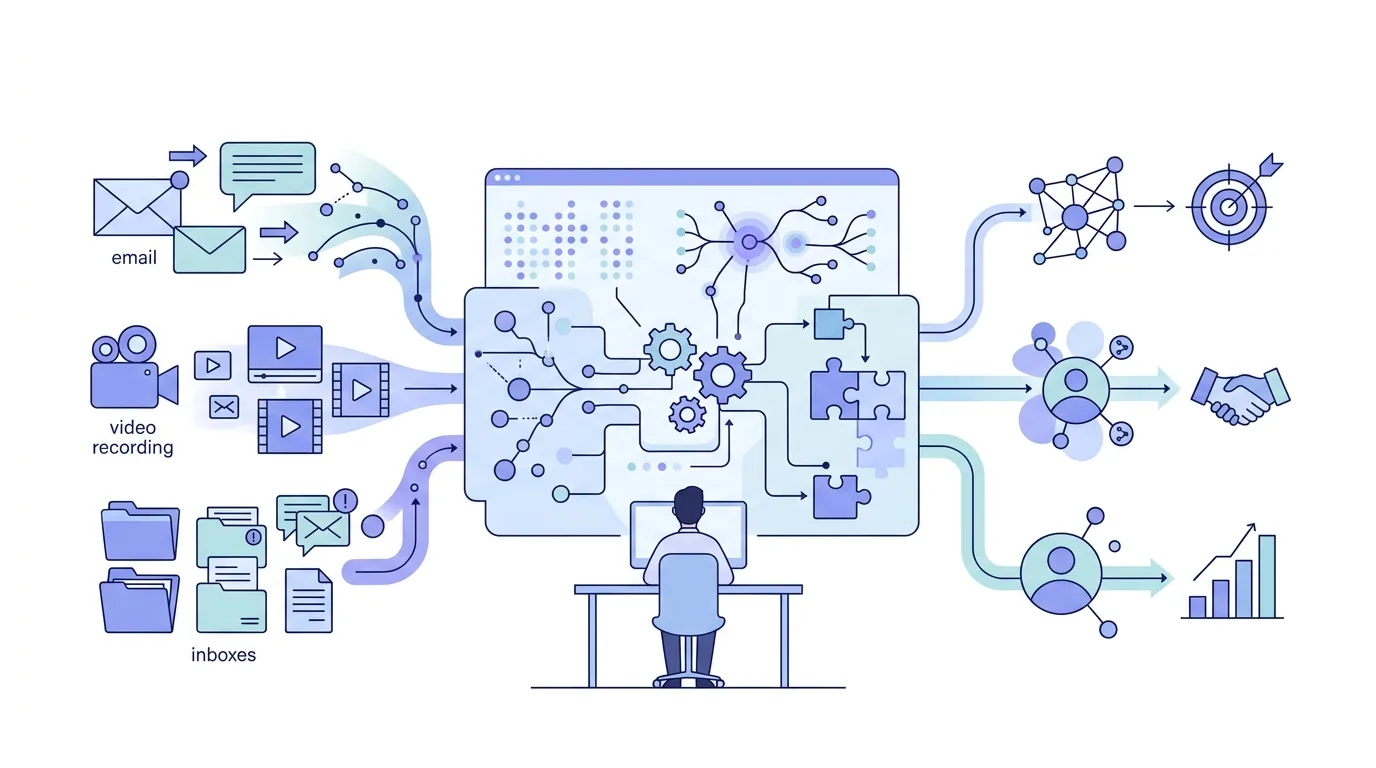
A sales intelligence platform is software that collects data about companies and the people who work there, lets you filter it, and exports the matching contacts to your CRM or sending tool. It answers two questions: which accounts should we work, and who at each account should we contact? It doesn't write, send or follow up. Those steps happen in other tools.
You search by industry, headcount, region, job title or tech stack. You get back a list of accounts and contacts with email addresses, phone numbers and company details. Some platforms also add intent signals, meaning evidence that an account is researching a topic, hiring for a role or changing its tools. Google's AI overview for this search (as of November 2026, citing g2.com, salesforce.com and demandbase.com) describes the job in the same terms: research accounts, find decision-makers, verify contact details and spot buying signals.
Here's a concrete example. Say you sell payroll software to mid-size logistics firms in Germany. In the platform you filter for industry = logistics, a mid-size headcount band, country = Germany, and titles containing "Head of HR" or "Payroll". Then you export the matching contacts, and that's where the platform's job ends. Writing, sending, deliverability and follow-up all happen in other tools, and most of the mistakes get made there. The search also works better if you define your target first, which a written B2B ICP template helps with.
Sales intelligence tools by type
- Broad contact and company databases: ZoomInfo SalesOS, Apollo.io, Cognism, Lusha, UpLead and ReachStream. These keep turning up in this year's "verified emails" roundups. You use them to build prospect lists with emails and phone numbers attached.
- Network-based prospecting: LinkedIn Sales Navigator. You search LinkedIn's member data and contact people through LinkedIn itself, so the data stays on LinkedIn and doesn't arrive as a mailing list.
- Account-level intent and ABM platforms: 6sense and Demandbase. These work with accounts rather than contact lists, and they rank companies by research activity. Teams use them to decide which accounts to work first.
- CRM-embedded intelligence: Salesforce and Microsoft both sell sales intelligence features inside their CRM suites. They suit teams that want account insights in the records they already keep, not in a separate tool.
- AI lead-generation tools such as RoverLead AI, which appears in one of the current top-ranking tool lists for this search. These tools suggest leads, and you should check those leads the same way as any database export before you send anything.
The type you need depends on the decision you're stuck on. If you know which accounts you want but not who to email, a contact database answers that. If you don't know which accounts to prioritise, an intent or ABM platform does. If your buyers spend their time on LinkedIn and you don't want to email them cold, Sales Navigator keeps the conversation on LinkedIn. Many teams combine two types. To score accounts before you buy contacts, see account scoring models.
How do ZoomInfo, Apollo, Cognism and Sales Navigator compare?
| Option | Primary data unit | What it hands you | What to test in a trial |
|---|---|---|---|
| ZoomInfo SalesOS | Contact and company | Contact and company records, plus intent data (Google's AI overview describes it as aimed at larger teams) | Bounce rate on a sample export in your target region; how intent topics are defined |
| Apollo.io | Contact and company | Exportable contact lists with emails | Share of catch-all and unverified addresses in a sample |
| Cognism | Contact and company | Exportable contact lists with emails and phone numbers | Coverage of your EU target countries; how it documents the data source for GDPR information notices |
| Lusha | Contact | Individual contact lookups and lists | Match rate on a list of named people you already know |
| UpLead / ReachStream | Contact | Contact lists marketed as verified emails | When and how the verification ran |
| LinkedIn Sales Navigator | LinkedIn member | Saved leads and accounts inside LinkedIn, contacted via InMail | Whether your buyers are active on LinkedIn at all |
| 6sense / Demandbase | Account | Account prioritisation by intent signals | Whether flagged accounts match the deals your team actually wins |
Use the same test for every option. Run one sample export of your real target segment, verify it, and count how many addresses bounce, how many are catch-all and how many are missing. A database that looks big in a demo can still be thin for a niche country or job title, and only a sample from your own segment shows that. For a fuller selection method, see how to choose a B2B database provider.
A worked version of that test, using the payroll example: take a short list of HR and payroll leads at German logistics firms that your team already knows by name, from past calls or events. Look each one up in every trial account. Note whether the platform finds the person, whether the title is current, and whether the email it returns matches the one you know works. That known-answer test shows staleness in your own niche, which a vendor's headline database size can't.
What should decide which platform you pick?
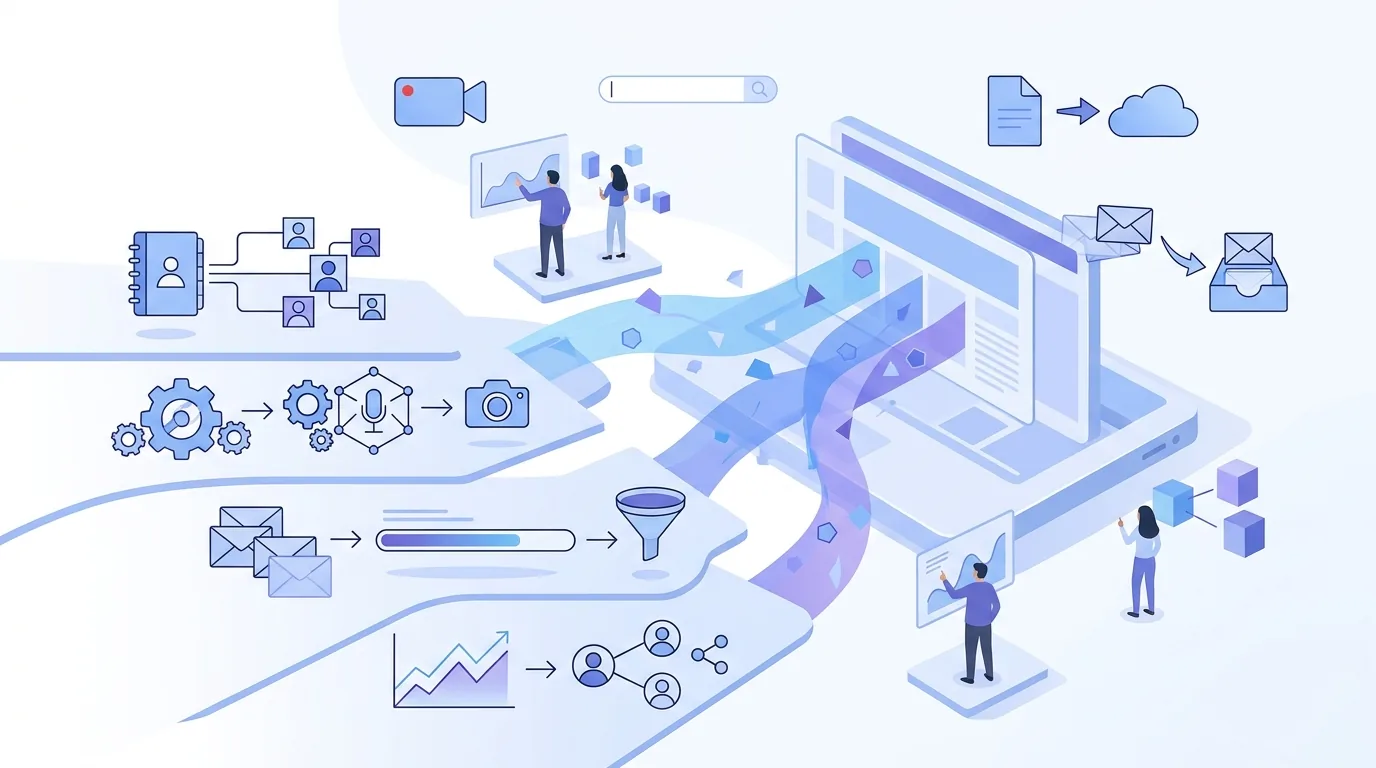
- Data source: is the data collected by crawling, contributed by users, licensed or researched by hand? The source decides how fresh the data is, and what you have to tell contacts about where you got their data.
- Verification method and date: an address that passed an SMTP check months ago can bounce today. Ask when each record was last checked.
- Regional coverage: test the countries you actually sell into, not the vendor's headline total.
- Contact vs account focus: intent tools rank companies. They don't replace a contact list.
- Export and CRM sync: check which fields come across, and whether duplicates get merged or created.
- Legal basis documentation: for EU contacts, the GDPR requires you to inform people whose data you didn't collect from them directly, and that includes telling them where it came from. So you need the vendor to tell you the source.
What goes wrong after the export?
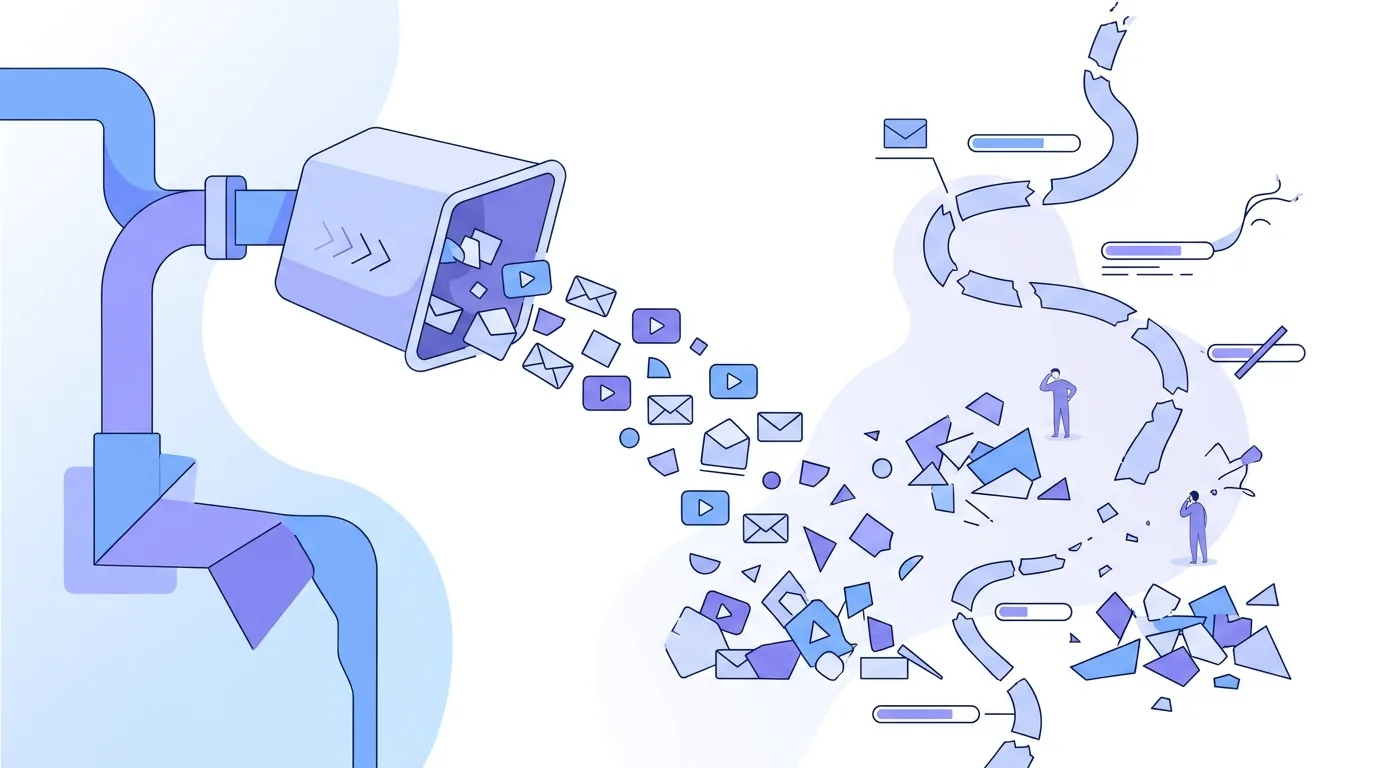
- Stale addresses bounce. People change jobs, and hard bounces count against your sending domain's reputation. Run every export through verification before your first send.
- Catch-all domains accept any address at SMTP level, so verification marks those addresses "unknown". Sending to them in bulk risks bounces that only show up later.
- Intent signals are probabilistic. A spike in topic research at an account doesn't name a person or a project. Treat it as a reason to take a look, not as proof of what they're planning.
- Big exports invite blasts. Loading a huge export into one send from a fresh domain is how domains get blocklisted. The list size a platform lets you export tells you nothing about a safe sending volume.
- Missing authentication. If SPF, DKIM and DMARC aren't set up for the domain you send from, receiving servers have less reason to trust the mail, however good the data is.
- EU email rules still apply. German unfair competition law (UWG) treats email advertising sent without prior express consent as an unreasonable nuisance, and that includes B2B email. Whether you may email someone depends on how you operate, not on which database you bought.
You can check authentication before you send a single message. The records and the order to set them up in are covered in SPF, DKIM and DMARC for cold email senders. The address checks are covered in email verification: how it works and fails.
How do you write a follow-up sales email from intelligence data?
Platform data such as role, company events or tech stack only helps a follow-up if it explains why you're writing to this person now. A follow-up sales email goes in the same thread as your first message. It adds one new piece of information and asks one question. It shouldn't just say "bumping this up".
Follow-up email format for sales
| Part | What it contains | What breaks it |
|---|---|---|
| Subject | Keep "Re:" on the original subject so it threads | A new subject starts a new thread and loses context |
| Opening line | One sentence referring to the first email | Apologising for following up |
| New information | One fact tied to their company: a hire, a launch, a tool change | Repeating the first pitch word for word |
| Ask | One yes/no or one short open question | Three asks, or a calendar link with no context |
| Sign-off | Name, role, company, one way to opt out | Missing sender identity or opt-out |
Follow-up sales email template
- Subject: Re: [original subject]. Body: Hi [First name], one addition to my note last week: [company] just [trigger from your data, e.g. opened a second warehouse]. Teams at that stage usually rework [process] first. Is that on your list this quarter, or is someone else looking after it? [Your name], [role], [company]. If this isn't relevant, just reply "no" and I won't write again.
Follow-up sales email examples and samples
- Trigger follow-up: "Hi Maria, quick addition: I saw you're hiring two payroll specialists. Are the hires meant to cover monthly runs for the new sites, or a system change? Happy to share how other logistics HR teams set this up."
- Referral follow-up: "Hi Jonas, if payroll sits with someone else at your company, could you point me to them? One name is enough."
- Breakup follow-up: "Hi Elena, I'll close this out on my side. If payroll for the new sites becomes a topic later, this thread is here."
There are more written-out versions for each stage in the sales follow-up email template collection. If the lead came in through a form instead, use the inbound sales follow-up format.
Where EmailFlow OS fits after the platform
Personalised video email is a EmailFlow OS product. It picks up where a sales intelligence platform stops, at the point where you have a verified prospect list to reach. You record one video and upload it to EmailFlow OS. Then you connect your own Brevo account and sending domain, and import your prospect list into EmailFlow OS. EmailFlow OS turns that single recording into a personalised version for each recipient, not one version per company. Each version goes out from your own inbox, through your Brevo account and your domain, not through a shared platform sender.
Because sending runs through your own Brevo account and domain, you keep control of your SPF, DKIM and DMARC records and your sender reputation, and the list checks above stay your job. EmailFlow OS doesn't decide how a message gets filtered. Each receiving server runs its own checks on every message it receives. The full workflow is described on the EmailFlow OS home page.

Questions people ask
- What is a sales intelligence platform?
- A sales intelligence platform is a filterable B2B database of companies and contacts. You search by industry, headcount, region, title or tech stack and export matching contacts with emails, phone numbers and firmographics. Some tools add intent signals such as hiring or topic research. ZoomInfo, Apollo.io and Cognism are contact-focused examples; 6sense and Demandbase work at account level. It stops at the export: sending and follow-up happen elsewhere.
- What does a sales intelligence platform do?
- It does three jobs: it finds accounts that match your target profile, names the people to contact there, and supplies their contact details. Intent-focused tools add a fourth, ranking accounts by research activity. It does not verify deliverability on your domain, write emails or send them. A known-answer test, looking up leads you already know, shows how current its data is in your niche.
- What is the difference between a sales intelligence platform and a CRM?
- A CRM stores the accounts, contacts and deals you already work with and records your activity on them. A sales intelligence platform supplies outside data about companies and people you haven't contacted yet. The two meet at the export or sync: intelligence records flow into the CRM. Check whether that sync merges duplicates or creates new ones before you connect them.
- What is sales intelligence?
- Sales intelligence is data about companies and buyers that you collect to decide who to contact and why. It covers contact details, firmographics such as industry and headcount, and signals such as hiring or research activity. Sales analytics is something else: it measures your own pipeline and results after the fact. Intelligence looks outward at the market, while analytics looks inward at your own numbers.
- Is Sales Navigator free?
- No. LinkedIn Sales Navigator is a paid LinkedIn subscription, separate from a free LinkedIn account. With a free account you can search members and send connection requests. Sales Navigator adds advanced lead filters, saved lead lists and InMail messaging. Check LinkedIn's own Sales Navigator page for current plans and trial terms.
- What are some major companies that offer business intelligence software?
- The best-known business intelligence vendors are Microsoft (Power BI), Salesforce (Tableau), Google (Looker) and Qlik. BI software visualises and analyses data you already hold, such as CRM or finance records. A sales intelligence platform supplies outside data about prospects. Many teams use both: one to find accounts and the other to report on pipeline.
- What are the 7 P's of competitive intelligence?
- There's no single standard list. Most versions borrow the extended marketing mix of product, price, place, promotion, people, process and physical evidence, and apply it to a competitor instead of your own offer. Used that way, it's a checklist for comparing a rival's offer, not a formal intelligence method.
